Showing posts with label English. Show all posts

Monday, 20 May 2024

Clampdown on foreign property buyers in the north

 May 19, 2024


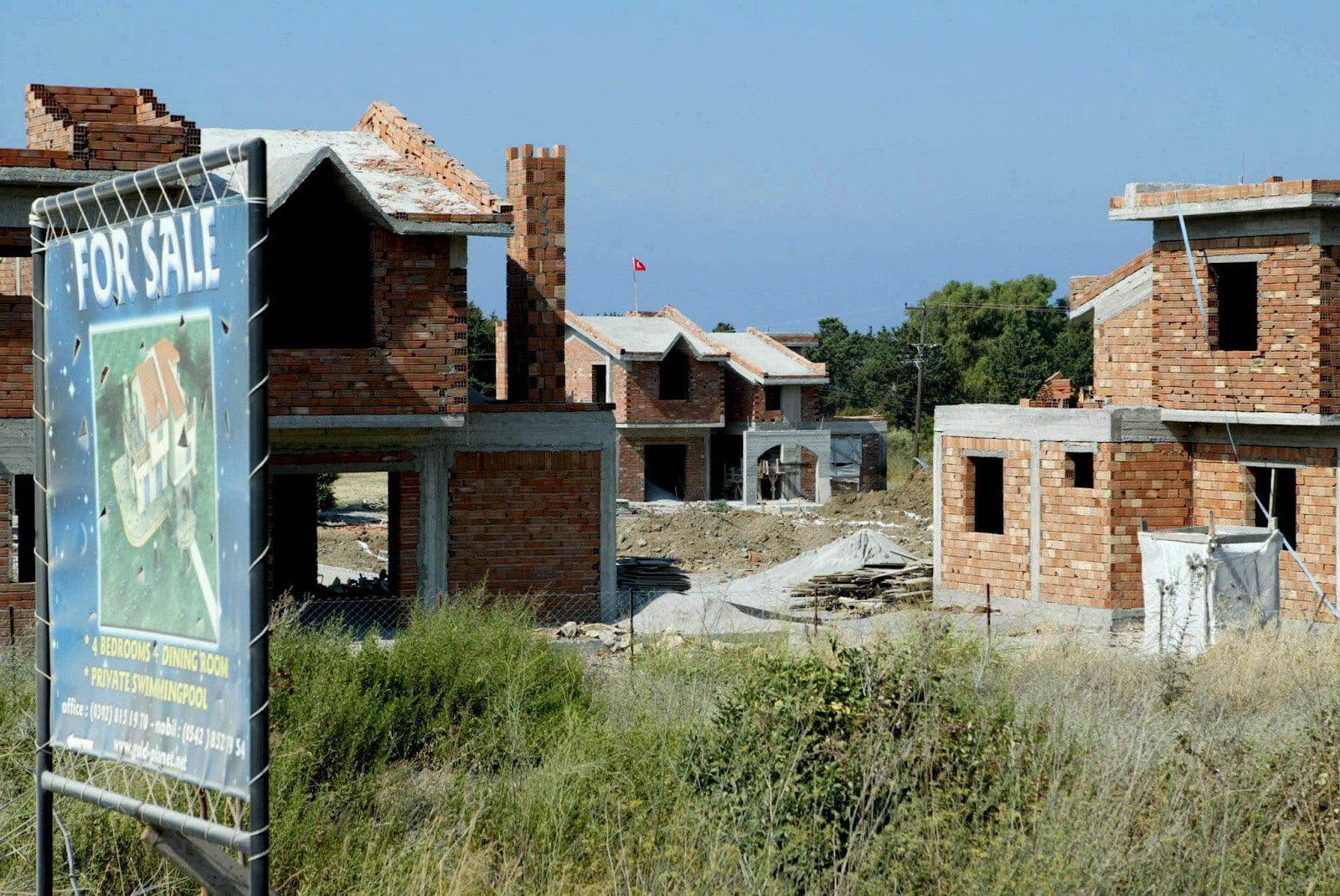
There are fears the new regulations may cause more ghost towns with unfinished buildings

But an exception is made if the buyers are Turks

The Turkish Cypriot administration is working on a set of legal amendments to limit the number of properties that foreigners can purchase in the northern part of Cyprus. The amendments will also put an end to the current loophole that allows property purchases to go unrecorded.

According to the amendments expected to soon be approved by the Turkish Cypriot assembly, foreigners will not be able to purchase more than one property or one piece of land in the north. The purchase will be subject to the permission of the administration.

The amendments include provisions that limit foreign property ownership to seven per cent in any district and three per cent in the north as a whole.

Under current laws, foreigners are legally able to buy up to three properties subject to permission, but this limitation has long been bypassed through the establishment of trusts that allow lawyers to purchase properties on behalf of foreigners. Such purchases have created a large gap between actual transactions and official records, as well as obscuring property ownership.

Sector experts estimate that over 50 per cent of property transactions in the north are not recorded. Dursun Oguz, who is responsible for the interior affairs dossier in the north, recently acknowledged that there are foreigners who have purchased up to 30 properties in the north and never recorded them under their own name.

According to the amendments, any foreigner, who has purchased more than one property before the amendments but have not registered these with the land registry department, will have to get rid of these properties within 24 months.

The amendments include provisions that outlaw multiple property purchases done through lawyers and stipulate that purchase agreements will be null and void unless the transfer of property is finalised at the land registry department within six months.

Turkey FATF

The amendments to the property regime are understood to be part of Turkey’s efforts to combat money laundering as it strives to get out of the international crime watchdog Financial Action Task Force FATF’s grey list.

FATF grey-listed Turkey in 2021 for failing to supervise its sectors such as real estate and banking that are vulnerable to money laundering and to financing terrorist groups. Turkey needs to get out of the grey list to improve confidence among foreign investors as it grapples with a deep economic crisis. According to official data Turkey’s annual inflation was almost 70 per cent in April.

Turkey’s “AKP government targets to get Turkey out of the grey list in June,” wrote Turkish journalist Zeynep Gurcanli in the financial news website ekonomim.com recently. “Until today, the grey list issue has always been discussed only in relation to Turkey… It appears that Ankara has realised that it will not be able to get out of the grey list unless north Cyprus stops being mentioned in connection with black money.”

Gurcanli added that Ankara wants the amendments to be approved by the Turkish Cypriot assembly by the end of this month.

Money laundering

The recent spike in property sales to foreigners in the northern part of Cyprus coupled with legal loopholes and lack of adequate controls had led to increased concerns about money laundering and calls for measures to regulate the sector.

Multiple reports in international media had pointed to north Cyprus as a destination for foreigners – especially Russians – to park their money without any questions asked. Russians can easily buy property in the northern part of Cyprus as banks there are not part of the international Swift system and operate via Ankara, which has not put sanctions on Russia.

In a speech last year, Turkish Cypriot judge Fadil Aksun, who is the head of the north’s Nicosia High Criminal Court, had made a stark warning about the large amounts of money coming into the north for real estate purchases.

“But there is no control over whether a real estate purchase indeed takes place,” said Aksun. “There is a risky money circulation in our country.”

Criticisms

The amendments have drawn criticism however, as they create a differentiation between foreigners and Turkish citizens and provide exceptions for the latter. While foreigners are limited with one property only, “natural persons who are citizens of a state that recognises the Turkish Republic of Northern Cyprus” have the right to buy up to three properties, according to the amendments.

“The plan is clear: Annexation didn’t happen so let’s sell for money,” was the headline of daily Ozgur Gazete, which argued that the amendments are aimed at enabling Turkish citizens to buy more properties in the north.

In fact, Hakan Akcam, the head of the Chamber of Real Estate Agents in Turkey, in a statement he made after the amendments were made public said: “The law in TRNC is changing. The way is being cleared for Turkish investors.”

Economic concerns

While the amendments are deemed positive for preventing money laundering, they have caused controversy because of the impact they are expected to have on the economy.

The Association of Real Estate Agents in the north held a press conference against the amendments saying they will “destroy the sector, cause chaos and serious economic loss”.

“The foreigners will leave,” asserted the association’s lawyer Husnu Tokatlioglu.  “The state will not get revenue because there will be no sales. Real estate agents will have no customers. Contractors will not be able to sell what they have built.”

Economist Mertkan Hamit states that the amendments will not only impact the real estate sector but the whole economy.

“Being outside international supervisory mechanisms, north Cyprus has become a destination for black money,” says Hamit. “If these amendments are implemented effectively, north Cyprus will no longer be an option for those, who would like to keep their assets outside supervision… The problem is we don’t know what the exact effects will be… In the pessimistic scenario, we may have more ghost towns with unfinished buildings and derelict apartments.”

Increasing tolerance of corruption in the north

 April 29, 2024


In 140th position on the corruption perception index along with Cameroon

Turkish Cypriots took the streets on Friday in a march against corruption, demanding that the “swamp is dried and those responsible are brought to account.”

In the demonstration, supported by some 30 civil society organisations and political parties, protesters chanted against the “theft, bribery, nepotism, money laundering” in the northern part of Cyprus.

The protest came days after a 2023 study on corruption revealed “very common” and “worsening” corruption in the north along with bribery, money laundering and political corruption.

According to the comprehensive study based on Transparency International’s Corruption Perceptions Index (CPI) methodology, the north has a corruption perception score of 27 out of 100. On a scale of 0-100, zero indicates very high corruption and 100 indicates no corruption.

The score of 27 is far below the average score of 43 in 180 countries and places the north in the 140th position on the index along with Cameroon, right after conflict-ridden countries of Gabon, Laos, Mali and Paraguay. The corruption perception score of Turkey in 2023 is 34, placing it in 115th position, while the corruption perception score of the Republic of Cyprus is 53, placing it at 49. The average score for the European Union is 65.

“There is a very clear downwards spiral,” says Omer Gokcekus, one of the academics who has conducted the study for the past seven years. “And it is accelerating. This result is not coincidental or a product of the margin of error. The situation is serious.”

The score for the north has been significantly decreasing since 2017 when the first study was conducted. The score for the north at the time was 40. It ranked 81 among other countries, much higher than the current rank of 140.

Transparency International, which publishes the corruption perception scores annually for 180 countries, does not actually cover the northern part of Cyprus. But academics, Gokcekus and Sertac Sonan, with the sponsorship of German Friedrich-Ebert-Stiftung (FES) foundation, have been measuring the perception of corruption in the north for the last seven years. They use Transparency International’s methodology based on surveys done among business executives and a group of retired senior civil servants.

Corruption rampant among ministers

A staggering 93 per cent of the 324 business executives in senior managerial positions surveyed said that there is corruption, with 80 per cent believing that corruption ‘is a very serious problem’. About 67 per cent said corruption increased in the past year.

Corruption was found to be most rampant among ministers (58 per cent) and politically appointed senior civil servants (54 per cent). The least corrupt were police, prosecutors and judges. According to participants, the most effective institution in the fight against corruption is police but by only 22 per cent.

Bribery

Twenty-five per cent of the business executives surveyed admitted to giving bribes, gifts or “offering a favour” in the past year, while a further 14 per cent refused to give an answer.

“Many people do not want to answer,” a question about bribery, Gokcekus told the Cyprus Mail. “It is not something to be proud of.” He added that the 14 per cent, who refused to answer the question, can definitely not be considered in the same category as those who said they did not resort to bribery.

The top three reasons for giving bribes were listed as “expediting procedures”, “finalising procedures” and “getting better treatment”. According to the business executives, “bribery or undocumented extra payments” are most common in public tenders, issuing of permissions and licences, land registry procedures and allocating and leasing public land and buildings. It is least common in obtaining favourable judicial decisions.

Money laundering

The study also revealed that 53 per cent of the participants believe that activities aimed at money laundering are common. The recent increase in the number of foreigners settling and investing in the northern part of Cyprus has heightened concerns about money laundering and led the Turkish Cypriot assembly to approve stricter anti-money laundering provisions.

Political corruption

The survey also gave indications about political corruption with 58 per cent of respondents saying that it is common to buy votes or offer special favours during election periods. Thirty-eight per cent said voters are frequently threatened with punishment unless they vote in a certain way.

Corruption at the top

Fifty-five per cent said the government is run by a group that largely only cares about its own interests while 64 per cent said officials involved in corruption are “not prosecuted” or “very rarely prosecuted”.

In fact, Turkish Cypriots are no stranger to top officials being involved in alleged corruption or corruption.

Turkish Cypriot leader Ersin Tatar has been under investigation by United Kingdom’s Serious Fraud Office (SFO) as one of Asil Nadir’s main helpers in the Polly Peck case in 1987. Tatar, who was the assistant treasurer, was alleged to have shredded evidence. He was unable to travel to the UK from 1991 until 2019 when the SFO confirmed that it was discontinuing proceedings against Tatar on the grounds that it is not now in the public interest to prosecute him.

Head of the Turkish Cypriot ruling coalition, Unal Ustel, has been embroiled in the infamous ‘jet scandal’ of 2020. Ustel, who was the then ‘tourism minister’, gave special permission for a group of nine Turkish businessmen and three Russian escorts to fly into Ercan (Tymbou) in a private jet and bypass the strict Covid-19 testing and quarantine rules.

Speaker of the Turkish Cypriot assembly Zorlu Tore, meanwhile, was arrested in Istanbul in 2006 trying to smuggle cigars. He avoided prosecution when he got elected in the assembly in 2009 and gained immunity.

Tolerance is increasing

Perhaps one of the most worrying findings of the study was the increase in the community’s tolerance of corruption. The percentage of those, who agreed with the statement “It is acceptable to use personal relations and connections with those working in public institutions to expedite procedures,” increased to 17 per cent from 5 last year. The percentage of those, who agreed with the statement “it is acceptable for the government to be involved in corruption as long as it provides good service,” increased to nine per cent from three per cent last year.

“Many Turkish Cypriots have normalised corruption,” says Gokcekus, adding that this is very troublesome. “If you don’t see something as a problem, if it doesn’t bother you, you don’t try to fight it.”

https://cyprus-mail.com/2024/04/29/increasing-tolerance-of-corruption-in-the-north/

The worst economic crisis in Turkish Cypriot history

 April 14, 2024

We have lost hope in this country, shopkeepers say

The annual inflation rate in the northern part of Cyprus hit 94.5 per cent in March as Turkish Cypriots continue to experience the worst economic crisis in their history. Inflation compared to February rose by 6.9 per cent – the highest monthly inflation since the crisis began in 2021.

According to the official figures announced by the Statistical Institute, monthly food inflation in March was 3.4 per cent, which brought the food inflation to 220 per cent since 2022. The price of bread has increased by 25 per cent since the start of this year alone.

‘Bairam meal turns sour,’ a front page on daily Halkin Sesi read, reporting about the exorbitant food prices ahead of the Eid festival (Bairam) this week. The festival marks the end of the holy month of Ramadan.

Even though Turkish Cypriots are among the most liberal Muslims globally, the Eid festival is a very important time of the year when families come together for feasts and celebrations.

‘Barbecue remains a dream during Bairam,’ wrote Star Kibris. ‘Baklava is for the price of gold this Bairam,’ headlined Kibris Postasi.

The Turkish Cypriot economy has been in freefall since 2021 as the Turkish lira continuously declined in value against most major global currencies because of the unorthodox interest-rate-cutting policies of Turkish President Recep Tayyip Erdogan. The official currency in the north is the Turkish lira, which lost some 40 per cent of its value in the past year alone. It has shed a further nine per cent this year. Keeping rates artificially low led to skyrocketing inflation, placing Turkey among the top five inflation champions in the world along with Zimbabwe, Sudan, Venezuela and Argentina.

Annual inflation in Turkey in March was 68.50 per cent, while the monthly inflation was 3.16 per cent.

Last month, Turkey’s central bank raised its key interest rate to 50 per cent in an attempt to combat inflation. Policymakers cited a “deterioration in the inflation outlook.” The central bank predicts Turkish inflation will rise towards 80 per cent by the summer.

The north adopts the Turkish key interest rate.

The fall in the value of the Turkish lira affects Turkish Cypriots even more as the economy is almost completely dependent on imports. Even imports from Turkey are indexed to the dollar. Transportation and import costs are also exacerbated by a cumbersome public administration that creates additional expenses. Moreover, many goods, services and expenses such as real estate, cars, rent and school fees are in foreign currencies although people’s salaries are paid in Turkish liras.

The flow of foreign currency into the Turkish Cypriot market through the increasing number of foreigners living there has also worsened inflation as each sector started to determine prices according to the higher purchasing power of foreigners, according to economists. Unlike in a normal economy, where the value of the local currency would increase with foreign currency inflow, the value of the Turkish Lira didn’t increase as it is not determined by the Turkish Cypriot economy.

“The money inflow with uncertain sources plays a big role in the increase [in inflation],” Turkish Cypriot economics professor Engin Kara of Cardiff University wrote on his social media account. “In the near future, a large part of the economy will be comprised of this money.”

Soaring prices in the northern part of the island have left people, especially those on low or fixed incomes, with plummeting purchasing power and a decline in their living standards. The Cyprus Turkish Civil Servants Union (KTAMS) calculated that a family of four earning the minimum wage is living right at the hunger threshold.

According to KTAMS, the hunger threshold – the amount needed to maintain a healthy, balanced and adequate diet – for a family of four as of the end of March, was 23,644 Turkish Lira (about €687). The minimum wage in the north is currently 24,000 Turkish lira (about €697).

As Turkish Cypriots experienced a huge drop in their purchasing power leading to a decline in their living standards, they also saw their debts rocket.

According to the official figures of the Turkish Cypriot central bank, total borrowing from banks increased 61 per cent as of the end of 2023 compared to the previous year to 87 billion Turkish lira (about €2.5 billion). As of 2022, the total borrowing stood at 53.9 billion (about €1.6 billion).

Together with borrowing, the amount of non-performing loans also increased 58.2 per cent by the end of 2023 compared with 2022 to 4,176 million Turkish liras (about €121 million).

The uncontrollable price increases also deeply affect businesses that have to grapple with constant increases in costs. In the last two months alone, bottled gas and electricity prices increased 7.8 per cent, while fuel prices increased 10.8 per cent.

Head of the chamber of shopkeepers and artisans (KTEZO) Mehmet Ali Ardic told daily Yeniduzen last week there is a 70 per cent closing rate in small food and beverage businesses as they cannot keep up with the increasing costs.

“We have lost our hope in this country,” head of the association of restaurant owners Arif Bayraktar said. “We are just rowing the boat in vain. We are not getting anywhere.”

https://cyprus-mail.com/2024/04/14/the-worst-economic-crisis-in-turkish-cypriot-history/

A ‘love of loneliness’ marks demands for two-state solution in Cyprus

 March 31, 2024


Ozdil Nami

As the United Nations secretary-general’s personal envoy wrestles to break the seven-year standstill in the Cyprus negotiations, the Turkish Cypriot pro-solution camp seems to agree that the new process should have pre-deteremined timeframes and clear consequences of failure if it is to have any chances of success.

The Cyprus peace process has reached the deepest impasse in its history after the latest round of negotiations failed in Crans-Montana in July 2017. Since then, Ankara withdrew its support for continued negotiations on a bicommunal, bizonal federation and the current conservative nationalist Turkish Cypriot leader, elected with the strong backing of Ankara in 2020, wants to record the breakaway state’s ‘sovereign equality’ before participating in any settlement negotiations.

Long-standing federal solution advocates and opinion leaders in the northern part of Cyprus criticise the Turkish and Turkish Cypriot leaderships for this change of course, but warn that without a different methodology introducing significant changes to the negotiating process it would be impossible to reach a federal solution.

Nami

After the experiences of the Annan Plan, the Talat-Christofias negotiations and then the failure at Crans-Montana “all confidence has been lost,” explains former chief negotiator Ozdil Nami, who served under two former Turkish Cypriot leaders Mehmet Ali Talat and Mustafa Akinci.

An adamant supporter of a federal solution, Nami argues that the negotiations should be picked up from where they were left in Crans-Montana in 2017, finalised within a pre-determined timeframe and put to simultaneous referendums in which Greek Cypriots should be asked to choose between a federal solution and a two-state solution, and Turkish Cypriots should be asked to choose between a federal solution and an unrecognised, isolated breakaway state that also stands to lose all advantages it gained for the positive vote it gave in the Annan Plan in 2004.

“There is not a single Greek Cypriot leader anymore, who can convince any Turkish Cypriot or Turkish leader that they mean business,” insists Nami. “Without this setup, the sides, and especially the Turkish side will never have the trust to say its final word or make its final offer.”

This lack of confidence was also mentioned by the International Crisis Group in a recent report, which stated as “a fundamental issue” that now “neither party believes that the other will necessarily negotiate in good faith.”

In January, in response to a tweet by the UN announcing the appointment of Maria Angela Holguin as Secretary-General Antonio Guterres’ personal envoy on Cyprus “to search for common ground on the way forward,” Nami tweeted: “Asking if common ground exists is waste of time, there isn’t [common ground]… In Crans-Montana a solution was on the table, still we failed. Problem is not the content but the process.”

Nami explains that “the main job of the envoy should be to help determine where we should we start, how long should we allow ourselves to negotiate, what happens at the end of that timeframe, what kind of a deadlock resolving mechanism can we create and what happens when we go to referendum and if one side says no.”

He underlines that all these should be negotiatied and agreed on by both sides before any new process begins.


CTP’s Fikri Toros

CTP

The main opposition Republican Turkish Party CTP in a recent letter to Holguin, reiterated its commitment to a federal solution based on political equality in line with the UN Security Council resolutions and parameters, but also stated that any future process should have a timetable “determined with a sense of urgency”, ensure participation of the civil society, and guarantee “that there will be no return to the status quo”.

There must be “a set time frame if not a target date whereby negotiations must be concluded”, explains CTP’s Fikri Toros. “No peace process has reached success without a target date… And there must be a cost attached to a possible reccurencce of yet another failure. Measures must be taken to abandon any likelihood of the continuation of the status quo… There is no such thing as a frozen conflict. As long as it is not solved, it is bound to flare up.”

Toros says the CTP has no concrete proposals on what that ‘cost’ might be, but says it should be negotiated by the sides.

“Leaving the negotiations or rejecting the prospective political agreement must have a ‘cost’ attached to it… Cyprus and its people cannot afford another failure,” he says.

Toros also criticises the Turkish Cypriot and Turkish leaderships for abandoning the goal of a federal solution. He recently likened the new Turkish policy of demanding a two-state solution to the Cyprus problem as a “love of loneliness”.

Tatar after his most recent meeting with Holguin earlier this month reiterated his stance on ‘sovereign equality’ and equal international standing for the Turkish Cypriot side in order to resume talks.

“The demand of ‘sovereign equality’ is not new,” says Nami. “It dates back to Denktash’s confederation proposal in 1998. This is a repackaging of that proposal.”


Ipek Borman

Borman

Ipek Borman, who served in the negotiations teams of both Talat and Akinci, agrees that any new negotiations process should be much more results-oriented with benchmarks to keep the sides on track towards a final outcome; include mechanisms to overcome impasses; and bear a clear understanding that there will be no return to the status quo at the end of the process with clearly determined consequences of a failure. She also emphasises the importance of a more participatory process with the participation of civil society, especially women and youth.

She warns however against alienating one another when trying to lay the building blocks of a new process.

“I am not willing to consent to another open-ended process that is at the mercy of the two leaders. That would only lead to fostering disappointments and killing hopes,” says international relations expert Borman. “But if we truly want to achieve a result that will lead us to a common future, then we should be able to convince one another wholeheartedly as Turkish Cypriots and Greek Cypriots to work together towards that goal.”

North a safe haven for criminals

 March 17, 2024


Australian underworld boss Mark Douglas Buddle

‘North Cyprus can easily be a safe shelter for those wanted by Interpol or involved in illegal dealings’

At least 11 fugitives wanted by Interpol have been pinned down in the northern part of Cyprus in the last 20 months, as this unrecognised piece of land increasingly becomes a safe haven for criminals looking to evade the law.

The fugitives, including Australian underworld boss Mark Douglas Buddle, Russian drug lord Viktor Panyushin, Chinese criminal Yanxi Xia also known as Arman Kaya, and Italian mafioso Sebastiano Claudio Saia had purchased real estate after obtaining residence permits from the Turkish Cypriot administration and were leading lavish lives here. Some had also established businesses.

All the arrested fugitives were extradited to Turkey. The northern part of Cyprus, not recognised by any state other than Turkey, has no extradition treaties in force and all the Interpol-related arrest and extraditions can only be made through Turkey.

Lack of recognition means there is no oversight of international institutions and that international law and legal order do not apply. This, coupled with lack of adequate controls on who enters the country, on what the status of their visas or permits are once there, as well as on their activities has increasingly turned the north into a place where fugitives can easily hide.

Not surprisingly, Moldovan authorities believe that fugitive oligarch Vladimir Plahotniuc, one of the most influential Moldovan politicians until 2019, is hiding in the north. Plahoutniuc, who is sanctioned by the USA and the EU, is wanted for embezzlement of state funds, fraud and bribery.

The lack of international recognition “creates serious legal gaps in terms of crime and criminals”, explains Dr Yonca Ozdemir of International Relations. “Moreover, existing laws are inadequate, there are huge shortcomings in their implementation, and there is lack of supervision… Therefore, north Cyprus can easily be a safe shelter for those wanted by Interpol or involved in illegal dealings.”

According to the 2023 Global Organised Crime Index, in the northern part of Cyprus “there are a number of people wanted by Interpol” and “these foreign criminal actors collaborate closely with domestic criminals.” The index also shows that organised crime; human, sex and drug trafficking; money laundering; and gambling networks are largely operating there with impunity.

The widespread bribery mechanism also supports the system, according to Ozdemir.

A study on corruption in the northern part of Cyprus based on Transparency International’s Corruption Perceptions Index (CPI) methodology published last year revealed that 40 per cent of the business executives interviewed resorted to bribery in the past year. Seventy-two per cent of the 350 interviewed said bribery and corruption was ‘very common’. Bribery was found to be most rampant among the ‘prime minister’ and ‘ministers.’

Security threat

The uncontrolled flow of individuals into the north has also proven to be a security threat. Shamil Kalaev, a member of the terrorist organisation Islamic State Isis was among the 11 people wanted by Interpol and apprehended in the north in the last 20 months.

Last year, three separate Iranian terror attacks against Israelis and Jews in the Republic of Cyprus were foiled. In all three cases, the arrested suspects had come into the Republic of Cyprus from the north. In December, Israeli Prime Minister’s Office made a statement with the Mossad intelligence agency and the National Security Council saying that Israel was “troubled” by Iranian use of the northern part of Cyprus “both for terrorism objectives and as an operational and transit area”.

Although there are no exact figures, authorities estimate that the number of Iranians living in the north have reached 15 thousand. Over 40 thousand Iranians entered the north through air and seaports in 2023 according to official statistics.

Chief Justice Narin Ferdi Åžefik in her speech at the opening of the 2023-2024 judicial year underlined that there should be increased controls at entry into the country and called for “urgent measures”.

Other deportations

In addition to the fugitives wanted by Interpol, 21 other individuals including Iranian Arash Maheri were deported from the north in the last 20 months for reasons like ‘threatening public law and order’, ‘spreading enmity among people and against the state’ and ‘conspiracy’. Seventeen of them were Turkish nationals.

Separately, and during the same period, 29 Nigerians were deported from the northern part of Cyprus. Many of them were members of violent cults such as Bucaneers and Black Axe, which are considered among the most far-reaching and dangerous organised crime groups in the world. A BBC investigation on Black Axe in 2021 for example, unearthed evidence of infiltration of politics, sexual attacks and killings across the world. All 29 had entered the north with student visas to attend university.

The ease with which student visas are issued paired with inadequate legal framework and the general lack of controls have turned universities into a backdoor to enter the county. There currently are 23 universities here that host almost 110,000 students. Close to half of these students are from countries in Africa, the Arabian Peninsula, the Middle East and the Far East. According to estimates at least 30 per cent of the enrolled students are “passive”, meaning they have entered the country on a student visa, but are not attending any classes.

According to the US State Department’s Trafficking in Persons Report in 2023, once in the north, these people, who have come in with student visas, end up being forced into prostitution, drug trafficking or other illegal dealings.

Secrecy surrounds Turkish military taking over of airport in north

 March 3, 2024

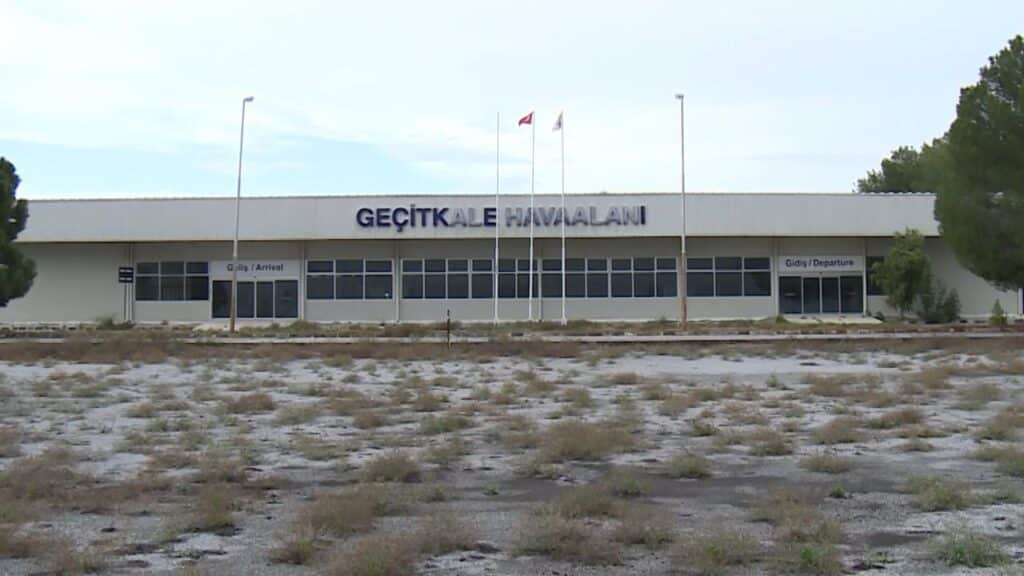
Gecitkale (Lefkoniko) airport

Opposition party says not given adequate information before a vote on airport’s contested future

The protocol between the north Cyprus and Turkey regarding the handing over of Lefkoniko airport to the Turkish army is being kept secret on the grounds that it constitutes classified military information. The protocol, backed unexpectedly also by the main opposition Republican Turkish Party CTP was unanimously approved by the Turkish Cypriot assembly in January.

The protocol to “allocate the Gecitkale (Lefkoniko) airport and its right of use to the Commandership of the Turkish Cypriot Peace Forces” is not published on any official website in the north or Turkey and attempts by the Cyprus Mail to obtain or see it were rejected as it is “classified and not public.” The Turkish Cypriot Peace Forces are under the direct control of the Turkish Armed Forces.

Before the unanimous vote at the assembly, which was broadcast live, the protocol’s aim was read out, which is “to improve the friendly and brotherly relations between the two countries and the military training and cooperation between the Armed Forces of the two countries.” The content of the protocol was withheld with the justification that it “includes many technical details.”

CTP has previously repeatedly objected to the use of Lefkoniko by the Turkish military as a landing airport and deployment hub for unmanned aircraft.

In a baffling address ahead of the vote, CTP head Tufan Erhurman said his party “will support the protocol” because Lefkoniko “will not become a military base” or “host warplanes.”

Minutes after the unanimous vote however, a triumphant Turkish media announced Lefkoniko as “Turkey’s first military base in the Eastern Mediterranean.”

Turkish state television TRT hailed the vote as a “historic step” that formalised “Gecitkale as an official base for Turkish Unmanned Aerial Vehicles (UAV) and Unmanned Combat Aerial Vehicles (UCAV).”

The same morning, Turkish Cypriot leader Ersin Tatar appeared live on a private Turkish television channel announcing, “Turkey now has a UAV and UCAV base in the TRNC.”

Amid the celebratory reports in the Turkish media and lack of transparency on the contents of the protocol, many found Erhurman’s justification far from convincing.

“Erhurman’s explanation… is unfortunate and serves nothing other than ridiculing our intelligence,” Fikri Marasali from the Turkish Cypriot Sol Hareket (Left Movement) said.

Journalist Ulas Baris also reacted on social media: “Gecitkale is already a military base. Erhurman either thinks we are stupid or he is joking… There is no other explanation.”

In fact, ten days prior to the unanimous vote in the assembly, CTP deputies Ongun Talat and Urun Solyali, who were members of the legal, political and foreign affairs sub-committee of the assembly, had voted against the protocol. They were outnumbered by the positive votes from the representatives of the ruling coalition and the protocol was referred to the assembly.

In an attempt to explain the contradiction, during his address Erhurman said Talat and Solyali rejected the protocol at sub-committee level because “they were not given adequate information” regarding its substance.

“We were put in a position where we had to contact the competent authorities ourselves,” Erhurman said. He added that Lefkoniko would be turned into an alternative airport without further land appropriations to be used in case Ercan/Tymbou is in any way disabled; it would not be a military base or a sovereign military base; that it would be used for air sports; and that civil aviation would remain in control.

Admitting that he had not seen the text of the protocol, Erhurman said: “The information we were able to obtain regarding the protocol is… within the parameters I have just mentioned… We reckon that we have obtained adequate information regarding the issue. Therefore, it is important to note that our positive vote is with these reservations and conditions. If there is any development outside these parameters, this would not be something we approve.”

The Cyprus Mail understands that the information was obtained by Erhurman in a private meeting with a high-ranking Turkish military official. It also anonymously confirmed that the deputies did not see the text of the protocol before the unanimous vote.

Turkish Cypriot Bagimsizlik Yolu (Path for Independence) questioned the basis of the statement that Lefkoniko airport will not become a military base.

“Who assured Mr Erhurman that the Gecitkale airport would not be used as a base for UAVs and UCAVs and that warplanes will not be deployed there,” it asked in a written statement. “Was this assurance verbal or written and documented? Does Mr Erhurman, as a legal expert, know that assurances are not binding unless they are written?

At least three CTP deputies walked out of the assembly just before voting began in an apparent protest against the party’s position.

In fact, plans to turn Lefkoniko into a permanent military base for Turkish UAVs and UCAVs were first voiced in 2021 by Turkish President Recep Tayyip Erdogan. “We have to be strong in case of any attacks in the region,” he had said. “And to be strong, we have to be present in the sky, on the land and in the seas.”

In 2023, the Turkish Cypriot ruling coalition gave authority to the ‘ministry’ responsible for transportation to prepare and sign the now-secret protocol with Ankara giving the right of use of Lefkoniko to the Turkish army. Erhan Arikli, who was then and still is responsible for the north’s transport dossier had hailed the decision on Turkish state television TRT: “Gecitkale airport will become a military base. And I will put the most honourable signature on it.”

Lefkoniko airport was first used for military purposes as a landing and stationing airport by Turkish UCAVs in 2019. The UCAVs were sent in response to oil and gas exploration activities by international energy companies licenced by the Cyprus government.

According to Turkish media reports, Turkey has been modernising the Lefkoniko airport since 2019, upgrading its infrastructure, building repair and maintenance stations, arsenals and storage for weapons systems. Military experts are quoted as saying that Lefkoniko airport was built in line with Nato standards and with a refurbishment it can in a short time become a base where F-16s can be deployed.

An intelligence report obtained by the Associated Press in 2021 indicated that Lefkoniko was receiving the upgrade for a planned deployment of additional drones, surveillance aircraft, training planes and advanced fighter jets.

North’s education sector riddled with corruption

February 18, 2024

University after university accused of issuing fake degrees, misconduct and embezzlement

A new fake diplomas and fraud scandal at a university in the northern part of Cyprus has reignited the debate on widespread corruption in the Turkish Cypriot higher education sector.

Three officials of Kibris Saglik ve Toplum Bilimleri Universitesi KSTU (Cyprus Health and Social Sciences University) and a senior civil servant were arrested last week after the owners of the university went to police following an internal audit that revealed embezzlement and fraud through fake student registrations and fake diplomas. The university is owned by Turkish citizen Levent Uysal, who is a member of parliament in the Turkish Grand National Assembly from the National Movement Party MHP.

The university’s secretary-general and director Serdal Gunduz, vice-rector and lecturer Serdal Isiktas, and the head of the international students office Amir Shakira are being charged with larceny, forgery of documents and circulation of forged documents. Celebi Ilik, the recently resigned head of the Turkish Cypriot registrar of cooperative companies and former undersecretary of the ministry responsible for labour and social security, has a fake graduate and a post-graduate diploma from the university. He has been charged with forgery of documents, circulation of forged documents and eliciting funds through fraud. Ilik presented his fake diplomas to get promotions and pay rise in civil service. He resigned from his position on Thursday.

Ilik and Isiktas were released on bail while Gunduz and Shakira remained under arrest.

KSTU, in an official statement following the arrests, said the fake diplomas are just the tip of a huge iceberg of misconduct, embezzlement, fraud and forgery at the university involving tens of millions of dollars. “The university will support the police investigation until all the crimes have been established,” the statement said.

On the other hand, Turkish daily Birgun alleged on Thursday that the university’s owner Uysal himself attempted to get a €45 million loan from Swiss IntaCapital bank with fake documents in 2022 but escaped judicial proceedings when he got elected to parliament in May 2023.

In a related development over the past week, a document revealed by the former Turkish Cypriot chief negotiator and head of People’s Party HP Kudret Ozersay allegedly showed that another university, Dunya Baris Universitesi (World Peace University) owned by Altinbas Holding is operating illegally. The document written by the north’s chief public prosecutor’s office stated that as a result of the university’s lack of permission to operate, all diplomas obtained by students at the university would be deemed invalid and unrecognised. The Holding’s executive Vakkas Altinbas, along with members of his family and associates, are separately being investigated over irregularities concerning a real estate purchase in Kyrenia.

Higher education sector

The higher education sector in the north, which is one of the main engines of the Turkish Cypriot economy, has grown exponentially in the last two decades as the focus has been on opening as many universities and enrolling as many students as possible. There are 23 universities some of which are owned by big Turkish businessmen who, in some cases, also own casinos, that host almost 110,000 students on paper. Close to half of the students are from countries in the Arabian peninsula, Africa, Middle East and Far East.

The aim of making profits rather than offering education, paired with the ease with which student visas are issued, the inadequate legal framework and the general lack of controls have created a sector rife with corruption.

In October, rector Oytun Sozudogru and student affairs staffer Zihni Ozturk of Ada Kent Universitesi (University of City Island), were arrested for stealing tuition fees worth more than 12 million TL (about €363 thousand). They pleaded guilty. The university is owned by Talip Emiroglu, known to be a close friend of Turkish President Recep Tayyip Erdogan.

“The unsupervised higher education sector handed over to bosses…is faced with crisis after crisis,” said Burak Mavis, secretary general of the Cyprus Turkish Teachers Trade Union KTOS. “The problem is the mentality that sees education as a commodity and and the students as clients.”

Human trafficking and smuggling

Corruption is not the only problem. Easy student visas and lack of controls over whether enrolled students are indeed going to school have turned universities into a backdoor to enter the county. Many of these universities are being accused of being a vehicle for human trafficking and smuggling.

According to figures from the education ministry, at least 20 per cent of the enrolled students are “passive”, meaning they have entered the country on a student visa, but are not attending any classes. Many of them are believed to be in the hands of human traffickers and human smugglers.

According to the US State Department’s Trafficking in Persons Report in 2023, in many cases, agents working with universities falsely promise students low tuition fees, accommodation and access to good jobs in an EU member state. Once in the north, they end up being exploited as cheap labour, or forced into prostitution or drug trafficking.

Human smugglers exploit the ungoverned higher education sector to offer young people a path to the Republic of Cyprus and therefore Europe through the island’s green line. United Nations High Commissioner for Refugees (UNHCR) communications officer Emilia Strovolidou recently told the Sunday Mail that for years the vast majority of the asylum seekers in the Republic of Cyprus were arriving via the north. She explained that as of 2020, increased numbers of refugees and migrants from Africa and Asia arrive by air in the north on student visas. In recent months, however, the Cyprus interior ministry said that arrivals via the green line have fallen sharply.

Turkish Cypriot police often hold up foreigners on student visas as they attempt to illegally cross the green line. The two Cameroonian suspects of a horrific murder of the 32-year-old Turkish Cypriot Ayca Alav two months ago were also in the north as students and fled to the Republic of Cyprus shortly after the murder.

Yodak

The higher education watchdog Yodak (Higher Education Planning, Audit, Accrediation, Coordination Board) in the north is the entity responsible for determining the minimum conditions, supervising the quality of education of higher education institutions and taking necessary measures in case of noncompliance. However, Yodak’s chairman Turgay Avci himself is under investigation on allegations that his diploma is fake. During the latest hearing in December, Avci failed to present his diploma in court.

“Does it not bother you to be living in such shoddiness; such a country of corruption, fraud, conspriacy, robbery and fiascos?” journalist Ali Baturay exclaimed in his column in bagimsiz.com as he commented on the developments. “Aren’t you uncomfortable in this unrecognised statelet so rife with decay and depravation?”

https://cyprus-mail.com/2024/02/18/norths-education-sector-riddled-with-corruption/

The Turkish Cypriots fighting for citizenship

February 4, 2024


Without a recognised nationality all her life, one woman welcomes the government’s decision to re-evaluate citizenship

“I’ve been alive for 21 years, but I actually don’t exist… Nobody knows of my presence. Nobody acknowledges me…” wrote Turkish Cypriot Sude Dogan on her social media page two years ago.

She was speaking about her feelings as one of the thousands of Turkish Cypriots, who are denied Cypriot citizenship because they are children of mixed marriages between a Cypriot and a Turkish parent. Since then, she has been tirelessly campaigning for the citizenship rights of children like herself.

Two years later, today, Sude is under a ferocious attack by Turkish nationalists for saying she “feels European” but is “unable to live her life as a European because of Turkey’s invasion in the northern part of the island”.

The attacks came after an excerpt of an interview she gave to France 24 ENTR channel eight months ago was dubbed and published on social media by a Turkish outlet earlier this week. It was viewed by almost 11 million users before it was removed for copyright reasons.

“You are a Greek bastard,” says one of the thousands of comments under the post with the interview excerpt. “Ungrateful”, “a traitor”, and “British seed” are other names Sude is called.

Despite all the personal attacks, she is most hurt by comments that refer to Cyprus as the territory of the Republic of Turkey and attest that Turkish Cypriots do not have a say in Cyprus.

“For them, the land that I was born and raised in, and live on, is just a commodity… Cyprus, for them is just a military base. And I should not be able to determine its fate or future. They don’t value Cyprus and they don’t respect the love we have for it,” Sude tells the Cyprus Mail.

Sude is the daughter of a Turkish Cypriot mother and a father born in Cyprus to a Turkish mother, who came to Cyprus in 1975 and married a Turkish Cypriot. Because of her Turkish grandmother, Sude has not been able to get Cypriot citizenship. Her parents divorced when she was a baby. Her mother has another child from her second marriage to a Turkish Cypriot.

“One time my mother, my stepfather and my stepsibling went abroad from Larnaca [airport],” says Sude. “I stayed home. I felt awful… I’ve felt awful for years. I’ve felt a huge emptiness inside me. I’ve never known where I belong.”

In the Republic of Cyprus, legally, any child of at least one Cypriot parent has the right to Cyprus citizenship. However, a provision later added to the law has given the discretion to the cabinet in cases where either of the parents entered the island from the ports and airports in the northern part of Cyprus, or the residence of any of the parents is in the north. This has left an estimated 10,000 Turkish Cypriot children without rights both as Cypriot and EU citizens. They face significant restrictions in their daily lives with barriers to travel, work and study abroad. Many – like Sude – are at risk of statelessness if they cannot acquire the Turkish parent’s nationality for any reason because the Turkish Cypriot nationality does not constitute a nationality under international law.

Towards the end of high school, Sude realised that even though she was a thriving student, she did not have the same opportunities as her friends to study abroad.

“They were all EU citizens and could go abroad for university for very affordable fees,” she says. “But my family could not afford the fees for international students in the EU.”

Sude ended up going to Turkey to study medicine. She was an international student there too since she never got the Turkish citizenship through her father’s side.

Asked why she is not a Turkish citizen, Sude says she was hesitant to apply because of Ankara’s treatment of the Turkish Cypriot opposition.

“I have always been a peace activist,” she explains. “I was a little girl when I attended my first bicommunal children’s camp. I was scared of what this would mean for me if I attempted to get Turkish citizenship. In Turkey, it is enough to say ‘I want peace in Cyprus’ to be blacklisted. I witnessed for years that Turkish Cypriot intellectuals and progressive people were banned from entering Turkey.”

At least 12 Turkish Cypriot activists, unionists, intellectuals and journalists have been denied entry to Turkey in recent years on the grounds that they pose a threat to Turkey’s “national security”. Many face trials in absentia in Turkey.

As she became increasingly visible after establishing the Movement for the Resolution of Mixed Marriage Problem (KESCH), studying in Turkey became more stressful and Sude transferred to the University of Nicosia in Cyprus in September last year.

“I am now back in my country, but again as an international student,” she remarks.

Sude is less scared of her safety than getting completely physically confined to Cyprus as a result of the ongoing attacks.

“If I am banned from entering Turkey, this means I can never go out of Cyprus ever again,” she says, since she can currently only travel to Turkey. “Is this incident going to imprison me here? This scares me a lot because I am still in university. I dream of going abroad for further studies and coming back to Cyprus to do much bigger things for all Cypriots. But I don’t know if I will be able to do this after all that’s happening.”

Sude wants to study law after graduating from medical school.

Earlier this week, the government of Cyprus announced a series of unilateral measures for Turkish Cypriots, which includes the intention to start evaluating the suspended citizenship applications of Turkish Cypriot children of mixed marriages.

Sude doesn’t think that it’s a coincidence that the attacks against her came just after the announcement.

“I would like to thank,” the Republic of Cyprus, she says. “This is a small step, but definitely a step in the right direction. This problem cannot be solved overnight. It will have to be solved in stages. They took the first step. This means they heard our voice, and they value it.”

Last week, the European parliament’s petitions committee, deliberating on the citizenship rights of children born of mixed marriages, resolved to keep the petition active and decided to reach out to the Cypriot government with a formal request to clarify the intended measures for addressing the issue.

“I am a foreigner in Turkey. I am a foreigner in the Republic of Cyprus,” concludes Sude. “Where do I belong? This emotional turmoil led me to undertake the struggle for children of mixed marriages. And I will continue until it is solved. The Turkish Cypriots had their hopes shattered too many times. I do not want to give up and be another reason why their hopes are shattered one more time.”

https://cyprus-mail.com/2024/02/04/the-turkish-cypriots-fighting-for-citizenship/

Cyprus hits back at ‘skyscrapers on stolen lands’

 January 21, 2024


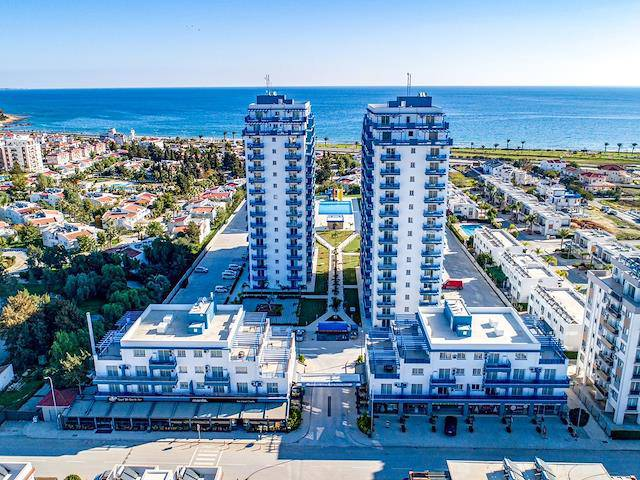
Ad on a real estate website for flats in Trikomo

Arrest of Turkish Cypriot lawyer shakes up sales of Greek Cypriot properties in north

The arrest of a Turkish Cypriot lawyer in Italy over exploitation of dispossessed Greek Cypriot property in the northern part of Cyprus has sent a shockwave through the society.

There is widespread panic that the development will affect the locomotive property sector as investors will likely no longer feel that the north is a safe place to invest, as well as threaten other individuals – especially investors, lawyers, contractors, developers and realtors involved in the sale or purchase of Greek Cypriot properties.

“New Threat for the Real Estate Sector,” “Crisis Around the Corner,” “This Could Spell the End for the Sector,” “This Will Cost Us Dearly,” “Investors Not Safe,” were some of the newspaper headlines following the arrest early January.

Legal counsel Akan Kursat was apprehended in Italy based on a 2007 European arrest warrant issued by the Republic of Cyprus for fraud and exploitation of properties without approval of their rightful owner when he was legal counsel to development company AGA Development owned by British con man Gary Robb. Kursat, who remains under arrest, has objected to the Republic of Cyprus’ request for his extradition. The court will convene on February 6 to assess what happens next.

It is the first time a Turkish Cypriot bearing Cypriot citizenship will be tried for exploitation of Greek Cypriot properties in the north. Kursat is married to deputy speaker of the Turkish Cypriot assembly Fazilet Ozdenefe of the left-wing Republican Turkish Party CTP.

There are reports that at least four other lawyers have outstanding arrest warrants. There also are unconfirmed reports of a file being prepared by the Republic of Cyprus with complaints from Greek Cypriots over developments on their properties in the north. Unconfirmed posts on social media by a user claiming to be close to President Nikos Christodoulides about arrest warrants having been issued against 95 people in the north is feeding fuel to the fire.


Property for sale in Kyrenia

“Now everyone…is on a knife’s edge,” wrote prominent journalist Cenk Mutluyakali. “Everyone will be worried when going to Europe or crossing to the south. We are trapped.”

“The sleeping giant has woken up,” wrote another journalist Rasih Resat. “Nobody is safe.”

‘Ruthless’ sales

Observers agree that the move to try a Turkish Cypriot lawyer for exploitation of Greek Cypriot property is more of an attempt by the Republic of Cyprus to avert the “ruthless” property sales in the north than anything else.

Back in December, Greek Cypriot officials had indicated that legal measures were being examined to deal with the sale of Greek Cypriot properties in the north and explained these will act as deterrents to the “usurpation”.

While legal expert Latif Aran acknowledges that more arrest warrants could be issued, he expresses doubt these will be against Turkish Cypriot dispossessed owners, who are currently using Greek Cypriot properties.

“But we have to acknowledge that the property sales have long become ruthless,” he adds. “The north has turned into a concrete jungle.”

Akan Kursat

Senior researcher Mete Hatay of PRIO Cyprus Centre, who has done extensive studies on the property issue, underlines that there are problems with the property regime in the Republic of Cyprus too, since Turkish Cypriots are not allowed to return to or get compensated for the properties they left in the south before a comprehensive solution to the Cyprus problem is found.

They are not treating the dispossessed Turkish Cypriots justly either. “Therefore, they will not go after a Turkish Cypriot displaced person,” says Hatay. “They are after the shameless exploitation of properties in the north… We have greedily erected buildings on every plot of land with undue haste. We have created a huge sector on a slippery ground with a looter spirit.”

“Greek Cypriot properties are being purchased, sold, marketed in an uncontrolled, vulgar, greedy way,” says journalist Mutluyakali.

Sixty-five to 80 per cent – depending on which side you ask – of the privately owned land in the northern part of Cyprus belongs to Greek Cypriots. It is estimated that Turkish Cypriots left behind some 400 thousand donums of land in the south while Greek Cypriots left behind some 1.5 million donums in the north in 1974.

Boom

There has been a boom in the property sector in the north as sales especially to foreigners skyrocketed in recent years.

Many of the properties are being bought by lawyers on behalf of foreigners or by Turkish Cypriot companies with “silent foreign partners”. These sales are not registered in the official figures. Turkish Cypriot officials have themselves suggested that many properties being sold are not controlled or checked.

Economist Mertkan Hamit estimates, looking at the construction projects and prices, that the property sales roughly generate an annual one billion dollars. This is almost one third of the gross domestic product of the northern part of Cyprus.

Impact

President Hasan Sungur of the Cyprus Turkish Realtors Association scrambled to calm the fears in statements to the daily Kibris earlier this week. He downplayed the arrest of the lawyer and accused the media of creating panic among investors.

“The case of Akan Kursat will not affect the foreign investors,” Sungur said. “What really will affect them are the media reports… We are shooting ourselves in the foot… There are no risks, no danger whatsoever,” in investing in property in the north. “It is wrong to report that things will escalate. Let’s not kill the sector by such media reports. Let’s put an end to this panic.”


Hasan Sungur

However, Cafer Gurcafer, president of the Contractors Association, in statements to the same daily, did acknowledge that European investors may be discouraged.

The development seems to have already affected the property sector. Daily Yeni Bakis reported this week that the value of Turkish Cypriot-owned properties in the north has increased 100 per cent as investors are shying away from buying Greek Cypriot-owned properties following the arrest.

Questioning the property regime

The arrest led to the questioning of the property regime in the northern part of Cyprus, whereby Greek Cypriot properties are being exploited with impunity.

Turkish Cypriot authorities not only gave right of usage but in time also issued ‘title deeds’ to displaced Turkish Cypriots as well as any other users of Greek Cypriot properties. Nepotism, favouritism and political interests played a role in the way Greek Cypriot properties were distributed. The number of Greek Cypriot properties developed and/or sold under a new “ownership” multiplied creating a problematic situation in terms of international law. In various rulings, the European Court of Human Rights has recognised the displaced Greek Cypriots as the legal owners of the properties they left in the north and said that their property rights are being violated.

The Immovable Property Commission, established in the 2000s to resolve property issues locally in an attempt to bring the property regime more in line with international law, hit a financial dead end.

Many editorials and columns appeared over the past week in Turkish Cypriot dailies of a wide political spectrum, concluding that the property regime, created by not just by right-wing but also left-wing parties over the years, has hit a wall.

“This is the consequence of this whole system,” journalist Ulas Baris wrote. “The system, which has enabled looting… issuing title deeds for Greek Cypriot properties for years.”

“Skyscrapers rose on ‘stolen’ lands,” wrote journalist Hasan Kahvecioglu. “Did we expect Greek Cypriots to just watch this overt ‘looting’, which was not prevented but, on the contrary, encouraged?”

“This is the crash of the false, fake, makeshift order they created,” said journalist Mutluyakali. “You cannot create a state on somebody else’s land! … They will come after you… There is no more peace of mind in this fake heaven.”

Saturday, 6 January 2024

Crime heaven: corruption ‘worsening’ in north

By Esra Aygin 

1 January 2024 


Former Turkish vice president Fuat Oktay with Turkish Cypriot leader Ersin Tatar


‘Deterioration in terms of corruption has been evident in our reports’

Multiple bribery allegations surfacing over the past week involving senior Turkish and Turkish Cypriot officials have shaken the northern part of Cyprus and raised important concerns about the prevalence of corruption.

The first, which may indicate connections between politicians and mafia, involves former Turkish Vice President Fuat Oktay. Voice recordings published by Turkish investigative journalist in exile Cevheri Guven suggest that Oktay received $50 million (about €45 million) in bribes from the wife of gunned-down Turkish Cypriot mafia boss Halil Falyali.

According to the audio published on YouTube, Turkish Cypriot leader Ersin Tatar acted as a mediator along with a Turkish journalist Alihan Pehlivan in organising and coordinating the bribery.

The voice in the damning audio allegedly belongs to Falyali’s former accountant and close associate Cemil Onal, who is heard saying the bribe was paid “in exchange for not confiscating the Falyali family’s assets in Turkey and to end all investigations against them.”

Onal was recently arrested in the Netherlands in connection with Falyali’s murder and is currently in a Dutch prison, where he allegedly made the recordings. Guven claims that Oktay was replaced as Turkish vice president because word about the bribery got out.

Oktay, who at the time was also the Turkish minister responsible for Cyprus affairs, Tatar and Pehlivan have denied the allegations while Falyali’s wife Ozge has remained silent.

Turkish Cypriots leader Ersin Tatar


Hotelier, betting and casino tycoon Falyali was gunned down in February 2022 in a gangland-style execution involving Kalashnikovs and A47s while being driven home. His funeral was attended by high-ranking Turkish Cypriot politicians including Tatar.

Falyali, who was known as the main sponsor of the campaigns of Tatar’s National Unity Party UBP, faced criminal charges in the United States for money laundering. A 2015 US court affidavit said he rans“a large-scale drug and weapons trafficking organisation” in northern Cyprus and was “known to be associated with Turkish organised crime”.

In the same YouTube broadcast, Guven said Turkey has turned the northern part of Cyprus into a “crime heaven” and therefore, does not want a solution on the island or international recognition of the breakaway Turkish Cypriot state.

He also said this is why Oktay and other Turkish politicians intervened in the elections for the Turkish Cypriot leader in the north in 2020 in favour of Tatar.

“They clambered on [north] Cyprus, they literally staged a coup d’etat in the elections,” he asserted. “They got the man they wanted elected so that this… network of crime becomes stronger in [north] Cyprus; so that [north] Cyprus turns into a crime heaven for them; and so that they can fill their pockets… It has come to such a point that they don’t want [north] Cyprus to be recognised by the world or a solution there. They have themselves a grey area that is not recognised by anyone… and turned [it] into a crime heaven.”

Turkey’s interference in the 2020 elections was documented in an investigative report, which revealed shocking details of threats, pressures and blackmail against the incumbent leader Mustafa Akinci, as well as other candidates and journalists.

In a further bribery revelation in less than a week, a Turkish Cypriot businessman alleged on a live TV show that officials of the ruling right-wing coalition demanded a bribe in exchange for granting him a loan from the Development Bank.

Businessman Redif Nurel said Fikri Ataoglu, who is responsible for the tourism dossier in the north, and Hasan Tosunoglu, the then-chairman of the Development Bank demanded a bribe of 2.5 million Turkish Lira (about €77,000).

Nurel said he refused to pay the bribe and therefore never got his loan request approved.

Nurel also said that foreigners can “buy” Turkish Cypriot citizenship for 30,000 GPB (about €35,000).

Ataoglu and Tosunoglu filed a complaint with the police over the allegations.

These revelations “do not surprise me at all,” said Turkish Cypriot academic Sertac Sonan, who, with his colleague Omer Gokcekus, has been conducting annual studies on corruption in the north.

“The deterioration in terms of corruption has been evident in our reports,” Sonan told the Cyprus Mail. And it has got worse in the last three years, he said.

According to Sonan and Gokcekus’ latest study published in March and based on Transparency International’s Corruption Perceptions Index (CPI) methodology, the corruption perception score for the north for 2022, is 27 out of 100 (where zero indicates very high corruption and 100 no corruption). The north’s score was 40 when the academics first conducted the study in 2019.

“I am afraid there is a worsening trend,” added Sonan. These developments “demonstrate that we, as a society, are headed downhill.”

The score of 27 is far below the average score of 43 in 180 countries and places the north in the 140th position on the index along with Kyrgyzstan, Pakistan and Cameroon. The 2022 corruption perception score of Turkey is 36, placing it in 101st position, while that of the Republic of Cyprus is 52, placing it at 51.

According to the 2022 study, 40 per cent of the business executives interviewed resorted to bribery in the past year. Seventy-two per cent of the 350 interviewed said bribery and corruption was ‘very common’. Bribery was found to be most rampant among the ‘prime minister’ and ‘ministers’.

“Turkish Cypriots have gone through bad times but in terms of good governance, I don’t think we have seen worse,” Sonan said.

He added that the worsening trend over the past years has a lot to do with the current Turkish Cypriot right-wing coalition, which has very close ties with Ankara, seeing themselves as “irreplaceable.”

“They believe they will never be held accountable,” the academic said. “And this makes them more daring in putting their own personal interests in front of those of society.”

https://cyprus-mail.com/2024/01/01/crime-heaven-corruption-worsening-in-north/

Property-owning Jews in north increasingly targeted

By Esra Aygin

17 December 2023


Turkish Foreign Minister Hakan Fidan

‘The opposition to Israel’s actions against Palestinians has turned into an unconscious attack on all Israelis and Jews’

Since the Hamas attack on Israel in early October and Israel’s subsequent bombardment of Gaza, the Jews living in the northern part of Cyprus are increasingly becoming a target, particularly by nationalist circles.

The aggression often involves the disclosure of identities and in some cases photographs of Jews living among the Turkish Cypriot community on social media. The posts are widely circulated.

Most recently, a group led by Yasemi Ozturk, a member of the Turkish Cypriot assembly from the majority coalition partner right-wing National Unity Party (UBP), staged a demonstration in front of a Jewish centre, Chabad, in Kyrenia, calling it “a concrete step towards the building of a Zionist structure in [the northern part of] Cyprus”. Back in November, the Chabad building was sealed off by local authorities pressured by the same nationalist group on the grounds that it didn’t have the necessary documentation.

Late last month, five business organisations including the Cyprus Turkish Businesspeople Association, in a statement that condemned Israel’s attack on Gaza and called for a ceasefire, said: “The Jewish colony settled in our country should be controlled and the necessary measures should be taken regarding their residency here.”

“There is a very dangerous and concerning trend,” says Middle East expert professor Nur Koprulu. “Incriminating individual Jews or the whole Jewish community is antisemitism, hate speech and discrimination… What we cannot tell apart here is the distinction between the Jewish community and the Israeli state… And the stereotypes about Jews that are still very present in the society, are revived with negative developments such as war.”

She underlines that the trauma of war and killing of innocent people on both sides is also playing a big role worldwide which manifests itself at times as antisemitism and at times as Islamophobia.

Image from one of the newspapers accused of antisemitism


Property ownership

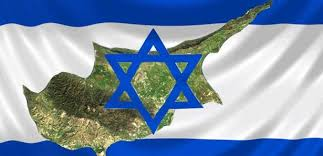
The aggression against Jews mainly focuses on their land and property ownership amid claims that they want to establish an Israeli state in northern Cyprus as part of the “Great Israel Project”.

Last month, a Turkish Cypriot nationalist journalist disclosed on social media the names of hundreds of real estate development companies owned by Jews along with their identities as well as their Turkish Cypriot partners under the heading “The Zionists among us.” The Jewish people identified in the post – also widely circulated in Turkey – were mostly the citizens of the unrecognised Turkish Cypriot state, which gives them the right to reside, buy property, and work freely in the north.

The antisemitic sentiment was exacerbated by a number of mainland Turkish media outlets that picked up on the post and did their own reports on the issue.

Sabah, which is among one of the biggest dailies in Turkey, claimed that there are 35,000 Jews living in northern Cyprus, who have bought 25,000 donums of land. The daily added that there are some 2,000 construction companies owned by Jews, which are building properties and selling only to Jews in the north.

“Israel is conquering TRNC [Turkish Republic of Northern Cyprus],” said Sabah.

Another Turkish daily, the Islamist Milli Gazete, claimed that “Zionists are amassing land in Cyprus, especially in areas that face Tel Aviv” and said an “unarmed invasion” is taking place.

International Relations associate professor Yonca Ozdemir warns against this mentality. “If there is any concern about the environmental, social or any other consequence of land sales then they should be looking at all sales,” she says. “It shouldn’t matter who is buying the land. Otherwise, this is antisemitism.”

“Who will be responsible of the horrific consequences of making targets of Jews, who have been living and investing in the northern part of Cyprus for decades?” asked journalist Pinar Barut at the online Ozgur Gazete newspaper. “The opposition to Israel’s actions against Palestinians has turned into an unconscious attack to all Israelis and Jews… Does this not bother the government and the law enforcement?”

The commotion about Jewish land ownership led a right-wing Turkish politician to ask Turkish Foreign Minister Hakan Fidan about “allegations that tens of thousands of donums of land in the north had been purchased by middlemen connected to Israel” in the Turkish parliament.

Fidan downplayed the Israeli property ownership but said that the land purchases by foreigners are being monitored since he was the chief of the Turkish intelligence agency MIT.

“We are conveying our concerns to the [Turkish] Cypriot authorities,” Fidan said.

Soon after Fidan’s statements, the department responsible for the interior affairs announced last week that it is preparing legal amendments that will bring limitations on property sales to foreigners.

“It is important to protect the land in the TRNC and not give it over to foreigners,” said Fikri Ataoglu, who is responsible for the tourism dossier in the north. “I don’t want TRNC land to be sold to anyone other than Turks.”

The amendments will not affect foreigners, who have been granted Turkish Cypriot citizenship.

“The territories of TRNC…were taken by guns,” wrote journalist Serhat Incirli in the daily Yeniduzen, after the announcement. “And now foreigners are buying these lands. The fuss is especially about some Israeli individuals or companies… Is there a problem if the looted territories are bought by Turkish companies rather than Israeli ones? No… We are being racist… Did we not steal the land over which we are fighting, being antisemitic, disgracing ourselves? The essence of the issue is very simple: ‘Fascists Turks cannot stomach that the stolen land is now being sold to some Israeli companies’.”

There has been a sharp increase in construction and property sales in northern Cyprus in recent years. Some 4,600 foreigners were given permission to buy properties in the first ten months of 2023. However, far more properties are being bought in the north by foreigners who have been granted Turkish Cypriot citizenships; by lawyers on behalf of foreigners; or Turkish Cypriot companies with “silent foreign partners” to avoid limitations imposed on foreigners. Official records do not show such transactions and estimates are that about 50 per cent of transactions are not recorded.

Is the north harbouring terrorism?

Meanwhile, Last Sunday, Israel said that it was “troubled” by use of the northern part of Cyprus “both for terrorism objectives and as an operational and transit area”. The statement described the north “as an area of activity and transit to attack Israeli and Jewish targets. [This] constitutes a disturbing issue.”

The statement came after Israel helped Republic of Cyprus foil an Iranian-ordered attack against Israelis and Jews on the island and captured two Iranian nationals. They were believed to have come to the Republic from the north.

Turkish Cypriot officials were quick to brush off Israel’s statement, with the speaker of the assembly Zorlu Tore labelling it as an “attempt to conceal the genocide it is committing in Palestine”.


https://cyprus-mail.com/2023/12/17/property-owning-jews-in-north-increasingly-targeted/

Tuesday, 5 December 2023

Ever-widening divisions between rich and poor in north

By Esra Aygin

December 3, 2023

Many families are surviving on less than the hunger threshold of €557 a month


The price of bread was recently increased by a further 20 per cent

A growing number of Turkish Cypriots live below the poverty threshold, while the income inequality between the richest and poorest segments of the society reaches unprecedented levels, a recent survey has revealed.

According to the 2021-2022 household budget survey conducted by the statistics institution in the northern part of Cyprus, almost 15 per cent of the population are currently living under the poverty threshold.

For comparison purposes, calculated with the methodology used in the European Union member states, the ratio increases to 22.8 per cent according to economists. This places the north among Romania and Bulgaria – the two EU countries with the largest percentage of people living below the poverty threshold.

The survey also shows that while poverty is growing, the high-income segment of the society is receiving a much larger percentage of the population’s total income. The Gini coefficient, which shows the degree of inequality in the distribution of income, is 0.37. According to economists, a Gini coefficient greater than 0.4 indicates that there is a big income gap in the society, which often leads to social and political instability or tension.

The survey results “show a huge inequality in income distribution, where the Turkish Cypriot middle class is fading into poverty, while the rich are getting richer,” economist Mustafa Besim explains to the Cyprus Mail. “The distortion in the distribution of income in the society has never been this bad.”

Besim highlights that GDP per capita has remained almost the same in the last 15 years – around 14,000 dollars – while the equality in distribution of income has deteriorated. The Gini coefficient in the previous survey conducted in 2015 was 0.33.

Hunger threshold

Making the situation grimmer, a calculation by the Cyprus Turkish Civil Servants Union KTAMS has revealed that a family of four earning the minimum wage is not only poor, but is in fact living below the hunger threshold.

According to KTAMS’ calculations, the hunger threshold – the amount needed to maintain a healthy, balanced and adequate diet – for a family of four as of October was 17,074 Turkish lira (about €557). The minimum wage is 15,750 Turkish lira (about €501).

“Those earning the minimum wage are left to starve,” Ktams head Guven Bengihan stated when announcing the findings. “People with minimum wage do not have the money they need to get enough food for their families.”

“I earn the minimum wage and have three children, who go to school,” Hamit Manga told the daily Yeniduzen a few weeks ago in a street interview. “I can only make ends meet because I do an extra job… I am worried about the future of my children. It looks like the only thing I will leave them will be debt.”

“It’s impossible to save money. We are only saving the day,” stated Mustafa Altinkalb in the same interview. “Many people are selling whatever they have just to survive. The rich have become richer, and the poor have hit rock bottom.”

“There is no middle class anymore,” said Mehmet Kadiri. “The rich lead super lives and the poor are struggling at the bottom… We are like a hopeless patient living on life support.”

Inflation

One of the main reasons that distorted the distribution of income to this extent is inflation, according to economist Besim. Turkish Cypriots have been going through one of the worst economic crises in their history since 2021 as the Turkish lira continuously declined in value against most major global currencies. Just this year, the Turkish lira lost 40 per cent of its value. This has led to soaring prices in the northern part of Cyprus, where the economy is dependent on imports.

According to the Statistical Institute, the annual inflation was 78.6 per cent in October. The monthly inflation was 1.9 per cent, while the monthly food inflation was recorded as 3.3 per cent. Earlier this week, the price of bread increased a further 20 per cent.

Although the official currency in the north is the Turkish lira and people’s salaries are also paid in lira, many expenses like rent and school fees are in foreign currencies, which exacerbates the situation. As Turkish Cypriots, especially those on low or fixed incomes, have experienced a huge drop in their purchasing power leading to a decline in their living standards, they have also seen their debts cascade as most borrowing in the north is done in foreign currencies.

Construction boom


Tens of thousands of houses are being built and sold mostly to foreigners in places like Trikomo

However, parallel to the increase in poverty and the income inequality, there is a huge amount of cash flow into some sectors such as construction and real-estate in recent years.

Ten of thousands of houses are being built and sold mostly to foreigners – mainly Russians and Iranians – in areas like Kyrenia and Iskele/Trikomo. Lack of reliable statistics and the overall problem of the unregistered economy makes it impossible to calculate exactly how big the construction and real estate sector is, but economist Merkan Hamit roughly estimates, looking at the construction projects and the prices, that property sales generate an annual 1 billion dollars in the north. This is almost one thirds of the gross domestic product.

It is estimated that the unregistered economy amounts to 80 per cent of the total economic activity.

According to the Chamber of Shopkeepers and Artisans (Ktezo), while small businesses, particularly in the food and beverage sector, are steadily going out of business, brokers, consultants and real estate agents, primarily run by foreign citizens, are taking their place. Data from Ktezo show that half of the small food and beverage businesses opened in recent years have closed down, while almost one third of new workplaces that have opened so far this year are linked to the real estate sector.

“There is a lot of economic activity in certain sectors, but due to a lack of effective public policies from adequate regulations, to controls and taxation policies, the revenue that is generated is not distributed equally to the society,” says Besim. “While certain segments of the society are getting ridiculously rich, others are not able to benefit from this economic activity… There is a very rich group on the one side, and then a very poor group on the other.”

The income inequality and the ensuing shrinking middle class has serious social implications, according to Besim.

“As the middle class becomes poorer, it starts spending its income solely on the basics such as food, health and shelter,” he explains. “The smaller the middle class, the smaller segment of the population spends on education, arts, culture. This completely distorts the social structure of the society as a strong middle class is required for a strong democracy. The lack of a strong middle class means those in power aren’t questioned or criticised. It is easier to govern societies with such a big income inequality. Unfortunately, this is where we are headed.”

https://cyprus-mail.com/2023/12/03/ever-widening-divisions-between-rich-and-poor-in-north/

Stark increase in north’s population

By Esra Aygin

November 5, 2023

Numbers could be up as much as 40 per cent since 2011


Some 60,000 new homes were sold in the last seven years, the majority of which were bought by foreigners

The population of the north may have increased by as much as 40 per cent since the last census in 2011, compared with a ten per cent growth rate in the south of the island, sparking a furious debate on why Turkish Cypriots are being left to ‘guesstimate’ how many of them are left and if they themselves have become a minority.

“We know the population!… There are some numbers that you can talk about and some that you cannot. There are some things that cannot be said,” lashed Unal Ustel, head of the Turkish Cypriot ruling coalition, on live TV recently when asked why there are no plans to do a census in the northern part of Cyprus.

Besides leaving the presenter and viewers speechless, the statement once again ignited the debate about the mystery around the population living in this part of the island.

“What is it that you can’t talk about?” opposition deputy Dogus Derya immediately took the social media. “What are you trying to hide? That we have become a minority in our own country?”

The last census in the north was done in 2011 with unofficial United Nations supervision and found the de jure population to be some 286,000, excluding Turkish military and their families residing in military bases. Although there were widespread reports of undercounting, this is the only figure that the Turkish Cypriot statistics office currently has, to make projections.

Taking the 2011 census as a basis, the office has recently announced a projected population of almost 400,000 as of the end of 2022. This figure was found unrealistic by most including the head of the statistics office Irfan Tansel Demir himself, who acknowledged that the projection has a considerable margin of error because of the time that has passed since the last census in 2011. Demir also raised questions about the accuracy of that census “because many people were not found at home.”

Even with these official numbers, however, the increase in population is stark. The difference between the 2011 census and the 2022 projection points to an almost 40 per cent increase in population in 11 years. The population growth rate in the Republic of Cyprus during the same period was less than 10 per cent.

Senior researcher Mete Hatay from PRIO Cyprus Centre, who has done extensive research on the population in the northern part of Cyprus, says that the projection only takes into account criteria such as fertility and death rates of the community and does not include the vital – and presumably huge – number of those, who are working in the black economy or who have overstayed their visas.

“We know that the population is at least half a million, but we don’t have the necessary details to make a healthy estimate,” says Hatay. He adds that “in any case, at any given moment, Turkish Cypriots are a minority in the northern part of Cyprus.

Turkish Cypriots in every walk of life feel the consequences of the overpopulation. Last month, the Cyprus Turkish Teachers Union (KTOS) official Akgun Kacmaz, talked about the shortness of teaching staff and mentioned that container classrooms had been set up in many public schools to manage the student numbers due to the increasing population.

Izlem Gurcag, who was responsible for the health dossier of the northern part of Cyprus, admitted in August as she was leaving her post that, “Our financial resources are not enough for the population that is cascading every day.”

Hatay says that as well as the size, the composition of the population in the north is also changing rapidly. Whereas until a few years ago the non-Turkish Cypriot population was almost exclusively Turkish, recently there is a tremendous number of people from other countries flowing into the north.

Currently there are some 110,000 foreign university students in over 20 universities in the north – mostly from Africa, Arabian Peninsula, Africa, Middle East, and Far East. They come to the northern part of Cyprus on a student visa, which is very easy to get. For the first time this year, the number of students from these third countries exceeded the number of students from Turkey.

The last couple of years also saw a huge increase in the Russian and Iranian population in the northern part of Cyprus. Russian news agency Itar Tass reported a few months ago that some 50,000 Russians live in the northern part of Cyprus, where Kremlin recently started mobile consular services. According to the official data by the tourism department, only in January-September this year, some 39 thousand Russians and 33 thousand Iranians came to north through the sea and airports.

“We don’t want to know”

Researcher Hatay argues that there is a deliberate political decision not to make any census “because we don’t want to know.”

“First of all, the more ambiguous the population numbers are, the more it can be politicised,” asserts Hatay.  “Everyone benefits from the ambigiouty. Some ask for more money based on inflated numbers, some use the ‘Turkish Cypriots are becoming extinct’ fear to get votes.”

But more importantly, according to Hatay, a census would reveal certain realities on ground, such as the alarming number of people – mostly university students – working in the black economy.

“A huge system of exploitation has been set up through universities,” says Hatay. “There are slave students here.”

The higher education sector, which is one of the main engines of the Turkish Cypriot economy, has grown in an uncontrolled fashion as the policy has been to open as many universities and attract as many foreign students as possible. According to the US State Department’s Trafficking in Persons Report in 2022, in many cases, foreign students are promised low tuition fees, accommodation and access to good jobs. Once in the northern part of Cyprus, they end up being exploited as cheap labour, or forced into prostitution or drug trafficking. Some are smuggled into the Republic of Cyprus.

According to Hatay, not doing a census also serves conveniently to obscure the size of certain groups of people in the country.

These groups do not just consist of Turks anymore – whose increasing presence in the north has always been contentious.

“They especially don’t want to talk about the foreign property owners,” says Hatay.

According to Hatay, some 60,000 new homes were sold in the last seven years, the majority of which were bought by foreigners. The numbers in the official gazette show that the number of foreigners – mostly Russians – investing in property has significantly increased as of November 2022, which coincides with the sanctions on Russian nationals due to the war in Ukraine. Russians can easily buy property in the northern part of Cyprus as banks here are not part of the international Swift system and operate via Ankara, which has not put sanctions on Russia. There currently are a further 15,000-20,000 thousand ongoing construction of homes. According to economist Merkan Hamit, looking at the construction projects and the prices, it can roughly be estimated that the property sales generate an annual 1 billion dollars, which is almost one thirds of the gross domestic product of the northern part of Cyprus.

Turkish Cypriot judiciaries have recently been warning about a risky money circulation in the northern part of Cyprus, whereby large amounts of money are coming in for real estate purchases but then going completely unchecked.

In some cases, these foreign property owners have been revealed as individuals wanted by Interpol. Earlier this week, Russian citizen Vladislav Apakov wanted by Interpol for embezzling large amounts of money, was found to be residing in the north. In June, another Russian national Stanislav Mitrushi wanted by Interpol for money laundering, was arrested in the north. Last year, Australian fugitive Mark Buddle also wanted by Interpol for links to a transnational criminal syndicate was arrested in the north, where he had acquired a sizeable amount of property. The recently published Global Organised Crime Index 2023 states that “In areas not under the effective control of the Republic of Cyprus, there are a number of people wanted by Interpol.”

Considering how important the higher education and real-estate sectors are for the economy of the northern part of Cyprus, this order of exploitation and illicitness needs to continue, and it can only continue if the ambiguity continues.

“The northern part of Cyprus, which has long been isolated from the world, has now integrated with the world through a system of exploitation and illicitness,” concludes Hatay. “And the long-standing controversy and speculation surrounding the population serves to maintain this. For this to continue, we have to not know.”

https://cyprus-mail.com/2023/11/05/stark-increase-in-norths-population/