Showing posts with label Fikri Toros. Show all posts

Monday, 20 May 2024

A ‘love of loneliness’ marks demands for two-state solution in Cyprus

 March 31, 2024


Ozdil Nami

As the United Nations secretary-general’s personal envoy wrestles to break the seven-year standstill in the Cyprus negotiations, the Turkish Cypriot pro-solution camp seems to agree that the new process should have pre-deteremined timeframes and clear consequences of failure if it is to have any chances of success.

The Cyprus peace process has reached the deepest impasse in its history after the latest round of negotiations failed in Crans-Montana in July 2017. Since then, Ankara withdrew its support for continued negotiations on a bicommunal, bizonal federation and the current conservative nationalist Turkish Cypriot leader, elected with the strong backing of Ankara in 2020, wants to record the breakaway state’s ‘sovereign equality’ before participating in any settlement negotiations.

Long-standing federal solution advocates and opinion leaders in the northern part of Cyprus criticise the Turkish and Turkish Cypriot leaderships for this change of course, but warn that without a different methodology introducing significant changes to the negotiating process it would be impossible to reach a federal solution.

Nami

After the experiences of the Annan Plan, the Talat-Christofias negotiations and then the failure at Crans-Montana “all confidence has been lost,” explains former chief negotiator Ozdil Nami, who served under two former Turkish Cypriot leaders Mehmet Ali Talat and Mustafa Akinci.

An adamant supporter of a federal solution, Nami argues that the negotiations should be picked up from where they were left in Crans-Montana in 2017, finalised within a pre-determined timeframe and put to simultaneous referendums in which Greek Cypriots should be asked to choose between a federal solution and a two-state solution, and Turkish Cypriots should be asked to choose between a federal solution and an unrecognised, isolated breakaway state that also stands to lose all advantages it gained for the positive vote it gave in the Annan Plan in 2004.

“There is not a single Greek Cypriot leader anymore, who can convince any Turkish Cypriot or Turkish leader that they mean business,” insists Nami. “Without this setup, the sides, and especially the Turkish side will never have the trust to say its final word or make its final offer.”

This lack of confidence was also mentioned by the International Crisis Group in a recent report, which stated as “a fundamental issue” that now “neither party believes that the other will necessarily negotiate in good faith.”

In January, in response to a tweet by the UN announcing the appointment of Maria Angela Holguin as Secretary-General Antonio Guterres’ personal envoy on Cyprus “to search for common ground on the way forward,” Nami tweeted: “Asking if common ground exists is waste of time, there isn’t [common ground]… In Crans-Montana a solution was on the table, still we failed. Problem is not the content but the process.”

Nami explains that “the main job of the envoy should be to help determine where we should we start, how long should we allow ourselves to negotiate, what happens at the end of that timeframe, what kind of a deadlock resolving mechanism can we create and what happens when we go to referendum and if one side says no.”

He underlines that all these should be negotiatied and agreed on by both sides before any new process begins.


CTP’s Fikri Toros

CTP

The main opposition Republican Turkish Party CTP in a recent letter to Holguin, reiterated its commitment to a federal solution based on political equality in line with the UN Security Council resolutions and parameters, but also stated that any future process should have a timetable “determined with a sense of urgency”, ensure participation of the civil society, and guarantee “that there will be no return to the status quo”.

There must be “a set time frame if not a target date whereby negotiations must be concluded”, explains CTP’s Fikri Toros. “No peace process has reached success without a target date… And there must be a cost attached to a possible reccurencce of yet another failure. Measures must be taken to abandon any likelihood of the continuation of the status quo… There is no such thing as a frozen conflict. As long as it is not solved, it is bound to flare up.”

Toros says the CTP has no concrete proposals on what that ‘cost’ might be, but says it should be negotiated by the sides.

“Leaving the negotiations or rejecting the prospective political agreement must have a ‘cost’ attached to it… Cyprus and its people cannot afford another failure,” he says.

Toros also criticises the Turkish Cypriot and Turkish leaderships for abandoning the goal of a federal solution. He recently likened the new Turkish policy of demanding a two-state solution to the Cyprus problem as a “love of loneliness”.

Tatar after his most recent meeting with Holguin earlier this month reiterated his stance on ‘sovereign equality’ and equal international standing for the Turkish Cypriot side in order to resume talks.

“The demand of ‘sovereign equality’ is not new,” says Nami. “It dates back to Denktash’s confederation proposal in 1998. This is a repackaging of that proposal.”

Ipek Borman

Borman

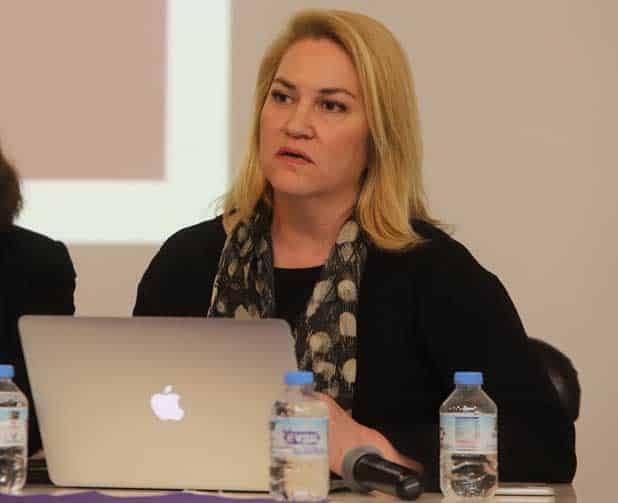
Ipek Borman, who served in the negotiations teams of both Talat and Akinci, agrees that any new negotiations process should be much more results-oriented with benchmarks to keep the sides on track towards a final outcome; include mechanisms to overcome impasses; and bear a clear understanding that there will be no return to the status quo at the end of the process with clearly determined consequences of a failure. She also emphasises the importance of a more participatory process with the participation of civil society, especially women and youth.

She warns however against alienating one another when trying to lay the building blocks of a new process.

“I am not willing to consent to another open-ended process that is at the mercy of the two leaders. That would only lead to fostering disappointments and killing hopes,” says international relations expert Borman. “But if we truly want to achieve a result that will lead us to a common future, then we should be able to convince one another wholeheartedly as Turkish Cypriots and Greek Cypriots to work together towards that goal.”

Saturday, 12 August 2017

Turkish Cypriots optimistic over Enosis hurdle

March 25, 2017

By Esra Aygin
Hopes that negotiations may restart soon have revived among Turkish Cypriots, as a legislative amendment expected to render ineffective an earlier decision to commemorate a 1950 Enosis petition in schools is to be passed.
The amendment introduced by ruling DISY and supported by opposition AKEL is to be voted on in the plenum on March 31. It gives the authority to decide on commemorations to the Education Minister, therefore making it possible for the minister to overturn the Enosis commemoration decision.
“The decision of the Greek Cypriot parliamentary committee is pleasing,” said Baris Burcu, the spokesperson of Turkish Cypriot leader Mustafa Akinci in a written statement. “The vote at the plenum, which will render the Enosis decision ineffective, will open the way for negotiations.”
Burcu added that Akinci is ready to meet with Nicos Anastasiades in a social gathering at the end of March.
The Enosis decision by the Cyprus parliament last month led to a collective backlash among the vast majority of Turkish Cypriots, prompting Mustafa Akinci to leave the negotiation table until the decision is retracted or rendered ineffective.
Turkish Cypriots consider the Enosis aim as the reason behind the inter-communal clashes of 1960s that saw them withdraw from all state organs of the Republic of Cyprus and move into enclaves throughout the island. A Greek-backed coup aimed at Enosis resulted in the Turkish military intervention in July 1974.
“It is with great pleasure that I find out today that DISY’s proposal regarding the 1950 Enosis commemorations at public schools has been approved by the education committee of the Greek Cypriot parliament,” Fikri Toros, President of the Turkish Cypriot Chamber of Commerce, wrote on his Facebook page.
“My hope is that the next necessary steps to render ineffective the commemoration decision will also be taken, so that a climate based on trust is re-established and negotiations continue,” Toros wrote.
“We no longer have the luxury of losing time… The comprehensive solution process, which we hope will continue as soon as possible, can be successful if first of all the two leaders and all the relevant sides show the necessary political will and courage.”
Toros, together with his Greek Cypriot counterpart Phidias Pilidis, President of the Cypriot Chamber of Commerce and Industry, through backstage diplomacy played an important role in enabling the Turkish Cypriot and Greek Cypriot leaderships to communicate and discuss ways to overcome the crisis.
Akinci and DISY leader Averof Neophytou and AKEL chief Andros Kyprianou came together at dinners in the past weeks hosted by Toros and Pilidis to discuss the issue.

Friday, 20 January 2017

HÜKÜMETİN -CENEVRE HALİ

Esra Aygın

Geçtiğimiz hafta en üst düzeyde ve uluslararası toplumun en önemli temsilcileri ile aynı anda Cenevre’de bulunan hükümetin orada ne yaptığını anlayan var mı?

UBP Genel Başkanı, Başbakan Hüseyin Özgürgün, Dışişleri Bakanı Tahsin Ertuğruloğlu, ve DP Genel Başkanı, Başbakan Yardımcısı ve Maliye Bakanı Serdar Denktaş, aile bireyleri, bürokratlar ve gazetecilerden oluşan yaklaşık 25 kişilik bir ekiple gittikleri Cenevre’de ne yaptılar? Kimlerle temas ettiler? Müzakere sürecine, uluslararası toplumun Kıbrıslı Türklere bakış açısına, veya Kıbrıslı Türklerin hak ve çıkarlarına ne gibi bir katkı sağladılar?

8 Ocak günü kötü hava şartlarından dolayı tüm uçak seferlerinin iptal edilmesiyle Cumhurbaşkanı Mustafa Akıncı için ayarlanan özel charter uçuşa katılmayarak farklı gün ve saatlerde ayrı ayrı yaptıkları Cenevre çıkarması kaç milyon TL’ye mal oldu? Hangi bütçeden karşıladı?

Bu sorular, sağcı/solcu, barış-yanlısı/barış-karşıtı, partili/partisiz her Kıbrıslı Türkün sorması gereken ve ısrarla cevap araması gereken sorulardır.

Hükümet temsilcileri süreç boyunca hem Kıbrıs’ta hem Türkiye ziyaretlerinde sürekli olarak bilgilendirilmiş olmalarına rağmen, Cenevre’de, masadaki hiç bir konudan haberleri yokmuş gibi davrandılar. Cumhurbaşkanı Akıncı’nın her günün sonunda kendilerini de davet ettiği istişarelere ve bilgilendirme toplantılarına katılmayarak, elde çalakalem yazdıkları ve kapıların altından attıkları notlarla süreci protesto ettiler.

Birleşmiş Milletler Genel Sekreteri Antonio Guterres’in 12 Ocak günü Kıbrıs Konferansı’nın açılışı için verdiği ve Güvenlik Konseyi üyelerinden tutun garantör devletlere, Avrupa Komisyonu başkanından üst düzey temsilcilerine, ve  uluslararası finans kuruluşlarına kadar, uluslararası toplumun tüm önde gelen temsilcilerinin davet edildiği resepsiyona - Serdar Denktaş hariç – katılmadılar.

Bugüne kadar Kıbrıslı Türkler ve Rumların güvenlik ihtiyaçları ile ilgili yapılmış olan çok değerli, ve bu başlıktaki müzakerelere ışık tutan araştırmanın ayaklarına –kendi otellerine - kadar gelen sunumunu teşrif etmediler.

Sabahtan akşama otel lobisinde oturdular, çay-kahve, şarap-viski keyfi yaptılar,
BRT yayınlarına müdahale ettiler, Türkiye ile Akıncı’nın aynı çizgide olmadığı izlenimini yaratmaya çalıştılar.

Hazır uluslararası toplumun ve basının önde gelen temsilcileri ile aynı ortamdayken müzakerelere dair çekincelerini, endişelerini, Akıncı’nın masadaki pozisyonuna neden karşı olduklarını, alternatif olarak ne önerdiklerini anlatmak yerine, saklandılar. Bu fırsatı değerlendirerek, Kıbrıs Türk sağı olarak vizyonlarını, görüşlerini, Kıbrıslı Türklerin içinde bulunduğu koşulların iyileştirilmesi için ne öngördüklerini aktarmak, lobi yapmak yerine, küsüp kaçtılar. Tüm bunları yapsalardı eğer, görüşlerine katılmadığım halde kendilerine saygı duyardım. Ama tek bir temas, tek bir çaba, tek bir girişim görmedim.


... ve Fikri Toros
Hükümetin ve dışişlerinin yapması gerekeni, Kıbrıs Türk Ticaret Odası Başkanı Fikri Toros tek başına yaptı. Beş gün boyunca, bıkmadan, yorulmadan, sürekli olarak uluslararası toplumun, siyasetin ve basının temsilcileri ile görüşerek Kıbrıslı Türklerin içinde bulunduğu mağduriyeti, fırsat kaybını, finansmana sınırlı erişimi, yatırım engellerini, rekabet edebilirlik sorunlarını, dış pazarlara erişim sıkıntısını, siyasi istikrarsızlığın getirdiği riskleri, iş dünyasının hassasiyetlerini ve beklentilerini anlatıp durdu.

İş dünyasının altında ezildiği ambargoların kaldırılacağı; Kuzey Kıbrıs'ın yasallaşacağı; ihtilaflı tapulardan kaynaklanan sorunların ortadan kalkacağı; yatırım iklimine istikrar sağlayacak; uluslararası finansa erişim ve yabancı sermaye ile joint venture ortaklıkların mümkün olacağı; Kıbrıslı Türklerin varlıklarının gerçek değerine kavuşacağı; Kıbrıslı Türklerin kendi vatanlarında siyasi eşitliklerini elde ederek gelecek nesillere güvenli bir Kıbrıs bırakmalarını sağlayacak bir çözüme KTTO olarak verdikleri desteği aktardı.

Hükümet kanadı ise her gün otel lobisinde Sarayönü siyaseti yaptı.

Bir Kıbrıslı Türk olarak hangisini utançla, hangisini takdirle izlerdiniz?