Showing posts with label universities. Show all posts

Monday, 20 May 2024

North’s education sector riddled with corruption

February 18, 2024

University after university accused of issuing fake degrees, misconduct and embezzlement

A new fake diplomas and fraud scandal at a university in the northern part of Cyprus has reignited the debate on widespread corruption in the Turkish Cypriot higher education sector.

Three officials of Kibris Saglik ve Toplum Bilimleri Universitesi KSTU (Cyprus Health and Social Sciences University) and a senior civil servant were arrested last week after the owners of the university went to police following an internal audit that revealed embezzlement and fraud through fake student registrations and fake diplomas. The university is owned by Turkish citizen Levent Uysal, who is a member of parliament in the Turkish Grand National Assembly from the National Movement Party MHP.

The university’s secretary-general and director Serdal Gunduz, vice-rector and lecturer Serdal Isiktas, and the head of the international students office Amir Shakira are being charged with larceny, forgery of documents and circulation of forged documents. Celebi Ilik, the recently resigned head of the Turkish Cypriot registrar of cooperative companies and former undersecretary of the ministry responsible for labour and social security, has a fake graduate and a post-graduate diploma from the university. He has been charged with forgery of documents, circulation of forged documents and eliciting funds through fraud. Ilik presented his fake diplomas to get promotions and pay rise in civil service. He resigned from his position on Thursday.

Ilik and Isiktas were released on bail while Gunduz and Shakira remained under arrest.

KSTU, in an official statement following the arrests, said the fake diplomas are just the tip of a huge iceberg of misconduct, embezzlement, fraud and forgery at the university involving tens of millions of dollars. “The university will support the police investigation until all the crimes have been established,” the statement said.

On the other hand, Turkish daily Birgun alleged on Thursday that the university’s owner Uysal himself attempted to get a €45 million loan from Swiss IntaCapital bank with fake documents in 2022 but escaped judicial proceedings when he got elected to parliament in May 2023.

In a related development over the past week, a document revealed by the former Turkish Cypriot chief negotiator and head of People’s Party HP Kudret Ozersay allegedly showed that another university, Dunya Baris Universitesi (World Peace University) owned by Altinbas Holding is operating illegally. The document written by the north’s chief public prosecutor’s office stated that as a result of the university’s lack of permission to operate, all diplomas obtained by students at the university would be deemed invalid and unrecognised. The Holding’s executive Vakkas Altinbas, along with members of his family and associates, are separately being investigated over irregularities concerning a real estate purchase in Kyrenia.

Higher education sector

The higher education sector in the north, which is one of the main engines of the Turkish Cypriot economy, has grown exponentially in the last two decades as the focus has been on opening as many universities and enrolling as many students as possible. There are 23 universities some of which are owned by big Turkish businessmen who, in some cases, also own casinos, that host almost 110,000 students on paper. Close to half of the students are from countries in the Arabian peninsula, Africa, Middle East and Far East.

The aim of making profits rather than offering education, paired with the ease with which student visas are issued, the inadequate legal framework and the general lack of controls have created a sector rife with corruption.

In October, rector Oytun Sozudogru and student affairs staffer Zihni Ozturk of Ada Kent Universitesi (University of City Island), were arrested for stealing tuition fees worth more than 12 million TL (about €363 thousand). They pleaded guilty. The university is owned by Talip Emiroglu, known to be a close friend of Turkish President Recep Tayyip Erdogan.

“The unsupervised higher education sector handed over to bosses…is faced with crisis after crisis,” said Burak Mavis, secretary general of the Cyprus Turkish Teachers Trade Union KTOS. “The problem is the mentality that sees education as a commodity and and the students as clients.”

Human trafficking and smuggling

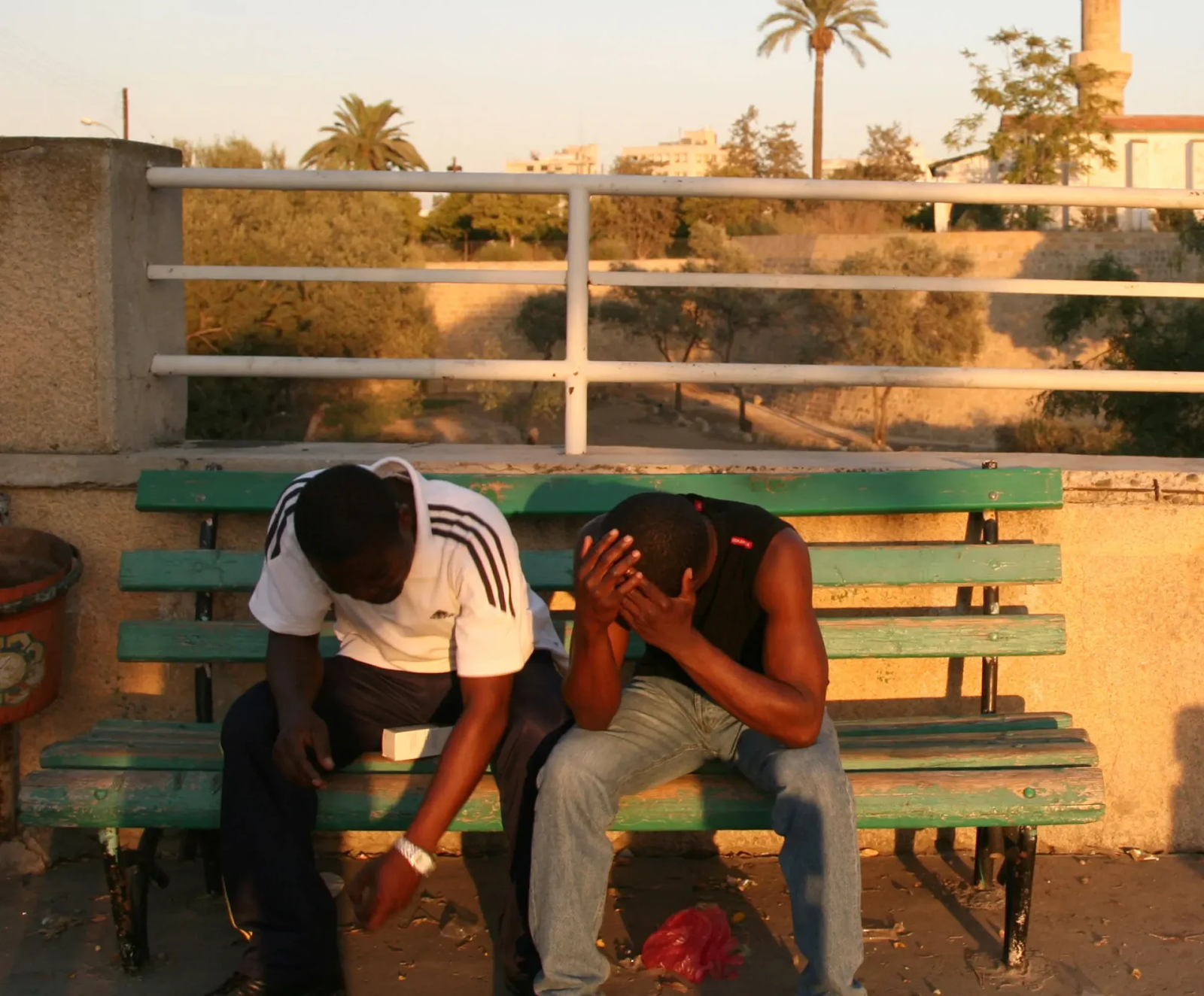
Corruption is not the only problem. Easy student visas and lack of controls over whether enrolled students are indeed going to school have turned universities into a backdoor to enter the county. Many of these universities are being accused of being a vehicle for human trafficking and smuggling.

According to figures from the education ministry, at least 20 per cent of the enrolled students are “passive”, meaning they have entered the country on a student visa, but are not attending any classes. Many of them are believed to be in the hands of human traffickers and human smugglers.

According to the US State Department’s Trafficking in Persons Report in 2023, in many cases, agents working with universities falsely promise students low tuition fees, accommodation and access to good jobs in an EU member state. Once in the north, they end up being exploited as cheap labour, or forced into prostitution or drug trafficking.

Human smugglers exploit the ungoverned higher education sector to offer young people a path to the Republic of Cyprus and therefore Europe through the island’s green line. United Nations High Commissioner for Refugees (UNHCR) communications officer Emilia Strovolidou recently told the Sunday Mail that for years the vast majority of the asylum seekers in the Republic of Cyprus were arriving via the north. She explained that as of 2020, increased numbers of refugees and migrants from Africa and Asia arrive by air in the north on student visas. In recent months, however, the Cyprus interior ministry said that arrivals via the green line have fallen sharply.

Turkish Cypriot police often hold up foreigners on student visas as they attempt to illegally cross the green line. The two Cameroonian suspects of a horrific murder of the 32-year-old Turkish Cypriot Ayca Alav two months ago were also in the north as students and fled to the Republic of Cyprus shortly after the murder.

Yodak

The higher education watchdog Yodak (Higher Education Planning, Audit, Accrediation, Coordination Board) in the north is the entity responsible for determining the minimum conditions, supervising the quality of education of higher education institutions and taking necessary measures in case of noncompliance. However, Yodak’s chairman Turgay Avci himself is under investigation on allegations that his diploma is fake. During the latest hearing in December, Avci failed to present his diploma in court.

“Does it not bother you to be living in such shoddiness; such a country of corruption, fraud, conspriacy, robbery and fiascos?” journalist Ali Baturay exclaimed in his column in bagimsiz.com as he commented on the developments. “Aren’t you uncomfortable in this unrecognised statelet so rife with decay and depravation?”

https://cyprus-mail.com/2024/02/18/norths-education-sector-riddled-with-corruption/

Tuesday, 5 December 2023

Easy student visas in north are driving human smuggling

By Esra Aygin

May 28, 2023

Many students never attend university and are either trafficked or enter the Republic


A group arrested while conspiring to smuggle people to the Republic (Yeniduzen)

The ease with which student visas are issued, the inadequate legal framework, and the general lack of controls in the northern part of Cyprus is increasing human smuggling and trafficking through universities.

There are 22 universities there, which has a population of less than 500,000, hosting some 104,000 students on paper. Close to half of these students are from third countries in the Arabian Peninsula, Africa, Middle East, and Far East. They come to the northern part of Cyprus on a student visa, which is very easy to get.

All any prospective student needs to do is to make an online application to any of the universities, pay the fee and register, explains education expert and academic Salih Sarpten. Once they are registered with a university, they get a plane ticket and arrive at Ercan/Tymbou airport, where they are given a one-year student visa when they show the printout of the proof of the university registration.


Young men arrested while trying to cross the Green Line and into the Republic (Yeniduzen)

“Once they are in the country, there is no mechanism to check where they are or what they are doing,” says Sarpten. This coupled with the inadequate legal framework has allowed many students to “disappear”.

“A considerable number of new students on the list handed to the academics at the beginning of the year, are missing from the classroom,” said Sarpten.

Fezile Osum, who is the Anti-Trafficking and Refugee Rights programme coordinator at the Turkish Cypriot Human Rights Platform, underlines that these students are largely in the hands of human traffickers and human smugglers.

Nazim Cavusoglu, who is responsible for the education dossier, recently told the AFP news agency that there are some 15,000 “passive” students, who have entered the country on a student visa, but are not attending any classes. Sarpten believes the number of students unaccounted for is no less than 30,000.

“Thirty per cent of the total number of students is missing,” said Sarpten. “Which suggests that they are either employed in the black economy; they are in the hands of human traffickers engaged in illegal activities such as sex or drugs trafficking; or they have already found their way into the European Union” through human smugglers across the porous Green Line dividing the island.

The higher education sector, which is one of the main engines of the Turkish Cypriot economy, has grown in an uncontrolled fashion in the last two decades as the policy has been to open as many universities and attract as many foreign students as possible.

“Higher education here is an economic sector,” says Sarpten. “Universities survive not on science, research, or patents, but on the money from students.”

This has led universities, some of which are owned by big businessmen, who in some cases also own casinos, to work with agents to find prospective students mainly from impoverished third countries and bring them to the universities. In return they get a commission.

Human trafficking

The ease with which student visas are issued, and lack of controls or supervision over whether individuals on a student visa are indeed going to school, have given rise to malicious agents, who take advantage of the system to exploit students. According to the US State Department’s Trafficking in Persons Report in 2022, in many cases, these agents falsely promise students low tuition fees, accommodation and access to good jobs in an EU member state. Once in the northern part of Cyprus, they end up being exploited as cheap labour, or forced into prostitution or drug trafficking.


Two Bangladeshis on student visas arrested after trying to enter the Republic (Yeniduzen)

Osum explained that out of 23 identified human trafficking victims in 2022, 18 of them had entered the island with student visas.

Last year, a Turkish rights group and the Nigerian National Agency for the Prohibition of Trafficking in Persons (NAPTIP), published a communique calling the northern part of Cyprus a “heaven for the traffickers who operate unrestrained”.

“Students can receive visas mostly with just a proof of university registration,” the communique explained. “It has been understood that the human traffickers have been abusing this procedure.”

The student visa can easily be renewed by re-registering in different higher education institutions while on the island.

Human smuggling

Human smugglers also exploit the ungoverned higher education sector to offer young people on a student visa a path to Europe.

“Not all of these students come here to study,” said Sarpten. “A significant number of them want to leave the difficult conditions in their countries… They take advantage of the simple student visa procedure to come here, and once they are here, they try to find ways to get into the Republic of Cyprus or other European Union member states.”

“We witness this a lot in the field,” Osum agreed. “Because student visas are very easy to get, the students come here to the north, and then cross to the south with the help of smugglers. We also know that the people applying for asylum in the Republic of Cyprus are mostly those, who arrive on the island using universities and student visas.”

Figures from the United Nations High Commissioner for Refugees (UNHCR) confirm this trend. From January to March 2023, some 3,182 persons have applied for asylum in the Republic of Cyprus.

“It is etablished that the vast majority of the asylum seekers in Cyprus arrive via the north,” UNHCR communications officer Emilia Strovolidou told the Sunday Mail.

Strovolidou explained that as of 2020, increased numbers of refugees and migrants from Africa and Asia arrive by air in the northern part of Cyprus on student visas and then clandestinely cross to the Republic of Cyprus to apply for asylum. 

In fact, last August, two Bangladeshi nationals were held up around the Yigitler Burcu/Roccas (Kaytaz) Bastion in Nicosia as they were attempting to cross to the Republic of Cyprus. The two men had paid smugglers €6,000 each and had been brought to the north on student visas issued in their names after they were registered in a university. For another €150 each, they were taken to the Yigitler Burcu and instructed to cross the Green Line to the Republic of Cyprus. Police believe the same smugglers have brought 322 Bangladeshis to the northern part of Cyprus through this scheme during the 2021-2022 academic year by registering them with five different higher education institutions.

“There is no population policy,” Sarpten emphasised. “There is no higher education policy. There is no policy on how many foreign students will be admitted in universities. There are no university entry criteria. All this is an invitation for the human traffickers and human smugglers.”


https://cyprus-mail.com/2023/05/28/easy-student-visas-in-north-are-driving-human-smuggling/

Saturday, 10 September 2022

Nigerians are both victims and perpetrators of crime in north

Many suspicious deaths of Nigerians, have been warned against going to north

By Esra Aygin


The Nigerian Federal Government has advised Nigerians against going to the northern part of Cyprus because of the killings and continued mysterious deaths of black university students in the country.

More than 100 Nigerian university students have been killed there in recent years. While some were obvious murder victims, many others were also suspicious.

“Please tell everybody to stop going to northern Cyprus,” said Abike Dabiri Erewa, chairman of the Nigerian government’s diaspora commission NiDCOM, during a press briefing at the State House in capital Abuja earlier this week. “Students are being killed on a daily basis, and nothing is happening. If you are going to northern Cyprus, think twice about it.”

During the briefing, Erewa underlined the difficulty of employing international diplomacy in investigating the deaths, as the northern part of Cyprus is only recognised by Turkey.

Just in the last couple of years, the body of 33-year-old Obasanje Adeola Owoyalr was found in the boot of a car in central Nicosia. He had been beaten and stabbed to death, bound, wrapped in a blanket and left to rot. Twenty-five-year-old Walshak Augustine Ngok was beaten to death and dumped in a field off a highway near Nicosia. Twenty-eight-year-old Nigerian Kennedy Taomwabwa Dede was kidnapped and beaten to death near a lake in Famagusta.

Besides brutal murders, many other Nigerian students in the north have died in recent years falling off balconies and roofs under suspicious conditions or have been found dead in their rooms. The suspicious deaths are usually dubbed “accident” or “suicide” and the case is closed without further investigation.

According to commentators, the problem arises from the higher education policy, which could be summarised as ‘opening as many universities as possible and attracting as many foreign students as possible.’ The higher education sector, which is one of the engines of the Turkish Cypriot economy, has grown in an uncontrolled fashion in the last decade as one university after another opened its doors to a flood of overseas students.

On this “education island” – as the northern Cyprus is advertised in African and Central Asian countries – there currently are about 110,000 university students in 22 universities. Some 51,000 of these students are coming from third countries, mostly Nigeria.

The lucrativeness of the business, coupled with the ease with which student visas are issued have boosted the foreign student numbers, but also the problems.

A recent study on foreign university students by The Centre for Migration, Identity and Rights Studies (CMIRS) shows that African students are usually deceived into coming by agents or middlemen, who themselves were formerly studying there.

“Agents, who themselves have been students here, and who are called ‘mama,’ deceive students with false promises of schools and jobs,” CMIRS director Mine Yücel explains. “The students are told they would be going to an EU member state, that they will have job opportunities and make a lot of money in euros. They are made to pay for their tickets and rent upfront, and they end up coming here already indebted.”

More often than not, the African students fall into the hands of criminal groups as a result of financial hardship.

“Usually, the students, who come here, are poor students, who cannot afford to go to Europe or America,” Yücel says. “These students usually spend all their family’s savings to come here. In a short time, they realise that the scholarships or jobs promised to them were false, that life is expensive, and that they cannot survive here unless they (sometimes illegally) make money. This leads them to fall into the hands of criminal groups,” which leaves them exposed to violence and killings.

In some cases, ‘mama’ seizes the students’ passports on their arrival and instead of being taken to school, they are taken to villas, where they are forced into prostitution, according to Yücel. “Those, who do not comply, are threatened blackmailed and subjected to physical violence,” she says.

Depression, anxiety and suicidal thoughts are widespread among Nigerian students, according to the CMIRS findings. Last April, there were two suicides and two attempted suicides by Nigerian students in the same 24 hours.


Trafficking through universities

In fact, the ease with which student visas can be acquired in the northern part of Cyprus has turned the country into a human trafficking “heaven”.

Last month, a Turkish rights group and the Nigerian National Agency for the Prohibition of Trafficking in Persons (NAPTIP), published a communique over the “mass trafficking” of young Nigerians, mostly females to the north, which they call a “heaven for the traffickers who operate unrestrained”. According to this communique, a human trafficking syndicate is believed to be operating between the northern part of Cyprus and Nigeria, which promises girls and young men non-existent scholarships and work opportunities.

“Students can receive visas mostly with just a proof of university registration,” the communique explains. “It has been understood that the human traffickers have been abusing this procedure.”

Human trafficking through universities was also mentioned by the US State Department’s Trafficking In Persons Report in 2022. The report explains that the foreign university students – mostly from African countries – come to northern Cyprus usually on false promises of scholarships, free housing and employment. These students, who enter on student visas, “are vulnerable to both sex and labour trafficking”, the report says. “Traffickers force female students into sex trafficking in apartments and male students into forced labour or coerce students to commit crimes such as transporting or selling drugs.”

Yücel confirms that through their research, they have identified nine human trafficking victims just between January-April 2022. The human trafficking activities are mostly carried out by Nigerian student groups called cults. These secret groups are banned in Nigeria and hundreds of members have been arrested and prosecuted over the years. These cults have been accused of being behind serious violence, including killings, at universities.

It is not surprising that in a place where vulnerabilities are exploited by malicious or criminal circles, so many students are forced into illegal activities, and necessary control and protection mechanisms are not in place, many Nigerian students are being murdered or losing their lives under questionable circumstances, according to commentators.


Money laundering

On the other side of the coin are the wealthy Nigerians who visibly live a very luxurious life driving expensive cars and entertaining in posh clubs and restaurants in the north.

Yücel highlights that easy-to-get student visas and lack of controls or supervision over whether individuals entering on a student visa are indeed going to school, in some cases are being used as a way to legitimise illegal dealings. Among those Africans, who arrive in Cyprus on a student visa, are some criminals and who, after registering in a university for just one semester, engage in all kinds of illegal activities such as money laundering. Almost weekly, there are reports in the Turkish Cypriot newspapers and news sites about Nigerian students being arrested for money laundering.

“Today, many illegal activities including money laundering are carried out by Nigerians, who have come into the country on student visas, but who have nothing to do with the schools here,” underlines Yücel. “These people are spending lavishly and laundering serious amounts of money in this country.”

Yücel explains that the problems can only be solved if both the authorities and the universities take strict measures and exercise strict controls on who are entering the country with student visas, whether they actually are attending schools and what they are doing here.

“The reality here is that once they get the tuition, the universities don’t care what the students are doing in the country,” she says. “Universities see students as a mere source of income and even those, who are in the country to commit crimes, don’t face any problems as long as they pay their tuition. Universities and authorities should take responsibility in cleaning this mess.”


https://cyprus-mail.com/2022/09/04/nigerians-are-both-victims-and-perpetrators-of-crime-in-north/

Wednesday, 4 September 2019

Sorry end for Africans on ‘education island’

By Esra Aygin
21 July 2019

The body of a 33-year-old Nigerian student, who had been missing since July 1, was found in the boot of a car in central Nicosia last week. He had been beaten and stabbed to death, bound, wrapped in a blanket and left to rot.

Obasanje Adeola Owoyalr was not the first African student brutally murdered in the northern part of Cyprus recently. In April 2019, another Nigerian, 25-year-old Walshak Augustine Ngok, was beaten to death and dumped in a field off a highway near Nicosia. In January 2018, the 28-year-old Nigerian Kennedy Taomwabwa Dede was kidnapped and beaten to death near a lake in Famagusta.

A non-negligible number of other African students on this “education island” – as the northern part of Cyprus is advertised in African and Central Asian countries – have died in recent years falling off balconies and roofs under suspicious conditions, or have been found dead in their rooms. Commentators point to a wide array of problems arising from the higher education policy of the northern part of Cyprus, which could be summarised as ‘opening as many universities as possible and attracting as many students as possible.’

The higher education sector, which is one of the engines of the Turkish Cypriot economy, has grown in an uncontrolled fashion in the last decade as one university after another opened its doors to a flood of overseas students. There currently are some 103,000 students in a total of 20 universities. The lucrativeness of the business, coupled with the ease with which student visas are issued, and lack of controls or supervision over whether individuals entering the northern part of Cyprus on a student visa are indeed going to school, boosted the foreign student numbers. The number of foreign students increased sevenfold from around 5,000 in 2010 to over 35,000 last year. Some 20,000 of those foreign students are from African countries, mostly Nigeria.

As of January 2019, three additional universities have received permits to start receiving students, seven have received permits to be established, and nine others are awaiting permits. A number of these universities are owned by big businessmen, who, in some cases, also own casinos, and even some Turkish politicians.

A report titled “Problems faced by foreign students in Cyprus” by the Eastern Mediterranean University Academic Staff Union DAU-SEN published earlier this year points to the lack of necessary infrastructure and conditions to ensure the welfare of these foreign students, and the existence of malicious agents or middlemen, who exploit them. In many cases, they are falsely promised low tuition fees, accommodation and access to good jobs by agents working for the universities in the northern part of Cyprus, but end up being exploited as cheap labour under slavery conditions, forced into prostitution or drug trafficking, according to the report.

“It has been determined that agents give incorrect information to African students, telling them that north Cyprus is a visa-free European country,” the report says. “The students are faced with the increasing costs of the school and the agents. They find out that promises of scholarships and accommodation are empty words. They realise that the budget they have will be insufficient and start struggling to survive.”

“The flow, which began with good students from Africa, has in time turned into soft human trafficking,” said Senior Researcher Mete Hatay of PRIO Cyprus Centre. “Hundreds of unemployed Africans are accepting agents’ offers and coming to Cyprus to find a job and build a better future.”

In fact, the plight of African students in the northern part of Cyprus was the inspiration for Booker prize nominee author Chigozie Obioma’s second book An Orchestra of Minorities. Nigerian Obioma was himself a student here from 2007 to 2012, during which time he witnessed the death of a fellow Nigerian student, who had been duped into coming to Cyprus and ended up dying after – according to police – accidentally falling off a roof.
The car the body was found in last week

In an article he penned for the Guardian in 2016, Obioma explains: “None of the students… knew that northern Cyprus was… not Europe; it was not America; it was not Asia; it was not even Turkey… Its streets were ramshackle, its infrastructure second rate. There were no jobs. There were no amenities, no opportunities… They came bursting with hope and expectations to a desert of stark, paralysing disappointment.”

Director Mine Yucel of The Center for Migration, Identity and Rights Studies, highlights that student visas, in some cases are also being used as a way to legitimise illegal dealings. The DAU-SEN report seconds Yucel’s findings. “Among those Africans, who arrive in Cyprus on a student visa, are some, who are from the world of crime and who, after registering in a university for just one semester, engage in all kinds of illegal activities such as drug trafficking, prostitution and money laundering. Many students have stated that some act as agents and force vulnerable students into prostitution, threaten and intimidate them and even apply physical violence. Economic hardships push students to drugs both as users and sellers.”

In fact, a paragraph in the US State Department’s 2018 Trafficking in Persons Report refers to the higher education sector in the northern part of Cyprus: “Men and women enrolled as university students, particularly from Sub-Saharan African countries, are vulnerable to sex trafficking and forced labour. As in previous years, observers reported a number of women entered the ‘TRNC’ on three-month tourist or student visas and engaged in prostitution… some may be trafficking victims.”

It is unfortunately not surprising that in a place where vulnerabilities are exploited by malicious or criminal circles so many students are forced into illegal activities, and necessary control and protection mechanisms are not in place, many African students are being murdered or losing their lives under questionable circumstances, according to the commentators.

“We have turned into a sick community that exploits or allows the exploitation of foreign students,” said Yucel. “Is there anyone here, who can still take pride in being an ‘education island?’”