Showing posts with label Turkish Cypriot. Show all posts

Monday, 20 May 2024

North’s education sector riddled with corruption

February 18, 2024

University after university accused of issuing fake degrees, misconduct and embezzlement

A new fake diplomas and fraud scandal at a university in the northern part of Cyprus has reignited the debate on widespread corruption in the Turkish Cypriot higher education sector.

Three officials of Kibris Saglik ve Toplum Bilimleri Universitesi KSTU (Cyprus Health and Social Sciences University) and a senior civil servant were arrested last week after the owners of the university went to police following an internal audit that revealed embezzlement and fraud through fake student registrations and fake diplomas. The university is owned by Turkish citizen Levent Uysal, who is a member of parliament in the Turkish Grand National Assembly from the National Movement Party MHP.

The university’s secretary-general and director Serdal Gunduz, vice-rector and lecturer Serdal Isiktas, and the head of the international students office Amir Shakira are being charged with larceny, forgery of documents and circulation of forged documents. Celebi Ilik, the recently resigned head of the Turkish Cypriot registrar of cooperative companies and former undersecretary of the ministry responsible for labour and social security, has a fake graduate and a post-graduate diploma from the university. He has been charged with forgery of documents, circulation of forged documents and eliciting funds through fraud. Ilik presented his fake diplomas to get promotions and pay rise in civil service. He resigned from his position on Thursday.

Ilik and Isiktas were released on bail while Gunduz and Shakira remained under arrest.

KSTU, in an official statement following the arrests, said the fake diplomas are just the tip of a huge iceberg of misconduct, embezzlement, fraud and forgery at the university involving tens of millions of dollars. “The university will support the police investigation until all the crimes have been established,” the statement said.

On the other hand, Turkish daily Birgun alleged on Thursday that the university’s owner Uysal himself attempted to get a €45 million loan from Swiss IntaCapital bank with fake documents in 2022 but escaped judicial proceedings when he got elected to parliament in May 2023.

In a related development over the past week, a document revealed by the former Turkish Cypriot chief negotiator and head of People’s Party HP Kudret Ozersay allegedly showed that another university, Dunya Baris Universitesi (World Peace University) owned by Altinbas Holding is operating illegally. The document written by the north’s chief public prosecutor’s office stated that as a result of the university’s lack of permission to operate, all diplomas obtained by students at the university would be deemed invalid and unrecognised. The Holding’s executive Vakkas Altinbas, along with members of his family and associates, are separately being investigated over irregularities concerning a real estate purchase in Kyrenia.

Higher education sector

The higher education sector in the north, which is one of the main engines of the Turkish Cypriot economy, has grown exponentially in the last two decades as the focus has been on opening as many universities and enrolling as many students as possible. There are 23 universities some of which are owned by big Turkish businessmen who, in some cases, also own casinos, that host almost 110,000 students on paper. Close to half of the students are from countries in the Arabian peninsula, Africa, Middle East and Far East.

The aim of making profits rather than offering education, paired with the ease with which student visas are issued, the inadequate legal framework and the general lack of controls have created a sector rife with corruption.

In October, rector Oytun Sozudogru and student affairs staffer Zihni Ozturk of Ada Kent Universitesi (University of City Island), were arrested for stealing tuition fees worth more than 12 million TL (about €363 thousand). They pleaded guilty. The university is owned by Talip Emiroglu, known to be a close friend of Turkish President Recep Tayyip Erdogan.

“The unsupervised higher education sector handed over to bosses…is faced with crisis after crisis,” said Burak Mavis, secretary general of the Cyprus Turkish Teachers Trade Union KTOS. “The problem is the mentality that sees education as a commodity and and the students as clients.”

Human trafficking and smuggling

Corruption is not the only problem. Easy student visas and lack of controls over whether enrolled students are indeed going to school have turned universities into a backdoor to enter the county. Many of these universities are being accused of being a vehicle for human trafficking and smuggling.

According to figures from the education ministry, at least 20 per cent of the enrolled students are “passive”, meaning they have entered the country on a student visa, but are not attending any classes. Many of them are believed to be in the hands of human traffickers and human smugglers.

According to the US State Department’s Trafficking in Persons Report in 2023, in many cases, agents working with universities falsely promise students low tuition fees, accommodation and access to good jobs in an EU member state. Once in the north, they end up being exploited as cheap labour, or forced into prostitution or drug trafficking.

Human smugglers exploit the ungoverned higher education sector to offer young people a path to the Republic of Cyprus and therefore Europe through the island’s green line. United Nations High Commissioner for Refugees (UNHCR) communications officer Emilia Strovolidou recently told the Sunday Mail that for years the vast majority of the asylum seekers in the Republic of Cyprus were arriving via the north. She explained that as of 2020, increased numbers of refugees and migrants from Africa and Asia arrive by air in the north on student visas. In recent months, however, the Cyprus interior ministry said that arrivals via the green line have fallen sharply.

Turkish Cypriot police often hold up foreigners on student visas as they attempt to illegally cross the green line. The two Cameroonian suspects of a horrific murder of the 32-year-old Turkish Cypriot Ayca Alav two months ago were also in the north as students and fled to the Republic of Cyprus shortly after the murder.

Yodak

The higher education watchdog Yodak (Higher Education Planning, Audit, Accrediation, Coordination Board) in the north is the entity responsible for determining the minimum conditions, supervising the quality of education of higher education institutions and taking necessary measures in case of noncompliance. However, Yodak’s chairman Turgay Avci himself is under investigation on allegations that his diploma is fake. During the latest hearing in December, Avci failed to present his diploma in court.

“Does it not bother you to be living in such shoddiness; such a country of corruption, fraud, conspriacy, robbery and fiascos?” journalist Ali Baturay exclaimed in his column in bagimsiz.com as he commented on the developments. “Aren’t you uncomfortable in this unrecognised statelet so rife with decay and depravation?”

https://cyprus-mail.com/2024/02/18/norths-education-sector-riddled-with-corruption/

The Turkish Cypriots fighting for citizenship

February 4, 2024


Without a recognised nationality all her life, one woman welcomes the government’s decision to re-evaluate citizenship

“I’ve been alive for 21 years, but I actually don’t exist… Nobody knows of my presence. Nobody acknowledges me…” wrote Turkish Cypriot Sude Dogan on her social media page two years ago.

She was speaking about her feelings as one of the thousands of Turkish Cypriots, who are denied Cypriot citizenship because they are children of mixed marriages between a Cypriot and a Turkish parent. Since then, she has been tirelessly campaigning for the citizenship rights of children like herself.

Two years later, today, Sude is under a ferocious attack by Turkish nationalists for saying she “feels European” but is “unable to live her life as a European because of Turkey’s invasion in the northern part of the island”.

The attacks came after an excerpt of an interview she gave to France 24 ENTR channel eight months ago was dubbed and published on social media by a Turkish outlet earlier this week. It was viewed by almost 11 million users before it was removed for copyright reasons.

“You are a Greek bastard,” says one of the thousands of comments under the post with the interview excerpt. “Ungrateful”, “a traitor”, and “British seed” are other names Sude is called.

Despite all the personal attacks, she is most hurt by comments that refer to Cyprus as the territory of the Republic of Turkey and attest that Turkish Cypriots do not have a say in Cyprus.

“For them, the land that I was born and raised in, and live on, is just a commodity… Cyprus, for them is just a military base. And I should not be able to determine its fate or future. They don’t value Cyprus and they don’t respect the love we have for it,” Sude tells the Cyprus Mail.

Sude is the daughter of a Turkish Cypriot mother and a father born in Cyprus to a Turkish mother, who came to Cyprus in 1975 and married a Turkish Cypriot. Because of her Turkish grandmother, Sude has not been able to get Cypriot citizenship. Her parents divorced when she was a baby. Her mother has another child from her second marriage to a Turkish Cypriot.

“One time my mother, my stepfather and my stepsibling went abroad from Larnaca [airport],” says Sude. “I stayed home. I felt awful… I’ve felt awful for years. I’ve felt a huge emptiness inside me. I’ve never known where I belong.”

In the Republic of Cyprus, legally, any child of at least one Cypriot parent has the right to Cyprus citizenship. However, a provision later added to the law has given the discretion to the cabinet in cases where either of the parents entered the island from the ports and airports in the northern part of Cyprus, or the residence of any of the parents is in the north. This has left an estimated 10,000 Turkish Cypriot children without rights both as Cypriot and EU citizens. They face significant restrictions in their daily lives with barriers to travel, work and study abroad. Many – like Sude – are at risk of statelessness if they cannot acquire the Turkish parent’s nationality for any reason because the Turkish Cypriot nationality does not constitute a nationality under international law.

Towards the end of high school, Sude realised that even though she was a thriving student, she did not have the same opportunities as her friends to study abroad.

“They were all EU citizens and could go abroad for university for very affordable fees,” she says. “But my family could not afford the fees for international students in the EU.”

Sude ended up going to Turkey to study medicine. She was an international student there too since she never got the Turkish citizenship through her father’s side.

Asked why she is not a Turkish citizen, Sude says she was hesitant to apply because of Ankara’s treatment of the Turkish Cypriot opposition.

“I have always been a peace activist,” she explains. “I was a little girl when I attended my first bicommunal children’s camp. I was scared of what this would mean for me if I attempted to get Turkish citizenship. In Turkey, it is enough to say ‘I want peace in Cyprus’ to be blacklisted. I witnessed for years that Turkish Cypriot intellectuals and progressive people were banned from entering Turkey.”

At least 12 Turkish Cypriot activists, unionists, intellectuals and journalists have been denied entry to Turkey in recent years on the grounds that they pose a threat to Turkey’s “national security”. Many face trials in absentia in Turkey.

As she became increasingly visible after establishing the Movement for the Resolution of Mixed Marriage Problem (KESCH), studying in Turkey became more stressful and Sude transferred to the University of Nicosia in Cyprus in September last year.

“I am now back in my country, but again as an international student,” she remarks.

Sude is less scared of her safety than getting completely physically confined to Cyprus as a result of the ongoing attacks.

“If I am banned from entering Turkey, this means I can never go out of Cyprus ever again,” she says, since she can currently only travel to Turkey. “Is this incident going to imprison me here? This scares me a lot because I am still in university. I dream of going abroad for further studies and coming back to Cyprus to do much bigger things for all Cypriots. But I don’t know if I will be able to do this after all that’s happening.”

Sude wants to study law after graduating from medical school.

Earlier this week, the government of Cyprus announced a series of unilateral measures for Turkish Cypriots, which includes the intention to start evaluating the suspended citizenship applications of Turkish Cypriot children of mixed marriages.

Sude doesn’t think that it’s a coincidence that the attacks against her came just after the announcement.

“I would like to thank,” the Republic of Cyprus, she says. “This is a small step, but definitely a step in the right direction. This problem cannot be solved overnight. It will have to be solved in stages. They took the first step. This means they heard our voice, and they value it.”

Last week, the European parliament’s petitions committee, deliberating on the citizenship rights of children born of mixed marriages, resolved to keep the petition active and decided to reach out to the Cypriot government with a formal request to clarify the intended measures for addressing the issue.

“I am a foreigner in Turkey. I am a foreigner in the Republic of Cyprus,” concludes Sude. “Where do I belong? This emotional turmoil led me to undertake the struggle for children of mixed marriages. And I will continue until it is solved. The Turkish Cypriots had their hopes shattered too many times. I do not want to give up and be another reason why their hopes are shattered one more time.”

https://cyprus-mail.com/2024/02/04/the-turkish-cypriots-fighting-for-citizenship/

Friday, 2 December 2022

Opening of new airport in north delayed yet again

 By Esra Aygin

The opening of the long-awaited new Ercan/Tymbou airport has once again been postponed, prompting the Turkish Cypriot media to question if it will ever be operational and to mock the project.

The 300 million euro airport was initially scheduled to open in 2016 according to the contract. The construction has been going on for exactly ten years now.

Over the years, many different officials announced different opening dates, all of which turned out to be empty promises.

Most recently in August, Fikri Ataoğlu, responsible for the tourism, environment and culture dossier in the northern part of Cyprus, had announced that the new airport would be inaugurated on November 15 – the anniversary of the unilateral declaration of independence of the Turkish Cypriot entity. Turkish President Recep Tayyip Erdoğan was scheduled to attend the inauguration by flying his plane to the new airport, Ataoğlu said.

Before Ataoğlu, back in June, Erhan Arikli, responsible for public works, had announced that the inauguration of the new Ercan/Tymbou airport would be on July 20.

“This man is mocking all of us,” wrote journalist Hasan Hastürer referring to Turkish businessman Emrullah Turanli, who is the owner of the company that operates Ercan/Tymbou and is responsible for the construction work of the new airport.

The airport was privatised in 2012.

“Ercan Airport has turned into a never-ending story,” wrote columnist Erçin Şahmaran. “Ten long years. How can this be explained?”

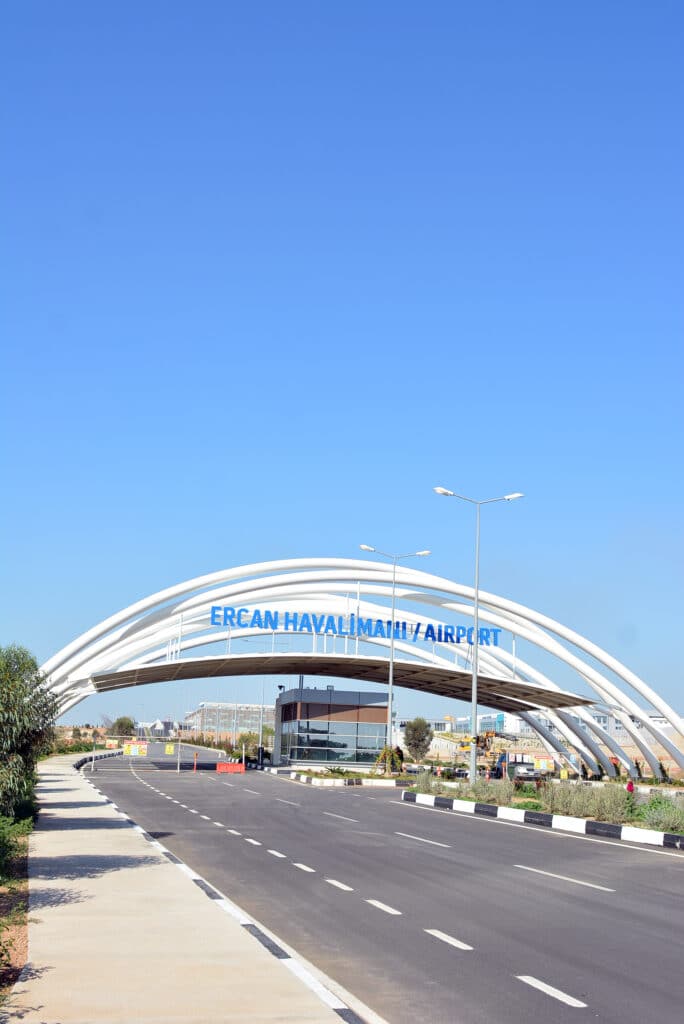
A myriad of reasons caused the delays over the years stemming from problems in the implementation of the tender conditions, a dispute between the operator and the Turkish Cypriot administration, delays in the Turkish Cypriot administration in fulfilling its contractual obligations and a series of bribery allegations.feature esra entrance to the new airport (burcin aybars yeniduzen)

The postponement this week was caused by the absence of certain technical equipment including the transformers and the Instrumental Landing System (ILS) vital to the operations of the airport, according to Arikli.

“The airport is physically completed,” he told journalists earlier this week, speaking at a press conference at the construction site of the new Ercan/Tymbou airport. “But we have some technical devices missing. Once these devices are delivered, we will install them in a very short time and open Ercan.”

Arikli said they considered to partially open the airport on November 15, but then abandoned the idea.

“We could have opened it partially, but nobody could really accept this,” he said. “It would not be correct to partially open it after having waited for so long.”

Arikli added that Erdoğan was also against the idea of a partial opening.

The new date given for the opening is “the first months of 2023”.

The new airport will have a 10 million passenger capacity as opposed to the current four million capacity. The airport, which is directly opposite the existing Ercan/Tymbou airport, has been built on an area of 7, 800,000 square metres. The land on which it is built has been bought from its Greek Cypriot original owner through the Immovable Property Commission in the northern part of Cyprus.

The Turkish Cypriot media is also questioning why such a big airport is being built when the north only has flights to and from Turkey.

“They are heralding that the Ercan airport will open,” wrote Cenk Mutluyakalı earlier this month. “But the main question is this: Where is it opening to? They are just building a bigger airport to host ‘domestic flights’ from Turkey. So that two airlines fly to Istanbul or Ankara…”

In June, July and August 2022 some 870,000 passengers used Ercan/Tymbou.

“It is too big for the current circumstances,” confessed Arikli this week. “We don’t have the possibility to use this capacity to the maximum with just the passengers from Turkey. Such a big airport is a luxury, yes… But maybe soon we will have direct flights.”

Arikli said the most important markets in terms of flights to the northern part of Cyprus are the Central Asian and Russian markets via Turkey. He repeated the allegation that a company from a foreign country has applied for direct flights to the north.

In September, Turkish media had reported that the Russian Federation was planning to have direct flights to the northern part of Cyprus. These reports were later denied by the Russian embassy in Nicosia. The embassy told Russian state agency PIA-Novosti it “refutes any negotiations for the opening of a direct air connection”.

In October, Turkish Transportation and Infrastructure Minister Adil Karaismailoğlu had stated that Kyrgyzstan had made a request for direct flights to the northern part of Cyprus.

And according to a recent report in the private Turkish TV channel CNN Turk, talks with Pakistan and Azerbaijan regarding direct flights are continuing.

For many Turkish Cypriots however, who have heard talk of direct flights to the northern part of Cyprus for too many years now without any concrete development, these reports are hard to believe.

“This has turned into a political show,” says journalist Aysu Basri Akter. “These allegations have been going on for years. They are not newsworthy anymore.”


https://cyprus-mail.com/2022/11/13/opening-of-new-airport-in-north-delayed-yet-again/

Monday, 31 October 2022

Legal action to stop north handing out citizenships


121 Turkish Cypriot exceptional citizenships handed out in just one day, and that does not include other naturalisations

 By Esra Aygin

Four political parties and a trade union have sued the administration in the northern part of Cyprus for arbitrarily handing out ‘exceptional’ Turkish Cypriot citizenships, and are asking the court to review a provision that gives the ‘council of ministers’ the authority to grant citizenships “whenever it deems necessary”.

Most exceptional citizenships are granted based on this provision, by a motion of the ‘ministry of interior’ and a decision of ‘council of ministers’. Citizenships given in this manner are published in the official gazette, which almost every day carries a list of people – mostly of Turkish origin – who were granted Turkish Cypriot citizenship because they live in the north, or have made investments, or even because they visit the island often. On October 21, for example, a total of 121 individuals were granted citizenship, according to the official gazette.

A few months ago, the Turkish architect of the controversial Külliye – an Islamic government complex – that is being financed by Ankara was also granted Turkish Cypriot citizenship, prompting an uproar among Turkish Cypriot architects.

The lawsuit against exceptional citizenships was filed by the Social Democracy Party TDP, Social Liberation Party TKP, United Cyprus Party BKP, New Cyprus Party YKP and Turkish Cypriot State Workers Union Çağ-Sen at the High Administrative Court against the Turkish Cypriot ‘council of ministers’ and the ‘ministry of interior’.

“If we win, this will serve as a precedent for thousands of other citizenships given in the same manner, says lawyer Öncel Polili. “Citizenship means the equal distribution of a country’s sovereignty among its citizens. And it should not be this easy to distribute this country’s sovereignty.”

Polili explains that they are also asking the court to review the legal provision that authorises the ‘council of ministers’ to give citizenship “whenever it deems necessary”.

“This provision gives an open-ended, unclear and unpredictable authority to the council of ministers,” says Polili. “It is open to exploitation.”

If this provision is annulled, the council of ministers will no longer be able to give arbitrary citizenships Polili clarifies.

However, these exceptional citizenships are only the tip of the iceberg. Under the current law in the northern part of Cyprus, anyone, who has been living there legally for at least five years – in other words – has five consecutive working permits, is entitled to receive citizenship as long as they don’t have a criminal record. Citizenships given in this manner are not published in the official gazette, and their number is unknown.

Repeated calls by opposition parties and civil society organisations to the current National Unity Party UBP, Democratic Party DP and Rebirth Party YDP coalition to disclose how many individuals have been granted citizenships because they have been on the island legally for five years, have fallen on deaf ears.

According to journalist Serhat İncirli, at least 50 people per day are granted Turkish Cypriot citizenship in this manner. This number does not include the exceptional citizenships granted by the ‘council of ministers’.

“Three Turkish civil servants have been appointed to the ‘ministry of interior’ by the Turkish embassy to speed up the citizenship application process,” İncirli wrote earlier this week in the Daily Yenidüzen. “Those, who rule Turkey, have a special policy to change the demographics here.”

It is known that Ankara has been piling up the pressure on the Turkish Cypriot administration to give more citizenship to people of Turkish origin and in a speedier manner. The controversial “Economic and Financial Cooperation Protocol”, signed between the north and Ankara back in April has a provision on the easing of the granting of Turkish Cypriot citizenship to Turkish nationals.

“With the aim of enhancing mutual cooperation, legislative arrangements will be made to ease the conditions of naturalisation,” the provision stipulates.

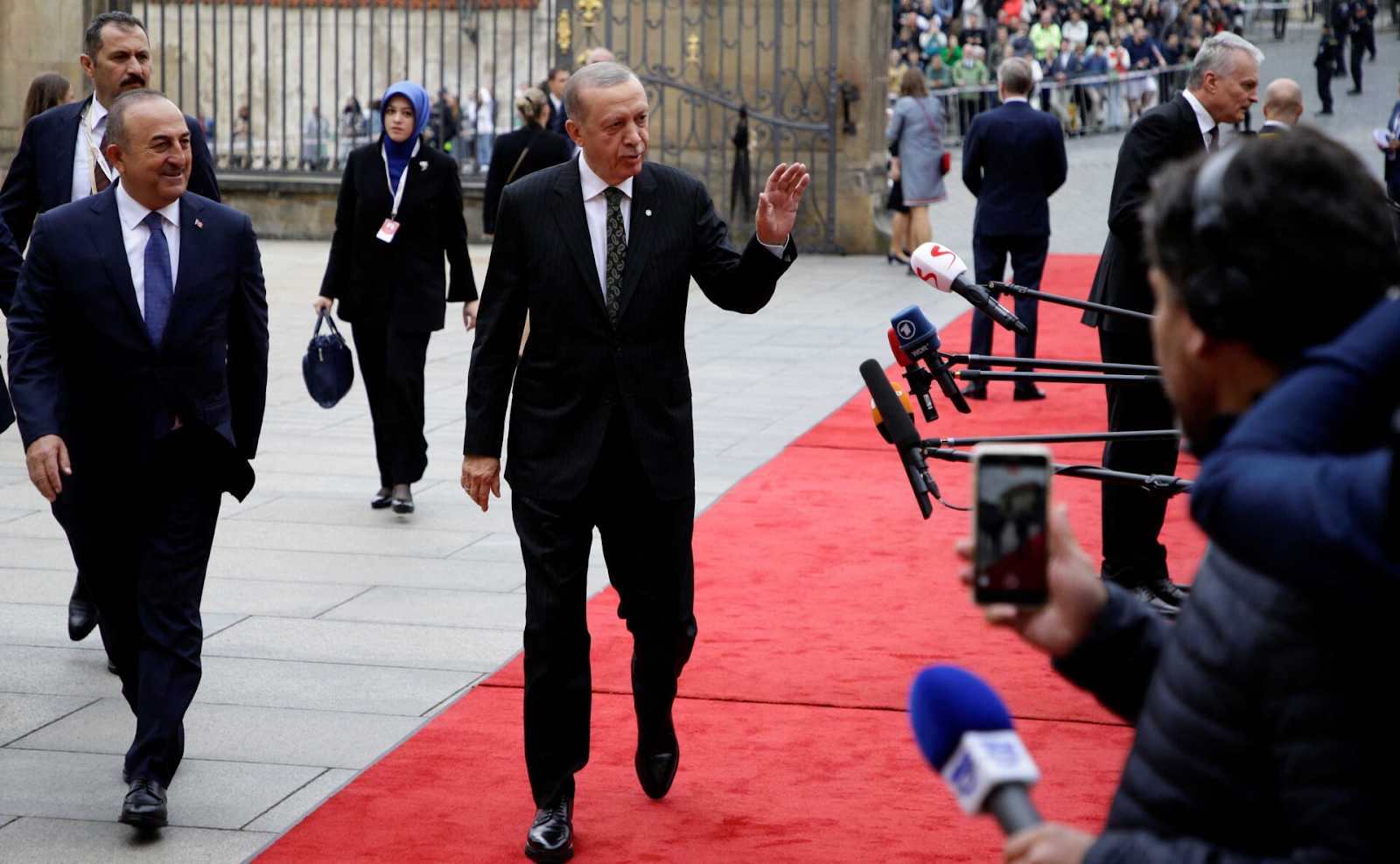
During a recent visit to the island, Turkish Foreign Minister Mevlüt Çavuşoğlu also promised to make it easier for Turkish nationals living in the northern part of Cyprus to get Turkish Cypriot citizenship.

In its 2021 Report on Turkey, the European parliament calls on Turkey to refrain from action altering the demographic balance in Cyprus.

The citizenship issue is sensitive for the Turkish Cypriot community, who already feel like a minority in their own country in the face of a growing Turkish population that is increasingly determining the outcome of elections.

“Citizenships are being granted to people, who have no sense of belonging to this country whatsoever, just like that just because they will vote in a certain way,” says TDP head Mine Atlı. “The political will of Turkish Cypriots is under a serious attack.”

Senior researcher Mete Hatay of PRIO Cyprus Centre, who has done extensive research on the population and population politics in Cyprus, estimates that already 40 per cent of the total number of voters in the northern part of Cyprus are of Turkish origin. This percentage is an important factor especially in the elections for the Turkish Cypriot leader, where even one vote can be decisive.

Turkish Cypriot authorities have historically been criticised for arbitrarily distributing Turkish Cypriot citizenships with political considerations, especially during election periods. In fact, according to a PRIO Cyprus report titled, ‘Is the Turkish Cypriot population shrinking’ by Hatay, statistics indicate a clear increase in the number of the persons, who acquired Turkish Cypriot citizenship during election years.

In 2004 for example, when former Turkish Cypriot leader Mehmet Ali Talat’s Republican Turkish Party CTP came to power, it cancelled a decision by the previous right-wing ‘cabinet’ to grant citizenships to 1,600 individuals in one sitting right before elections.

However, according to political analysts, the policy of easing the granting of Turkish Cypriot citizenship to Turkish nationals, is targeted towards the elections in Turkey. Turkish President Recep Tayyip Erdoğan’s Justice and Development Party AKP has historically done worse among the people of Turkish origin in Cyprus than it did in the mainland in every election since 2014, when the Turkish diaspora gained the right to vote.

The issue of citizenship is sensitive also because it is directly related with who will or will not be entitled to become citizens of a possible future federal Cyprus.

“As long as the Cyprus problem remains unresolved and the northern part of Cyprus remains outside international law, the population will continue to increase uncontrollably,” underlines journalist Sami Özuslu. “And maybe one day, the issue of who is the majority and who is the minority in Cyprus, will be reversed. Maybe the Turks will claim that they are now the majority on the island, and will want to hold a plebiscite to unite with the motherland. Maybe we will witness a demand for ‘reverse-Enosis’ in 50, 60 years.”

https://cyprus-mail.com/2022/10/30/legal-action-to-stop-north-handing-out-citizenships/


Thursday, 28 July 2022

Turkey’s Trojan horse policy

Çavuşoğlu’s promise of easier ‘TRNC’ citizenship for Turks in the north has deepened concerns among Turkish Cypriots

By Esra Aygin


Turkish Foreign Minister Mevlüt Çavuşoğlu has promised to make it easier for Turkish nationals living in the northern part of Cyprus to get Turkish Cypriot citizenship, further deepening already grave concerns about the demographic change in the society.

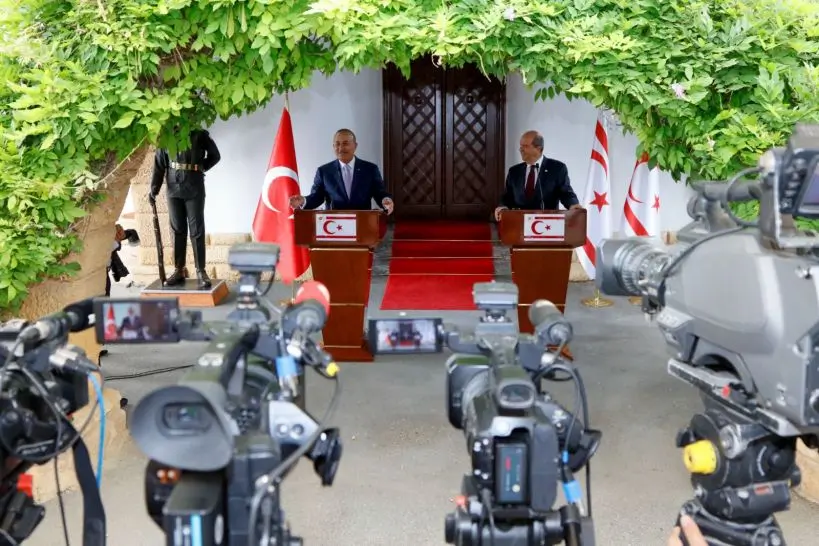
During a gathering in Lapta/Lapethos earlier this week, Çavuşoğlu, in response to a Turkish national, who asked for help in getting a Turkish Cypriot citizenship, said: (getting a citizenship) “will no longer be a problem. There are laws here, but these can easily be changed through ordinances.”

Çavuşoğlu was accompanied by Ziya Öztürkler, who is responsible for the internal affairs dossier including the granting of citizenships in the current Turkish Cypriot coalition, who listened in compliance. Çavuşoğlu’s blunt promise on behalf of Turkish Cypriot authorities led to Republican Turkish Party CTP deputy Doğuş Derya to liken him to a “colony chief.”

The promise of easier citizenship deepened concerns among the Turkish Cypriot community, who already feel like a minority in their own country in the face of a growing Turkish population.

Senior researcher Mete Hatay of PRIO Cyprus Centre, who has done extensive research on the population and population politics in Cyprus, estimates the current Turkish Cypriot citizen population to be around 230,000. Seventy thousand of these are of Turkish origin, according to Hatay. The de facto population, on the other hand, including the workers on work permits and their families as well as students, is close to 500,000.

Under the current law in the northern part of Cyprus, anyone, who has been living there legally for at least five years – in other words – has five consecutive working permits, is entitled to receive citizenship as long as they don’t have a criminal record.

Since the law only sets the minimum number of years, different political parties have had different citizenship policies when in power. CTP, in 2015 for example, published an ordinance to increase the number of years required for becoming entitled to citizenship to 13. The National Unity Party UBP reduced this to ten years through a new ordinance.

“From what I understand, Çavuşoğlu is referring to the law, which stipulates a minimum of five years, and says the current rules can change with an ordinance,” says CTP deputy Asım Akansoy, who was responsible for the internal affairs dossier between 2015 and 2016. “So what Ankara wants is for the ordinance requiring ten years to change and for everyone, who has been living in the northern part of Cyprus legally for five years, to immediately be granted citizenship.”

Akansoy stated that Ankara had approached him with the same request during his post.

It seems that Ankara will be piling on the pressure regarding this issue, since the controversial “Economic and Financial Cooperation Protocol,” signed between the northern part of Cyprus and Ankara back in April also has a provision on the easing of the granting of Turkish Cypriot citizenship to Turkish nationals.

“With the aim of enhancing mutual cooperation, legislative arrangements will be made to ease the conditions of naturalisation,” the provision stipulates.

Researcher Hatay draws attention to the dangers of politicizing the citizenship issue like this.

“Can’t Çavuşoğlu, who made a public promise about citizenships, see that he is instigating the demographic fracture on this island?” he asked on his social media page. “Or does he not care?”

“This policy of further easing the conditions for citizenship turns all people of Turkish origin into Trojan horses,” in the eyes of the Turkish Cypriot community Hatay tells the Sunday Mail. “They are seen as a group that can be manipulated in the elections and that can dictate the outcome.”

Already, some 40 per cent of the total number of voters in the northern part of Cyprus are of Turkish origin, according to Hatay.

“This is not a percentage that can be underestimated,” he says. “Although they don’t vote for a single party as a block, they are a very important factor especially in the elections for the Turkish Cypriot leader, where even one vote can be decisive.”

According to Hatay, the pressure to ease the granting of Turkish Cypriot citizenship to Turkish nationals, is targeted towards the elections in Turkey more than anything else.

“The aim is to affect the elections in Turkey more than it is to manipulate the elections in Cyprus,” Hatay says. “This move is targeted towards garnering votes for the Justice and Development Party AKP. But of course we can say that it hits two birds with one stone.”

Every single Turkish national living abroad, including in the northern part of Cyprus, has become important since Turkey introduced the presidential system in 2018, Hatay explains. “In a parliamentary system, one vote may not mean much. But in the presidential system, one vote can make you win.”

AKP has historically done worse among the people of Turkish origin on the island than it did in the mainland in every election since 2014, when the Turkish diaspora gained the right to vote.

“This is why they are trying to attract votes with populist acts such as the easing of citizenship conditions,” says Hatay.

Getting a Turkish Cypriot citizenship gives the Turkish nationals living in the northern part of Cyprus the right to elect and be elected, as well as make daily life easier for them. Once they have Turkish Cypriot citizenship, they don’t have to renew their work permit every year, undergo health checks, and exit the country and come back every time they want to change jobs. With a citizenship, they also gain the right to make investments and buy property. In fact, there have been cases of Turkish nationals being deported after their work permits expired.

There are no clear numbers of how many citizenships are currently being granted. However, from fragmented statements from different officials in different media, it can be calculated that in the last four years until September 2021 some 13,000 people were granted citizenships. This makes on average 14 citizenships granted in one day.

The issue of citizenship is very sensitive since it is also directly related with who will or will not be entitled to become citizens of a possible future federal Cyprus. During the Cyprus negotiations in 2016, Turkish officials including President Recep Tayyip Erdogan had put pressure on the Turkish Cypriot ruling coalition of the time to naturalise 26,500 Turkish nationals, who had gained the right to receive Turkish Cypriot citizenship by law. Turkish Cypriot leader of the time, Mustafa Akinci had convinced Erdoğan to put this demand on hold.

In its 2021 Report on Turkey, the European Parliament calls on Turkey to refrain from action altering the demographic balance in Cyprus.

https://cyprus-mail.com/2022/06/19/turkeys-trojan-horse-policy/

Turkey’s interference in north more blatant than ever

 Turkish Cypriot politics in disarray as Ankara orchestrates collapse of latest coalition

 By Esra Aygin


The Turkish Cypriot ruling coalition collapsed for the second time in 10 days last week, amid serious allegations of meddling by Ankara, leaving deep political uncertainty in the northern part of Cyprus.

The third Faiz Sucuoğlu coalition collapsed within just five days of being formed, after small partners Democratic Party DP and Rebirth Party YDP announced they would not be giving a vote of confidence to the coalition that included themselves. Their excuse was Sucuoğlu’s refusal to sign a declaration of the policies DP and YDP wanted to fulfil in the first 100 days.

Nobody believed this to be the genuine reason, but only an excuse to make the coalition collapse. Rumours had already been rife that Ankara was trying to prevent a coalition under National Unity Party UBP head Sucuoğlu.

“When did DP and YDP ever care about reforms?” asked Kudret Özersay of People’s Party HP. “How could these issues now cause them to leave the government?”

“Unfortunately, against customary practices, the two coalition partners decided to introduce a new declaration,” said Tufan Erhürman of the Republican Turkish Party CTP. “And then they announced they would not give a vote of confidence to the government that includes them. The intervention that began with the presidential elections has become official now.”

“Ankara’s intervention is obvious,” Doğuş Derya of CTP tells the Sunday Mail. “Nobody denied this anyway. It is certain that there was a direct intervention.”

The media also wrote extensively about Ankara’s hand in the developments.

“Everyone, in off-the-record conversations, even gives the names of those, who intervened…” wrote journalist Serhat Incirli in his column in the daily Yenidüzen. “DP and YDP decided not to be in the government due to some hard pressurising, provoking, intimidating, suggesting… [They] could not withstand the pressure and the blackmailing… The reality is looking us in the eye. The reality is the reality of a coloniser and a colony. They are telling us: ‘We will rule you’… And they are telling us: ‘To hell with the Turkish Cypriot community.’

“There have been serious political interventions in the Turkish Cypriot community by Turkey,” continued Incirli. “But I don’t think we have come across one that is so shameless.”

Online newspaper Özgür Gazete reported that UBP officials acknowledge the intervention in informal conversations, but refuse to go on the record, saying: “If we confess there has been an intervention, we will find nobody willing to stand by our side.”

How did the previous coalition collapse?

Before the latest collapse, the previous ruling coalition had come to an end on April 20, only 59 days after being formed, when Sucuoğlu submitted his resignation to Turkish Cypriot leader Ersin Tatar. The resignation had come after Tatar did not readily accept Sucuoğlu’s decision to replace Sunat Atun, responsible for the economy and energy dossier, with Olgun Amcaoğlu. Sucuoğlu and Atun had had public disagreements over electricity prices.

Ankara’s support for Atun is believed to have been the reason why Tatar preferred to accept Sucuoğlu’s resignation rather than a decision to replace Atun.

“The point in question is that there is an elected prime minister here,” says Mine Atli, head of the Social Democratic Party TDP. “And he has the right to form his own cabinet. This is nothing but a minister removing the prime minister from office with the support of Ankara.”

On April 22, Tatar had to give the mandate to form a coalition to Sucuoğlu again, since the latter is a strong leader with full backing of his party. The coalition was formed with just one change in the cabinet: Amcaoğlu had replaced Atun.

Sucuoğlu seemed to win this battle, but the move is said to have infuriated Ankara.

“They don’t want to see Faiz Sucuoğlu as the prime minister,” wrote journalist Incirli at the time, who called the attempts “a coup” against Sucuoğlu.

Previously, Sucuoğlu is said to have been forced by Ankara to make a change in his cabinet only about two weeks after forming his first coalition after the January 23 general elections. Sucuoğlu, on March 9, had to replace Hasan Taçoy, responsible for the foreign affairs dossier, with the hawkish Tahsin Ertuğruloğlu, who is known to have close relations with Turkish President Recep Tayyip Erdoğan. On the same day, DP and YDP announced their decision to withdraw from the coalition, Ertuğruloğlu is said to have told Sucuoğlu during a party meeting: “Ankara does not want to work with you. Resign!” Neither Ertuğruloğlu nor Sucuoğlu has denied these reports.

How did it start?

Ankara’s intervention against Sucuoğlu is believed to have started at the November 2020 General Assembly of UBP, where he was leading the race to be elected the party leader. After coming out in the lead in the first round, Sucuoğlu mysteriously withdrew his candidacy, together with the other runner up, Hasan Taçoy, amid rumours of an intervention by Ankara. However, in what was seen as a playoff, Sucuoğlu won a sweeping victory, with 61 per cent of the votes at the General Assembly in late 2021.

At the time, journalist Hasan Kahvecioğlu described this as the “UBP voters’ democratic uprising against AKP.” Kahvecioğlu could, however, foresee that Ankara would seek revenge.

“This uprising by UBP will cost Turkish Cypriots a lot,” wrote Kahvecioğlu. “They will make Faiz Sucuoğlu curse the day he was born. Probably his prime ministry will not last long.”

There are different scenarios as to why Ankara does not want Sucuoğlu, ranging from him belonging to another sect of Islam, to him having gained too much power in the Turkish Cypriot politics.

“Faiz Sucuoğlu is not wanted by the Gods,” says political scientist Sertaç Sonan. “There is a lot of bad blood there… We are used to Ankara treating the left badly, but now it’s also treating the right badly… The mistake is that many politicians here still think they have a room for manoeuvre despite Ankara. And Sucuoğlu is one of them.”

Sonan believes that Turkey’s intervention in Turkish Cypriot politics became stronger especially with the 2020 elections for the Turkish Cypriot leader. A report by independent researchers and lawyers had documented Turkey’s blatant interference against the then-Turkish Cypriot leader Mustafa Akinci during the election period.

“Turkey has always had an important weight on our political life,” says Sonan. “But it was never this explicit… The ‘suggestions, recommendations’ were given behind closed doors. Now the interferences are done in a forceful manner.”

What now?

Nobody can be sure what will happen now. Any coalition formula is likely to exclude Sucuoğlu. If no formula can be found, there will have to be early elections.

Sonan is optimistic that early elections can be averted for now.

“The problem is not with UBP. It’s with one person,” he says. “They will convince him to withdraw. When he goes, the government will be formed under someone else.”

The Eid al-Fitr message last week of former Turkish Cypriot leader Derviş Eroğlu, who is the spiritual leader of UBP was very telling. “Our relations with Turkey are vital,” said Eroğlu. “I would like to underline with all my experience that the biggest mistake we can make is to come into conflict with Turkey.”

Early elections may be averted this time, but both Sonan and Atli draw attention to the damage being done to the Turkish Cypriot democracy.

“The percentage of boycotters will increase,” says Sonan. “All surveys show that trust in politics is falling drastically.”

The abstention rate in the 23 January elections was 41.8 per cent – the highest up to date.

“All segments of society will soon reject that there is such thing as a ‘Turkish Cypriot democracy,’” says Atli. “They are making the community say: ‘Turkish Cypriots cannot govern themselves.’ Therefore, they will say: “We must govern you.’ And this will just consolidate annexation.”

https://cyprus-mail.com/2022/05/08/turkeys-interference-in-north-more-blatant-than-ever/

Tuesday, 5 April 2022

Stateless children: The fight for Cypriot citizenship


Esra Aygin 


A recent court decision about two Turkish Cypriot children, who had been waiting for years for a response to their Cypriot citizenship applications, is a “critical milestone in the fight for citizenship, which is a long and arduous road” according to lawyer Murat Metin Hakkı. 

The administrative court in the Republic of Cyprus, last month, ruled in favour of the two Turkish Cypriots, who filed cases of administrative negligence against the state. The court said that Cypriot authorities acted in violation of the law by not responding to the application within a reasonable period of time.

The plaintiffs, born from a mixed marriage between a Turkish Cypriot and a Turk, are among thousands of applicants who have applied for Cyprus citizenship and who have been waiting for years. In most cases the applicants are not officially denied citizenship, but their applications are left pending indefinitely. They are also not given any proof of their application or a case file number. It is estimated that about 10,000 children were born from mixed marriages between Turkish Cypriots and Turks. Many of these children remain stateless because the nationality of the self-styled Turkish Cypriot entity does not constitute a nationality under international law. 

The main issue here is the denial of Cypriot citizenship to the children of mixed marriages, lawyer Hakkı tells the Sunday Mail. “This is what we need to challenge at the European Court of Human Rights. And this administrative court decision has enabled us to get a grip of the situation.” 

Following this decision, the Turkish Cypriots received a negative answer to their application on the grounds that the father entered the country illegally.

“Now we will move on to the second stage and take this denial to local courts,” explains Hakkı. “And if that does not prove to be an effective internal remedy, then we will go to the European Court of Human Rights.”

According to Hakkı, this process is likely to take another five to ten years. But a favourable decision by the ECHR will open the way for thousands of other children, who are awaiting Cypriot citizenship. 

 “A favourable decision by the ECHR would force the Republic of Cyprus to change its policy and take children’s rights and human rights into consideration,” says Hakkı. 

The lawyer is optimistic about the ECHR decision: “The chances of success at the ECHR is very high. You cannot victimize these children, who have no fault or responsibility in all of this. You can deny passports, IDs, even entry to the ‘illegal’ parent. But you cannot punish the child. The child has no chance to choose their parents.” 

Hakkı especially refers to two main international conventions, which, according to Article 169(3) of the Republic of Cyprus Constitution, have precedence over national law. These are The UN Convention on the Rights of the Child, and The European Convention on Human Rights. 

The UN Convention on the Rights of the Child bans any kind of discrimination against any child based on “the child's or his or her parent's…race, colour, sex, language, religion, political or other opinion, national, ethnic or social origin, property, disability, birth or other status.” 

The European Convention on Human Rights states that the enjoyment of any right “shall be secured without discrimination on any ground such as sex, race, colour, language, religion, political or other opinion, national or social origin, association with a national minority, property, birth or other status. It further adds that “no one shall be discriminated against by any public authority on any ground such as those mentioned.”  

Cyprus is signatory to both conventions.

According to Republic of Cyprus law, any child of at least one parent, who has Republic of Cyprus nationality, should also get citizenship. A provision was later added to give the discretion to the Council of Ministers in cases where any one of the parents entered the island illegally i.e., from the ports and airports in the northern part of Cyprus; or the residence of any of the parents is illegal i.e., in the northern part of Cyprus.

The Council of Ministers in 2007 made a list of criteria that have to be met, for children of mixed marriages to get Republic of Cyprus citizenship. Among these are children, whose parents’ marriage was solemnized outside Cyprus and children, whose parents had relations independently of the events of 1974 i.e., while studying or working outside Cyprus. 

However, these criteria are not being consistently applied, according to Hakkı. 

“The Council of Ministers looks like it opened a door for children of mixed marriages, but only some children could go through that door. Others did not.” 

In fact, the Turkish Cypriot mother and Turkish father of 5-year-old Pera Pınar met and got married outside of Cyprus. Pera was born in the Republic of Cyprus and has been awaiting a response to her citizenship application since 2018. 

The recent decision by the administrative court “does not give me much hope,” says Pera’s mother Çim. “It is positive, but there is still a long legal process of many years before anything concrete can happen. In the meantime, my child is deprived of the most basic rights in the country she was born and lives.” 

17-year-old Nehir Göker has been waiting for a Cypriot passport and ID card for all her life. Not getting any approval or denial, her mother Nafia finally applied to the Ombudsman in the Republic of Cyprus in 2017. The Ombudsman responded by informing her that recommendations had been made to the Ministry of Interior and the Civil Registry and Migration Department to ensure that citizenships are granted within a reasonable timeframe where the Council of Ministers criteria are met, and that the applicants are informed in writing about the reasons that their application cannot be approved where there the criteria are not met.  

The Ombudsman also cited a court decision regarding a citizenship application, which ruled that “the different treatment…is reasonable and justified since it aims to address the particular circumstances that the Republic is facing since 1974 and to avoid legalising of unlawful actions.” 

“From there on, the only thing left for me to do was to launch a legal battle, but I did not have the financial means to do that,” says Nafia, who is currently a single mother. 

“I am concerned about her,” she continues. “She realises that there is a problem with her identity, with who she is. I can’t answer her questions anymore. I did not want to give my child such a bad heritage. She wants to travel but she cannot. She is 17, she is dreaming about a future. The only future I can give her is a university education in this half of Cyprus.”  

 Nafia and her Turkish ex-husband got divorced in 2007. “I am trying to empathise with them too. I would understand this treatment if Nehir’s father was a soldier, who had come to the island in 1974. But he is not even in Cyprus anymore.” 

Forty-three-year-old Emel Kaya is another applicant with a Turkish Cypriot mother and a Turkish father. Her parents met through a Turkish youth magazine, which helped readers get pen pals. She applied for the Republic of Cyprus citizenship in 2005. She is still waiting. 

“I was born in Cyprus, I grew up in Cyprus. I have a Cypriot living style. My personality, my character was shaped here. I never felt like I belonged to Turkey. I belong to Cyprus. I want to live here. Everything I have is here. I see this as my country. And I hope one day my country will accept me,” she says. 

Emel is married with a Turk with German citizenship, who easily crosses to the southern part of the island with his German ID. 

“This hurts me the most,” says Emel. “He is a Turk with a German ID. No questions are asked. When it comes to me, I give my Turkish Cypriot ID and I have to answer who I am, where I come from, how I got this ID, and why I don’t have a Cypriot ID.” 

Emel is a poet and a peace activist, who is involved in a lot of bicommunal activities and has a lot of Greek Cypriot friends. 

“I am a person strugling for peace and federation, but I am being discriminated against by the Republic of Cyprus,” says Emel. “I am being told that I should not have been born. But those, who are advocating a separate independent state for Turkish Cypriots, who advocate for TRNC, are walking around with Cypriot ID cards in their pockets. We live in a very dystopic place.”

Emel believes that the administrative court’s decision is positive but too late for her. 

“I am 43,” she says. “Will I be able to fly from Larnaca like my husband, one day? Will I see the day when I am able to cross without anyone telling me that I am not a Cypriot? I am losing my hope.” 

https://cyprus-mail.com/2022/04/03/stateless-children-the-fight-for-cyprus-citizenship/


Wednesday, 23 March 2022

Turkish Cypriot airspace? What airspace?


Esra Aygin 

Cyprus Republic’s decision to close its airspace to Russian aircraft and circulating a map showing the whole of Cyprus, has sparked a debate in the northern part of Cyprus on whether Turkish Cypriots have their own separate airspace.

The Ercan/Tymbou advisory area


Turkish Cypriot leader Ersin Tatar immediately reacted to the decision, saying Greek Cypriots cannot take decisions about the airspace in the northern part of Cyprus. “No one can encroach on our airspace,” said Tatar in a statement. 

Challenging this, President Cem Kapısız of the Turkish Cypriot Air Traffic Controllers Union asked: “If we indeed have an airspace, where does the money from the route charges go?” 

A route charge is a fee collected for each flight performed in a an airspace or route charging zone. 
 
“Where the Turkish Republic’s airspace ends, the Republic of Cyprus’ airspace begins,” Kapısız told the Cyprus Mail. “They are separated by a line. So, the route charges go to Turkey north of that line, and to the Republic of Cyprus south of that line. To say that the northern part of Cyprus has an airspace is like saying that the Turkish Republic of Northern Cyprus is a state. It is merely a claim that is not substantiated.” 
                                                                   The RoC airspace    

In practice, Turkey has allocated a portion – some 50-60 nautical miles - of its airspace to the Turkish Cypriots, according to Kapısız. “This portion is still Turkey’s airspace. We are just controlling the air traffic there,” he explained 

All the planes that fly in that portion coordinate with the air traffic controllers at Ercan/Tymbou, which is classified as an advisory airspace. 

“In this advisory airspace, we just give advisory services,” said Kapısız.  We have no authority or jurisdiction, like we would have if we had an airspace.” 

Kapısız said that the air traffic controllers at Ercan/Tymbou give service to some 700 planes daily. Only 60 of those planes land at or take off from Ercan/Tymbou. The rest are transit flights that pass over Cyprus through the portion allocated to Turkish Cypriots. This corresponds to a route charge of 8 million euros a year, which is paid to Turkey, according to the air traffic controller. 

Kapısız explained that normally, when a flight is leaving a certain airspace and entering another, the air traffic control centres in the two countries coordinate and share information. However, because the Turkish Cypriot control centre doesn’t have any coordination with the control centre in the Republic of Cyprus, pilots assume the role of the control centres and personally communicate with the air traffic controllers in Ercan/Tymbou. 

“Let’s say a plane has taken off from Larnaca. 10 minutes before entering the Ercan/Tymbou advisory airspace, the pilots voluntarily communicate with us for security reasons and give us all the necessary information,” said Kapısız. “Normally we should be getting that information from the Larnaca control center. But because we don’t coordinate, pilots assume this responsibility.”

Even though there is no coordination between the air traffic control centres in Larnaca and Ercan/Tymbou, traffic controllers still listen to each other through radio frequency to be aware of any last-minute changes regarding a flight or any urgent information. 

Normally, plans about all flight must be sent to the European Organisation for the Safety of Air Navigation (Eurocontrol) in Brussels. Besides sharing these flight plans with the relevant countries, Eurocontrol, through these flight plans, determines the route charge each country should get. To prevent the Republic of Cyprus from asking for any route charge from the Turkish aircraft using Ercan/Tymbou, Turkey simply does not send any flight plans about these to Eurocontrol, Kapısız explained.

“The flight plans are only sent to us,” said Kapısız. Eurocontrol has no information or flight plans whatsoever about the flights to Ercan/Tymbou. As far as Eurocontrol is concerned, there are no such flights. Turkey has created for us a separate world away from the real world.” 

Since Ankara does not send the flight plans of the planes using Ercan/Tymbou, it is impossible for transiting pilots to know how the air traffic over that part of Cyprus will be like, which is a serious security problem. The air traffic controllers in the Republic of Cyprus know about these flights only after they see them on the radar. On the other hand, the air traffic control centre at Ercan/Tymbou knows about all the flights in the Cypriot airspace since it gets from Ankara all the data including flights to and from Ercan/Tymbou and transiting flights. 

“This is why pilots have to coordinate with the Ercan/Tymbou air traffic control centre,” said Kapısız. “This is the customary practice and pilots experienced in the route know what to do.” 

Kapısız explained that even though Turkish Cypriots don’t have an official airspace, the air traffic control centre in Ercan/Tymbou has a very important function. 

“It is critical that in practice we control the air traffic. Otherwise, there is no way a flight from Ankara to Ercan/Tymbou and a flight from Larnaca would know about each other.” 


Saturday, 23 March 2019

Turkey accused of starving north of funds

By Esra Aygin

The Turkish Cypriot administration, financially dependent on Turkey, has not received any funding from Ankara for more than a year and is increasingly reliant on bank borrowing.

The unprecedented stoppage is being viewed as blackmail from Ankara to put political pressure on the ruling coalition.


The four-party coalition – Republican Turkish Party (CTP), People’s Party (HP), Democratic Party (DP) and Social Democracy Party (TDP) – which came to power in February 2018, has been relying on domestic borrowing to keep the system running. It currently has an internal debt of about 6 billion Turkish lira (about 980 million euros).

Although in recent years the Turkish Cypriot administration has largely been able to pay salaries through local revenues, it depends on financing from Turkey for infrastructure investments, defence expenses, incentives and private sector support.

Economists warn that without investments and private sector support the economy will be faced with stagnation in a matter of months. The lender banks are also expected to go under pressure since the administration does not have the capacity to pay even the interest, let alone repaying the loans, said economist Erdal Guryay.

“I don’t know how much longer this system can continue. It is not sustainable as it is. Imagine, you borrow but you can’t even pay the interest,” he said.

The devaluation of the Turkish lira, which lost almost 40 per cent of its value against the dollar in 2018, has added to the ruling coalition’s woes.

According to the 2019 budget, the Turkish Cypriot administration expects 695 million Turkish liras (about 113 million euros) in financial aid and 575 million TL (about 94 million euros) in loans from Ankara. It also needs an additional 825 million TL (about 135 million euros) to compensate for its budget deficit forecasted for the year 2019 – which bring the total amount of resources expected from Ankara to 2, 095 million TL (about 342 million euros).

Unless funds start flowing, it will be very difficult for the ruling coalition to sustain stability until the middle of the year, says economist Vargin Varer.

“Not only because it will have difficulty in payments but because the drop in public spending will cause stagnation in the economy and cause a reaction in the people.”

The official explanation is that the delay is a technical glitch caused by the system change in Turkey as the country finalised the process of adopting an executive presidency replacing the parliamentary system of government last June. This has interrupted transfers to the northern part of Cyprus and delayed the preparation and signing of an economic protocol to regulate grants and loans from Turkey for the years 2019-2021.

Despite repeated statements by coalition partners, that the problem would be overcome soon, the delay continues, prompting sources to think that Ankara is using funding as leverage to impose political control on the ruling coalition.

“The problem cannot be technical,” said a source close to the administration. “Turkey is blocking the money due to political and social problems it has with the government.”

Back in December, former Turkish Cypriot leader Mehmet Ali Talat had stated that he did not believe what he called “a financial crisis with Turkey” is due to technical reasons. “Especially now that the system has changed and the powers of the president have increased, this would be something that could be solved with one instruction,” Talat said.

The ruling coalition officially denies that the problem is other than technical. Kudret Ozersay of HP, responsible for foreign affairs, told Yeniduzen newspaper in December: “What the Turkish officials are telling us is that they are having problems due to the change in the system and that the reasons are technical… This problem will be overcome. I believe that there are no bad intentions or political ulterior motives.”

“The problem is that they are not happy with this government,” said a member of the coalition, who asked to remain anonymous. “Ankara has two main expectations from us: Respect for its authority, and compliance with its Sunni Islam policies. And it is trying to make us conform through financial pressure.”

The infamous Afrika newspaper incidents were the first challenge for the Turkish Cypriot ruling coalition.

Ankara was open about the fact that it expected the Turkish Cypriot administration to punish Afrika after the newspaper first published a cartoon in December 2017 titled “Through Greek eyes” which showed an ancient Greek statue urinating on the head of President Recep Tayyip Erdogan.

Then, in January 2018, it ran a front-page article criticising Turkey’s military operation in Afrin, Syria, calling it a ‘second occupation after Cyprus’.

The publication enraged Erdogan, who called Afrika a “sleazy newspaper” and called on his “brothers in northern Cyprus to give the necessary response”. The newspaper’s offices were largely destroyed the next day by an ultranationalist mob while the riot police stood by.

“Ankara believes that the coalition did not back President Erdogan enough against Afrika,” said the source. “And the logic goes: why should Erdogan back a government that did not back Erdogan?”

The Turkish Cypriot coalition’s resistance against pressure for increased Islamic policies in the north is also a continuous cause of tension, according to the source. “For example, Ankara demands to directly control the Hala Sultan Mosque. We refuse and say if it is opened it has to operate under Turkish Cypriot control. This is why the mosque remains closed” although it was completed in mid-2018.

The monumental mosque, which is one of the biggest in the Eastern Mediterranean, has come to be widely seen as a symbol of Ankara’s religious and cultural pressure on Turkish Cypriots.

Last month, in what was widely seen as a big change in Turkey’s handling of relations with the Turkish Cypriots, it was declared that President Erdogan would personally be responsible for Cyprus, including being the sole authority for its financing. Turkey, in the past, managed its Turkish Cypriot affairs through a state minister.

“This means that now everything is now up to one person, whereas in the past relations were more horizontal,” said the source. “Erdogan’s approval will be sought for everything.”


The lack of any development to resume the flow of Turkish funds is also leading to speculation that soon the ruling coalition will be replaced by a right-wing National Unity Party (UBP)-People’s Party (HP) coalition, which would be more preferable for Ankara as traditionally, right-wing administrations are more compliant and conform to Ankara’s demands.