Showing posts with label citizenship. Show all posts

Monday, 20 May 2024

The Turkish Cypriots fighting for citizenship

February 4, 2024


Without a recognised nationality all her life, one woman welcomes the government’s decision to re-evaluate citizenship

“I’ve been alive for 21 years, but I actually don’t exist… Nobody knows of my presence. Nobody acknowledges me…” wrote Turkish Cypriot Sude Dogan on her social media page two years ago.

She was speaking about her feelings as one of the thousands of Turkish Cypriots, who are denied Cypriot citizenship because they are children of mixed marriages between a Cypriot and a Turkish parent. Since then, she has been tirelessly campaigning for the citizenship rights of children like herself.

Two years later, today, Sude is under a ferocious attack by Turkish nationalists for saying she “feels European” but is “unable to live her life as a European because of Turkey’s invasion in the northern part of the island”.

The attacks came after an excerpt of an interview she gave to France 24 ENTR channel eight months ago was dubbed and published on social media by a Turkish outlet earlier this week. It was viewed by almost 11 million users before it was removed for copyright reasons.

“You are a Greek bastard,” says one of the thousands of comments under the post with the interview excerpt. “Ungrateful”, “a traitor”, and “British seed” are other names Sude is called.

Despite all the personal attacks, she is most hurt by comments that refer to Cyprus as the territory of the Republic of Turkey and attest that Turkish Cypriots do not have a say in Cyprus.

“For them, the land that I was born and raised in, and live on, is just a commodity… Cyprus, for them is just a military base. And I should not be able to determine its fate or future. They don’t value Cyprus and they don’t respect the love we have for it,” Sude tells the Cyprus Mail.

Sude is the daughter of a Turkish Cypriot mother and a father born in Cyprus to a Turkish mother, who came to Cyprus in 1975 and married a Turkish Cypriot. Because of her Turkish grandmother, Sude has not been able to get Cypriot citizenship. Her parents divorced when she was a baby. Her mother has another child from her second marriage to a Turkish Cypriot.

“One time my mother, my stepfather and my stepsibling went abroad from Larnaca [airport],” says Sude. “I stayed home. I felt awful… I’ve felt awful for years. I’ve felt a huge emptiness inside me. I’ve never known where I belong.”

In the Republic of Cyprus, legally, any child of at least one Cypriot parent has the right to Cyprus citizenship. However, a provision later added to the law has given the discretion to the cabinet in cases where either of the parents entered the island from the ports and airports in the northern part of Cyprus, or the residence of any of the parents is in the north. This has left an estimated 10,000 Turkish Cypriot children without rights both as Cypriot and EU citizens. They face significant restrictions in their daily lives with barriers to travel, work and study abroad. Many – like Sude – are at risk of statelessness if they cannot acquire the Turkish parent’s nationality for any reason because the Turkish Cypriot nationality does not constitute a nationality under international law.

Towards the end of high school, Sude realised that even though she was a thriving student, she did not have the same opportunities as her friends to study abroad.

“They were all EU citizens and could go abroad for university for very affordable fees,” she says. “But my family could not afford the fees for international students in the EU.”

Sude ended up going to Turkey to study medicine. She was an international student there too since she never got the Turkish citizenship through her father’s side.

Asked why she is not a Turkish citizen, Sude says she was hesitant to apply because of Ankara’s treatment of the Turkish Cypriot opposition.

“I have always been a peace activist,” she explains. “I was a little girl when I attended my first bicommunal children’s camp. I was scared of what this would mean for me if I attempted to get Turkish citizenship. In Turkey, it is enough to say ‘I want peace in Cyprus’ to be blacklisted. I witnessed for years that Turkish Cypriot intellectuals and progressive people were banned from entering Turkey.”

At least 12 Turkish Cypriot activists, unionists, intellectuals and journalists have been denied entry to Turkey in recent years on the grounds that they pose a threat to Turkey’s “national security”. Many face trials in absentia in Turkey.

As she became increasingly visible after establishing the Movement for the Resolution of Mixed Marriage Problem (KESCH), studying in Turkey became more stressful and Sude transferred to the University of Nicosia in Cyprus in September last year.

“I am now back in my country, but again as an international student,” she remarks.

Sude is less scared of her safety than getting completely physically confined to Cyprus as a result of the ongoing attacks.

“If I am banned from entering Turkey, this means I can never go out of Cyprus ever again,” she says, since she can currently only travel to Turkey. “Is this incident going to imprison me here? This scares me a lot because I am still in university. I dream of going abroad for further studies and coming back to Cyprus to do much bigger things for all Cypriots. But I don’t know if I will be able to do this after all that’s happening.”

Sude wants to study law after graduating from medical school.

Earlier this week, the government of Cyprus announced a series of unilateral measures for Turkish Cypriots, which includes the intention to start evaluating the suspended citizenship applications of Turkish Cypriot children of mixed marriages.

Sude doesn’t think that it’s a coincidence that the attacks against her came just after the announcement.

“I would like to thank,” the Republic of Cyprus, she says. “This is a small step, but definitely a step in the right direction. This problem cannot be solved overnight. It will have to be solved in stages. They took the first step. This means they heard our voice, and they value it.”

Last week, the European parliament’s petitions committee, deliberating on the citizenship rights of children born of mixed marriages, resolved to keep the petition active and decided to reach out to the Cypriot government with a formal request to clarify the intended measures for addressing the issue.

“I am a foreigner in Turkey. I am a foreigner in the Republic of Cyprus,” concludes Sude. “Where do I belong? This emotional turmoil led me to undertake the struggle for children of mixed marriages. And I will continue until it is solved. The Turkish Cypriots had their hopes shattered too many times. I do not want to give up and be another reason why their hopes are shattered one more time.”

https://cyprus-mail.com/2024/02/04/the-turkish-cypriots-fighting-for-citizenship/

Monday, 31 October 2022

Legal action to stop north handing out citizenships


121 Turkish Cypriot exceptional citizenships handed out in just one day, and that does not include other naturalisations

 By Esra Aygin

Four political parties and a trade union have sued the administration in the northern part of Cyprus for arbitrarily handing out ‘exceptional’ Turkish Cypriot citizenships, and are asking the court to review a provision that gives the ‘council of ministers’ the authority to grant citizenships “whenever it deems necessary”.

Most exceptional citizenships are granted based on this provision, by a motion of the ‘ministry of interior’ and a decision of ‘council of ministers’. Citizenships given in this manner are published in the official gazette, which almost every day carries a list of people – mostly of Turkish origin – who were granted Turkish Cypriot citizenship because they live in the north, or have made investments, or even because they visit the island often. On October 21, for example, a total of 121 individuals were granted citizenship, according to the official gazette.

A few months ago, the Turkish architect of the controversial Külliye – an Islamic government complex – that is being financed by Ankara was also granted Turkish Cypriot citizenship, prompting an uproar among Turkish Cypriot architects.

The lawsuit against exceptional citizenships was filed by the Social Democracy Party TDP, Social Liberation Party TKP, United Cyprus Party BKP, New Cyprus Party YKP and Turkish Cypriot State Workers Union Çağ-Sen at the High Administrative Court against the Turkish Cypriot ‘council of ministers’ and the ‘ministry of interior’.

“If we win, this will serve as a precedent for thousands of other citizenships given in the same manner, says lawyer Öncel Polili. “Citizenship means the equal distribution of a country’s sovereignty among its citizens. And it should not be this easy to distribute this country’s sovereignty.”

Polili explains that they are also asking the court to review the legal provision that authorises the ‘council of ministers’ to give citizenship “whenever it deems necessary”.

“This provision gives an open-ended, unclear and unpredictable authority to the council of ministers,” says Polili. “It is open to exploitation.”

If this provision is annulled, the council of ministers will no longer be able to give arbitrary citizenships Polili clarifies.

However, these exceptional citizenships are only the tip of the iceberg. Under the current law in the northern part of Cyprus, anyone, who has been living there legally for at least five years – in other words – has five consecutive working permits, is entitled to receive citizenship as long as they don’t have a criminal record. Citizenships given in this manner are not published in the official gazette, and their number is unknown.

Repeated calls by opposition parties and civil society organisations to the current National Unity Party UBP, Democratic Party DP and Rebirth Party YDP coalition to disclose how many individuals have been granted citizenships because they have been on the island legally for five years, have fallen on deaf ears.

According to journalist Serhat İncirli, at least 50 people per day are granted Turkish Cypriot citizenship in this manner. This number does not include the exceptional citizenships granted by the ‘council of ministers’.

“Three Turkish civil servants have been appointed to the ‘ministry of interior’ by the Turkish embassy to speed up the citizenship application process,” İncirli wrote earlier this week in the Daily Yenidüzen. “Those, who rule Turkey, have a special policy to change the demographics here.”

It is known that Ankara has been piling up the pressure on the Turkish Cypriot administration to give more citizenship to people of Turkish origin and in a speedier manner. The controversial “Economic and Financial Cooperation Protocol”, signed between the north and Ankara back in April has a provision on the easing of the granting of Turkish Cypriot citizenship to Turkish nationals.

“With the aim of enhancing mutual cooperation, legislative arrangements will be made to ease the conditions of naturalisation,” the provision stipulates.

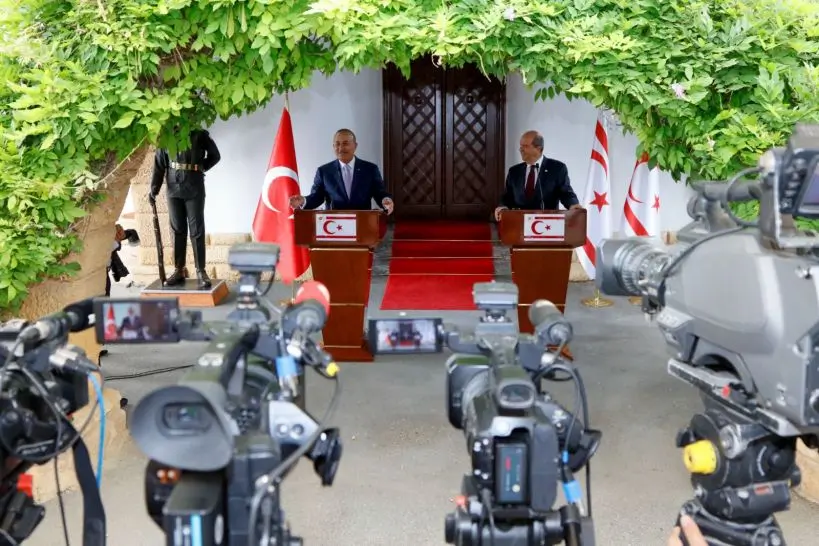
During a recent visit to the island, Turkish Foreign Minister Mevlüt Çavuşoğlu also promised to make it easier for Turkish nationals living in the northern part of Cyprus to get Turkish Cypriot citizenship.

In its 2021 Report on Turkey, the European parliament calls on Turkey to refrain from action altering the demographic balance in Cyprus.

The citizenship issue is sensitive for the Turkish Cypriot community, who already feel like a minority in their own country in the face of a growing Turkish population that is increasingly determining the outcome of elections.

“Citizenships are being granted to people, who have no sense of belonging to this country whatsoever, just like that just because they will vote in a certain way,” says TDP head Mine Atlı. “The political will of Turkish Cypriots is under a serious attack.”

Senior researcher Mete Hatay of PRIO Cyprus Centre, who has done extensive research on the population and population politics in Cyprus, estimates that already 40 per cent of the total number of voters in the northern part of Cyprus are of Turkish origin. This percentage is an important factor especially in the elections for the Turkish Cypriot leader, where even one vote can be decisive.

Turkish Cypriot authorities have historically been criticised for arbitrarily distributing Turkish Cypriot citizenships with political considerations, especially during election periods. In fact, according to a PRIO Cyprus report titled, ‘Is the Turkish Cypriot population shrinking’ by Hatay, statistics indicate a clear increase in the number of the persons, who acquired Turkish Cypriot citizenship during election years.

In 2004 for example, when former Turkish Cypriot leader Mehmet Ali Talat’s Republican Turkish Party CTP came to power, it cancelled a decision by the previous right-wing ‘cabinet’ to grant citizenships to 1,600 individuals in one sitting right before elections.

However, according to political analysts, the policy of easing the granting of Turkish Cypriot citizenship to Turkish nationals, is targeted towards the elections in Turkey. Turkish President Recep Tayyip Erdoğan’s Justice and Development Party AKP has historically done worse among the people of Turkish origin in Cyprus than it did in the mainland in every election since 2014, when the Turkish diaspora gained the right to vote.

The issue of citizenship is sensitive also because it is directly related with who will or will not be entitled to become citizens of a possible future federal Cyprus.

“As long as the Cyprus problem remains unresolved and the northern part of Cyprus remains outside international law, the population will continue to increase uncontrollably,” underlines journalist Sami Özuslu. “And maybe one day, the issue of who is the majority and who is the minority in Cyprus, will be reversed. Maybe the Turks will claim that they are now the majority on the island, and will want to hold a plebiscite to unite with the motherland. Maybe we will witness a demand for ‘reverse-Enosis’ in 50, 60 years.”

https://cyprus-mail.com/2022/10/30/legal-action-to-stop-north-handing-out-citizenships/


Thursday, 28 July 2022

Turkey’s Trojan horse policy

Çavuşoğlu’s promise of easier ‘TRNC’ citizenship for Turks in the north has deepened concerns among Turkish Cypriots

By Esra Aygin


Turkish Foreign Minister Mevlüt Çavuşoğlu has promised to make it easier for Turkish nationals living in the northern part of Cyprus to get Turkish Cypriot citizenship, further deepening already grave concerns about the demographic change in the society.

During a gathering in Lapta/Lapethos earlier this week, Çavuşoğlu, in response to a Turkish national, who asked for help in getting a Turkish Cypriot citizenship, said: (getting a citizenship) “will no longer be a problem. There are laws here, but these can easily be changed through ordinances.”

Çavuşoğlu was accompanied by Ziya Öztürkler, who is responsible for the internal affairs dossier including the granting of citizenships in the current Turkish Cypriot coalition, who listened in compliance. Çavuşoğlu’s blunt promise on behalf of Turkish Cypriot authorities led to Republican Turkish Party CTP deputy Doğuş Derya to liken him to a “colony chief.”

The promise of easier citizenship deepened concerns among the Turkish Cypriot community, who already feel like a minority in their own country in the face of a growing Turkish population.

Senior researcher Mete Hatay of PRIO Cyprus Centre, who has done extensive research on the population and population politics in Cyprus, estimates the current Turkish Cypriot citizen population to be around 230,000. Seventy thousand of these are of Turkish origin, according to Hatay. The de facto population, on the other hand, including the workers on work permits and their families as well as students, is close to 500,000.

Under the current law in the northern part of Cyprus, anyone, who has been living there legally for at least five years – in other words – has five consecutive working permits, is entitled to receive citizenship as long as they don’t have a criminal record.

Since the law only sets the minimum number of years, different political parties have had different citizenship policies when in power. CTP, in 2015 for example, published an ordinance to increase the number of years required for becoming entitled to citizenship to 13. The National Unity Party UBP reduced this to ten years through a new ordinance.

“From what I understand, Çavuşoğlu is referring to the law, which stipulates a minimum of five years, and says the current rules can change with an ordinance,” says CTP deputy Asım Akansoy, who was responsible for the internal affairs dossier between 2015 and 2016. “So what Ankara wants is for the ordinance requiring ten years to change and for everyone, who has been living in the northern part of Cyprus legally for five years, to immediately be granted citizenship.”

Akansoy stated that Ankara had approached him with the same request during his post.

It seems that Ankara will be piling on the pressure regarding this issue, since the controversial “Economic and Financial Cooperation Protocol,” signed between the northern part of Cyprus and Ankara back in April also has a provision on the easing of the granting of Turkish Cypriot citizenship to Turkish nationals.

“With the aim of enhancing mutual cooperation, legislative arrangements will be made to ease the conditions of naturalisation,” the provision stipulates.

Researcher Hatay draws attention to the dangers of politicizing the citizenship issue like this.

“Can’t Çavuşoğlu, who made a public promise about citizenships, see that he is instigating the demographic fracture on this island?” he asked on his social media page. “Or does he not care?”

“This policy of further easing the conditions for citizenship turns all people of Turkish origin into Trojan horses,” in the eyes of the Turkish Cypriot community Hatay tells the Sunday Mail. “They are seen as a group that can be manipulated in the elections and that can dictate the outcome.”

Already, some 40 per cent of the total number of voters in the northern part of Cyprus are of Turkish origin, according to Hatay.

“This is not a percentage that can be underestimated,” he says. “Although they don’t vote for a single party as a block, they are a very important factor especially in the elections for the Turkish Cypriot leader, where even one vote can be decisive.”

According to Hatay, the pressure to ease the granting of Turkish Cypriot citizenship to Turkish nationals, is targeted towards the elections in Turkey more than anything else.

“The aim is to affect the elections in Turkey more than it is to manipulate the elections in Cyprus,” Hatay says. “This move is targeted towards garnering votes for the Justice and Development Party AKP. But of course we can say that it hits two birds with one stone.”

Every single Turkish national living abroad, including in the northern part of Cyprus, has become important since Turkey introduced the presidential system in 2018, Hatay explains. “In a parliamentary system, one vote may not mean much. But in the presidential system, one vote can make you win.”

AKP has historically done worse among the people of Turkish origin on the island than it did in the mainland in every election since 2014, when the Turkish diaspora gained the right to vote.

“This is why they are trying to attract votes with populist acts such as the easing of citizenship conditions,” says Hatay.

Getting a Turkish Cypriot citizenship gives the Turkish nationals living in the northern part of Cyprus the right to elect and be elected, as well as make daily life easier for them. Once they have Turkish Cypriot citizenship, they don’t have to renew their work permit every year, undergo health checks, and exit the country and come back every time they want to change jobs. With a citizenship, they also gain the right to make investments and buy property. In fact, there have been cases of Turkish nationals being deported after their work permits expired.

There are no clear numbers of how many citizenships are currently being granted. However, from fragmented statements from different officials in different media, it can be calculated that in the last four years until September 2021 some 13,000 people were granted citizenships. This makes on average 14 citizenships granted in one day.

The issue of citizenship is very sensitive since it is also directly related with who will or will not be entitled to become citizens of a possible future federal Cyprus. During the Cyprus negotiations in 2016, Turkish officials including President Recep Tayyip Erdogan had put pressure on the Turkish Cypriot ruling coalition of the time to naturalise 26,500 Turkish nationals, who had gained the right to receive Turkish Cypriot citizenship by law. Turkish Cypriot leader of the time, Mustafa Akinci had convinced Erdoğan to put this demand on hold.

In its 2021 Report on Turkey, the European Parliament calls on Turkey to refrain from action altering the demographic balance in Cyprus.

https://cyprus-mail.com/2022/06/19/turkeys-trojan-horse-policy/

Tuesday, 5 April 2022

Stateless children: The fight for Cypriot citizenship


Esra Aygin 


A recent court decision about two Turkish Cypriot children, who had been waiting for years for a response to their Cypriot citizenship applications, is a “critical milestone in the fight for citizenship, which is a long and arduous road” according to lawyer Murat Metin Hakkı. 

The administrative court in the Republic of Cyprus, last month, ruled in favour of the two Turkish Cypriots, who filed cases of administrative negligence against the state. The court said that Cypriot authorities acted in violation of the law by not responding to the application within a reasonable period of time.

The plaintiffs, born from a mixed marriage between a Turkish Cypriot and a Turk, are among thousands of applicants who have applied for Cyprus citizenship and who have been waiting for years. In most cases the applicants are not officially denied citizenship, but their applications are left pending indefinitely. They are also not given any proof of their application or a case file number. It is estimated that about 10,000 children were born from mixed marriages between Turkish Cypriots and Turks. Many of these children remain stateless because the nationality of the self-styled Turkish Cypriot entity does not constitute a nationality under international law. 

The main issue here is the denial of Cypriot citizenship to the children of mixed marriages, lawyer Hakkı tells the Sunday Mail. “This is what we need to challenge at the European Court of Human Rights. And this administrative court decision has enabled us to get a grip of the situation.” 

Following this decision, the Turkish Cypriots received a negative answer to their application on the grounds that the father entered the country illegally.

“Now we will move on to the second stage and take this denial to local courts,” explains Hakkı. “And if that does not prove to be an effective internal remedy, then we will go to the European Court of Human Rights.”

According to Hakkı, this process is likely to take another five to ten years. But a favourable decision by the ECHR will open the way for thousands of other children, who are awaiting Cypriot citizenship. 

 “A favourable decision by the ECHR would force the Republic of Cyprus to change its policy and take children’s rights and human rights into consideration,” says Hakkı. 

The lawyer is optimistic about the ECHR decision: “The chances of success at the ECHR is very high. You cannot victimize these children, who have no fault or responsibility in all of this. You can deny passports, IDs, even entry to the ‘illegal’ parent. But you cannot punish the child. The child has no chance to choose their parents.” 

Hakkı especially refers to two main international conventions, which, according to Article 169(3) of the Republic of Cyprus Constitution, have precedence over national law. These are The UN Convention on the Rights of the Child, and The European Convention on Human Rights. 

The UN Convention on the Rights of the Child bans any kind of discrimination against any child based on “the child's or his or her parent's…race, colour, sex, language, religion, political or other opinion, national, ethnic or social origin, property, disability, birth or other status.” 

The European Convention on Human Rights states that the enjoyment of any right “shall be secured without discrimination on any ground such as sex, race, colour, language, religion, political or other opinion, national or social origin, association with a national minority, property, birth or other status. It further adds that “no one shall be discriminated against by any public authority on any ground such as those mentioned.”  

Cyprus is signatory to both conventions.

According to Republic of Cyprus law, any child of at least one parent, who has Republic of Cyprus nationality, should also get citizenship. A provision was later added to give the discretion to the Council of Ministers in cases where any one of the parents entered the island illegally i.e., from the ports and airports in the northern part of Cyprus; or the residence of any of the parents is illegal i.e., in the northern part of Cyprus.

The Council of Ministers in 2007 made a list of criteria that have to be met, for children of mixed marriages to get Republic of Cyprus citizenship. Among these are children, whose parents’ marriage was solemnized outside Cyprus and children, whose parents had relations independently of the events of 1974 i.e., while studying or working outside Cyprus. 

However, these criteria are not being consistently applied, according to Hakkı. 

“The Council of Ministers looks like it opened a door for children of mixed marriages, but only some children could go through that door. Others did not.” 

In fact, the Turkish Cypriot mother and Turkish father of 5-year-old Pera Pınar met and got married outside of Cyprus. Pera was born in the Republic of Cyprus and has been awaiting a response to her citizenship application since 2018. 

The recent decision by the administrative court “does not give me much hope,” says Pera’s mother Çim. “It is positive, but there is still a long legal process of many years before anything concrete can happen. In the meantime, my child is deprived of the most basic rights in the country she was born and lives.” 

17-year-old Nehir Göker has been waiting for a Cypriot passport and ID card for all her life. Not getting any approval or denial, her mother Nafia finally applied to the Ombudsman in the Republic of Cyprus in 2017. The Ombudsman responded by informing her that recommendations had been made to the Ministry of Interior and the Civil Registry and Migration Department to ensure that citizenships are granted within a reasonable timeframe where the Council of Ministers criteria are met, and that the applicants are informed in writing about the reasons that their application cannot be approved where there the criteria are not met.  

The Ombudsman also cited a court decision regarding a citizenship application, which ruled that “the different treatment…is reasonable and justified since it aims to address the particular circumstances that the Republic is facing since 1974 and to avoid legalising of unlawful actions.” 

“From there on, the only thing left for me to do was to launch a legal battle, but I did not have the financial means to do that,” says Nafia, who is currently a single mother. 

“I am concerned about her,” she continues. “She realises that there is a problem with her identity, with who she is. I can’t answer her questions anymore. I did not want to give my child such a bad heritage. She wants to travel but she cannot. She is 17, she is dreaming about a future. The only future I can give her is a university education in this half of Cyprus.”  

 Nafia and her Turkish ex-husband got divorced in 2007. “I am trying to empathise with them too. I would understand this treatment if Nehir’s father was a soldier, who had come to the island in 1974. But he is not even in Cyprus anymore.” 

Forty-three-year-old Emel Kaya is another applicant with a Turkish Cypriot mother and a Turkish father. Her parents met through a Turkish youth magazine, which helped readers get pen pals. She applied for the Republic of Cyprus citizenship in 2005. She is still waiting. 

“I was born in Cyprus, I grew up in Cyprus. I have a Cypriot living style. My personality, my character was shaped here. I never felt like I belonged to Turkey. I belong to Cyprus. I want to live here. Everything I have is here. I see this as my country. And I hope one day my country will accept me,” she says. 

Emel is married with a Turk with German citizenship, who easily crosses to the southern part of the island with his German ID. 

“This hurts me the most,” says Emel. “He is a Turk with a German ID. No questions are asked. When it comes to me, I give my Turkish Cypriot ID and I have to answer who I am, where I come from, how I got this ID, and why I don’t have a Cypriot ID.” 

Emel is a poet and a peace activist, who is involved in a lot of bicommunal activities and has a lot of Greek Cypriot friends. 

“I am a person strugling for peace and federation, but I am being discriminated against by the Republic of Cyprus,” says Emel. “I am being told that I should not have been born. But those, who are advocating a separate independent state for Turkish Cypriots, who advocate for TRNC, are walking around with Cypriot ID cards in their pockets. We live in a very dystopic place.”

Emel believes that the administrative court’s decision is positive but too late for her. 

“I am 43,” she says. “Will I be able to fly from Larnaca like my husband, one day? Will I see the day when I am able to cross without anyone telling me that I am not a Cypriot? I am losing my hope.” 

https://cyprus-mail.com/2022/04/03/stateless-children-the-fight-for-cyprus-citizenship/


Saturday, 23 March 2019

The children denied citizenship

Cyprus to be scrutinised over failure to give citizenship to Turkish Cypriots from mixed marriages

By Esra Aygin


Aylin is a two-year-old stateless baby.

She has a Turkish Cypriot mother and a Turkish father, who met ten years ago at university in the United Kingdom. They got married in Turkey and moved to the northern part of Cyprus five years ago. Although Aylin’s mother is a national of the Republic of Cyprus (RoC), she has not been able to pass this on to Aylin. And she refuses to apply for Turkish nationality for her daughter for political and ideological reasons. Aylin remains stateless because the nationality of the self-styled Turkish Cypriot entity does not constitute a nationality under international law. She cannot travel to visit her father, who is currently working in a third country.

Aylin (not her real name) is one of the tens of thousands of Turkish Cypriot children, who had nothing to do with past events in Cyprus, but who are being punished for them.

On Tuesday, January 29, the difficulty Aylin and other Turkish Cypriot children of mixed marriages face in obtaining RoC nationality is expected to be debated at the Universal Periodic Review (UPR) – a meeting under the auspices of the UN Human Rights Council – which involves a review of the human rights records of all UN member states.

A report submitted to the UPR, highlights that a large group of Turkish Cypriot children with one Cypriot and one Turkish parent are denied their right to RoC nationality based on ethnicity. The report underlines the risk of statelessness for some of these children.

The report, co-submitted to the UPR by the Institute on Statelessness and Inclusion and the Research Team from Maastricht University, also explains that although the applicants are not officially denied citizenship their applications stand pending indefinitely.

The report estimates that some 15,000-25,000 people are denied their right to nationality in this way.

The report adds that the situation of Turkish Cypriot children of other types of mixed marriages that involve one Cypriot parent and one of another nationality remains unclear. According to the report, some people in this situation seem able to pass on their RoC nationality to their children, and some do not.

At the end of the report, the authors urge reviewing states to, among other things, recommend to the Republic of Cyprus to “review and amend relevant legal provisions and ensure non-discriminatory application of the law to guarantee the right of all persons who have one RoC parent to obtain RoC nationality, irrespective of the other parent’s ethnicity or gender as well as the place of residence and/or means of entering the country.”

According to RoC law, any child of at least one parent who has RoC nationality should also get citizenship. A provision has later been added to make an exception in cases where any one of the parents entered the island from Turkey or is living in the northern part of Cyprus.

Challenges the children of mixed marriages face in their right to obtain RoC nationality have been the subject of a widespread debate in Cyprus recently. The Turkish Cypriot Teachers’ Union KTOS is currently assisting – along with a Turkish Cypriot and a Greek Cypriot lawyer – some 5,500 Turkish Cypriots, most of whom are children, in their applications for RoC citizenship.  In August last year, Interior Minister Constantinos Petrides appointed a team to work with KTOS to go through the applications and grant citizenship to those who are compatible with the law provisions. Initially 420 were submitted to the ministry.

So far, however, there has been no progress at all on the issue, KTOS head Sener Elcil told the Sunday Mail, adding that they will take legal measures if necessary. Most of the applications are from individuals with one Cypriot and one Turkish parent, but some have one Turkish Cypriot parent and a parent of other nationality. Among the applicants are 32 Turkish Cypriots, whose both parents have RoC nationality but have not been accepted, Elcil said.

The report submitted to the UPR by the Institute on Statelessness and Inclusion and the Research Team from Maastricht University draws heavily on the field research led by Marieke Hopman and Ambra Borne conducted from August 2017 to May 2018 in Cyprus. The results were published in a report titled “Deleted off the map: the child’s right to nationality in in the Turkish Republic of Northern Cyprus” in October 2018.

The research, which included around 185 qualitative interviews with experts, politicians, parents, children and young adults, and around 30 observations, found that the nationality law of the RoC is applied in a discriminatory manner towards children of mixed marriages of a Cypriot and a Turkish national. The research notes that RoC nationality is unlikely to be passed on to a child if there is a Turkish parent, regardless of the birthplace or where the marriage is held.

“Authorities in the RoC have explained to us that the policy is in place because people in the RoC are worried that when unification will eventually happen, there will be too many Turkish Cypriots compared to Greek Cypriots on the island, which would shift the power balance. To prevent this, they have to limit granting RoC nationalities to children of mixed RoC/TR marriages,” researcher Hopman said.

“The policy not to grant children of RoC/Turkish marriages RoC nationality is…potentially a violation of both the right to nationality and the right to non-discrimination.”

It is estimated that there are 17,000 mixed marriages between Turkish Cypriots and Turks.

The research also found that in these situations, applications for RoC nationality are not officially denied but are left pending indefinitely where people are told to come back in a few months – a process that goes on for years.

According to the research, employees at the ministry of interior do not give proof of application or a case file number to applicants. People who challenge this issue legally, engage in court cases that go on for years.

“All children have rights, simply because they are children, no matter where they are born in the world, where they live or who their parents are,” Hopman and Borne told the Sunday Mail. “We definitely hope that the report will be discussed at the UPR and the recommendations will be brought forward.”


The Joint Submission of the Institute on Statelessness and Inclusion and the Research Team from Maastricht University to the Universal Periodic Review http://www.institutesi.org/UPR32_Cyprus.pdf


For the Maastricht University Research “Deleted off the map: the child’s right to nationality in the Turkish Republic of Northern Cyprus”  http://www.childrensrightsresearch.com/

Saturday, 12 August 2017

Back-door naturalisation in the north

By Esra Aygin

June 24, 2017
The National Unity Party UBP-Democratic Party DP coalition continues to grant Turkish Cypriot ‘citizenships’ in an uncontrolled manner, Sila Usar Incirli, head of the Doctors’ Union in the north, said. 
Incirli stated that there are long queues at the Nicosia public hospital formed by those seeking a health report for Turkish ‘citizenship’ applications. 
“The hospital is congested,” said Incirli on a TV programme this week. “There is a big crowd seeking a medical report for the citizenship procedures. 
“Civil servants are having to work overtime and doctors are having to examine a much higher number of people during working hours in order to keep up,” she added. 
Deputy head of the north’s UBP-DP coalition Serdar Denktash recently stated that a total of 7,200 people were granted Turkish Cypriot ‘citizenships’ since they came to power in April 2016 and added they would grant another 27,000 without hesitation. 
Yeniduzen newspaper, which is closely following the issue, reported that the hospital had to limit medical examinations for naturalisation purposes to 15 people per day, so as not obstruct other health care services to patients. 
The issue of naturalisation is very sensitive since it is directly related with who will or will not be entitled to become citizens of a possible future federal Cyprus.
There is an understanding between the Turkish Cypriot and Greek Cypriot sides that a total of 220,000 people currently in possession of Turkish Cypriot ‘citizenships’ will become citizens of a federal Cyprus. 
This figure includes Turkish Cypriots and Turkish nationals who have settled on the island as of December 2016.
The current naturalisation rule in the north stipulates that anyone, who has been living in the northern part of the island legally for at least five years, is entitled to receive ‘citizenship’.
However, the five-year requirement is, in practice, often waived by the office responsible for the interior affairs of the coalition council on grounds that the applicant “is of benefit to the state”.
Turkish Cypriot authorities have widely been criticised for arbitrarily distributing Turkish Cypriot naturalisation with political considerations, especially during election periods.
In fact, according to a PRIO Cyprus report titled, ‘Is the Turkish Cypriot population shrinking’ by Mete Hatay, statistics indicate a clear increase in the number of persons who acquired ‘TRNC’ naturalisation during election years.
The arbitrary distribution of ‘citizenships’ had become a widely-debated issue in 2004, when then Turkish Cypriot leader Mehmet Ali Talat’s Republican Turkish Party CTP, after coming to power, had cancelled a decision by the previous ‘cabinet’ to grant ‘citizenships’ to 1,600 individuals in one sitting.

Sunday, 8 May 2016

Akinci and Erdogan agree on Citizenships (The Cyprus Weekly, 29 April 2016)

Esra Aygin

Turkish Cypriot leader Mustafa Akinci and Turkish President Recep Tayyip Erdogan have reached an understanding that no further citizenships should be granted in the northern part of the island for the next 10 months.

Akinci raised the issue with Erdogan in a meeting the two had on the sidelines of the 13th Organization of Islamic Cooperation (OIC) Summit in Istanbul earlier this month and explained that a move to grant further Turkish Cypriot citizenships would compromise the solution process in Cyprus, a well-informed source has said speaking on condition of anonymity.

There was widespread concern that the incoming right-wing National Unity Party UBP and Democrat Party DP coalition in the northern part of Cyprus would bow to pressure from Turkey to grant Turkish Cypriot citizenship to some 25,000 people – 40,000 with their families – who have resided legally on the island for at least five years. The outgoing Republican Turkish Party CTP had resisted repeated requests from Turkish officials including from Erdogan himself, to grant the citizenships. Under the Turkish Cypriot citizenship law, anyone who has been living in the northern part of the island legally for at least five years is entitled to apply for and receive citizenship.

Turkish Cypriot leader’s spokesperson Baris Burcu refrained from confirming the understanding between Akinci and Erdogan, but said nevertheless that Akinci has discussed “with all the relevant actors the seriousness of the citizenship issue.”

“I am very pleased to say that all actors have comprehended the sensitivity of the issue and the soundness of Akinci’s approach. I hope the newly formed coalition does not take any steps that would unsettle the current situation,” Burcu added. 

The issue of citizenship is very sensitive since it is directly related with who will or will not be entitled to become citizens of a possible future federal Cyprus.

The Turkish Cypriot and Greek Cypriot sides have shared with each other their citizen and population figures within the framework of the negotiations. The sides have agreed, based on both sides’ figures, that the population of the federal Cyprus on the very first day of a solution will carry a four Greek Cypriots to one Turkish Cypriot ratio, and 40,000 extra Turkish Cypriot citizens is likely to become a spoiler. The sides have also agreed that Turkish citizens, just like Greek citizens, will have the right to free entry, free movement, establishment and property ownership in a federal Cyprus. However, these freedoms will also follow criteria that would regulate the ratio between the two mainlands to 4:1. That is, for each Turkish national making Cyprus home, there would be four Greek nationals, so that a 4:1 balance would not be disturbed.

The sides, who aim to find a federal solution to the Cyprus problem within 2016, are currently working mainly on the property issue to further bridge some of the remaining differences and move on to put on paper the agreements, the disagreements and the convergences under this topic.

The negotiations will proceed to the territory issue when “adequate progress has been reached in property” said Burcu. “Likewise, the sides will pick up the issue of guarantees and security when there is adequate progress in territory.”


It is understood that major elements in governance and power sharing, property, territory and guarantees will be taken up interdependently at the final give and take phase of the negotiations.

http://in-cyprus.com/curbs-on-residency-rights/

Monday, 21 March 2016

Turkey piles on the pressure (The Cyprus Weekly, 19 February 2016)

By Esra Aygin
The relations between Turkey and the north turned sour once again during the past week after the Turkish government mounted pressure on Turkish Cypriots to accept its terms for the operation of water from Turkey whilst also repeating its demand that some 10,000 Turks living on the island to be naturalised.
Following tense negotiations in Ankara over the management of water reaching the island through a trans-Mediterranean pipeline, Turkish Cypriot “prime minister” Omer Kalyoncu implied that the water will not be delivered unless Turkey’s terms are accepted, and complained of the oppressive treatment of his “ministers” during the meetings.
“Turkish Cypriot ministers had to deal with Turkish deputy undersecretaries who sat opposite them. This is a problem. The treatment we were faced with in Ankara indicates why this process did not lead to a positive conclusion,” said Kalyoncu.
The draft agreement reached in Ankara, which envisages the operation of the water by a private company, has once again been rejected by the CTP party assembly, as well as many political parties and non-governmental organisations in the north mainly on grounds that it bypasses municipalities.
In a separate development that added fuel to the flames, Turkish President Recep Tayyip Erdogan reportedly lambasted visiting Turkish Cypriot officials for not naturalising some 10,000 Turks, who have gained the right to apply for and receive Turkish Cypriot citizenship.
“Why are you not granting the citizenships? You have to take the necessary steps,” Erdogan was quoted by Turkish daily Milliyet as saying.
Under the current Turkish Cypriot citizenship law, anyone – who has been living in the northern part of the island legally for at least five years – is entitled to apply for and receive citizenship.
However, The Turkish Cypriot administration has halted the granting of citizenships except for births and marriages since Republican Turkish Party CTP came to the “government” as the major coalition partner in 2013.
This is not the first time the citizenship issue was raised by Turkish authorities.
During his visit to the north in December, Turkish Prime Minister Ahmet Davutoglu reportedly asked citizenships to be granted to some 26,500 Turks.
It is understood that Erdogan’s Justice and Development Party AKP, which held an election campaign in the northern part of Cyprus too ahead of the November general elections in Turkey, made a promise to the Turks on the island that their citizenship problem would be solved.
The reiteration of this demand prompted Turkish Cypriot leader Mustafa Akinci to make a public statement.
“I have never approved the mass granting of citizenships and there is no harm in saying this,” said Akinci. “There is a negotiation process that I am carrying out based on the formal citizenship data. These data include all our citizens. I cannot keep changing the data on the table.”
It remains to be seen how the latest standoff between Turkey and Turkish Cypriots will end. The Turkish Cypriot administration has limited room to manoeuvre however, as it economically depends on Turkey.
“Unfortunately as Turkish Cypriots, we have an unhealthy relationship with Turkey,” said CTP “parliamentarian” Armagan Candan. And this fact, which arises from being economically dependent on Turkey, slaps us in the face especially during sensitive times as these.”

Saturday, 20 February 2016

Turkey piles on the pressure (The Cyprus Weekly, 20 February 2016)

By Esra Aygin
The relations between Turkey and the north turned sour once again during the past week after the Turkish government mounted pressure on Turkish Cypriots to accept its terms for the operation of water from Turkey whilst also repeating its demand that some 10,000 Turks living on the island to be naturalised.
Following tense negotiations in Ankara over the management of water reaching the island through a trans-Mediterranean pipeline, Turkish Cypriot “prime minister” Omer Kalyoncu implied that the water will not be delivered unless Turkey’s terms are accepted, and complained of the oppressive treatment of his “ministers” during the meetings.
“Turkish Cypriot ministers had to deal with Turkish deputy undersecretaries who sat opposite them. This is a problem. The treatment we were faced with in Ankara indicates why this process did not lead to a positive conclusion,” said Kalyoncu.
The draft agreement reached in Ankara, which envisages the operation of the water by a private company, has once again been rejected by the CTP party assembly, as well as many political parties and non-governmental organisations in the north mainly on grounds that it bypasses municipalities.
In a separate development that added fuel to the flames, Turkish President Recep Tayyip Erdogan reportedly lambasted visiting Turkish Cypriot officials for not naturalising some 10,000 Turks, who have gained the right to apply for and receive Turkish Cypriot citizenship.
“Why are you not granting the citizenships? You have to take the necessary steps,” Erdogan was quoted by Turkish daily Milliyet as saying.
Under the current Turkish Cypriot citizenship law, anyone – who has been living in the northern part of the island legally for at least five years – is entitled to apply for and receive citizenship.
However, The Turkish Cypriot administration has halted the granting of citizenships except for births and marriages since Republican Turkish Party CTP came to the “government” as the major coalition partner in 2013.
This is not the first time the citizenship issue was raised by Turkish authorities.
During his visit to the north in December, Turkish Prime Minister Ahmet Davutoglu reportedly asked citizenships to be granted to some 26,500 Turks.
It is understood that Erdogan’s Justice and Development Party AKP, which held an election campaign in the northern part of Cyprus too ahead of the November general elections in Turkey, made a promise to the Turks on the island that their citizenship problem would be solved.
The reiteration of this demand prompted Turkish Cypriot leader Mustafa Akinci to make a public statement.
“I have never approved the mass granting of citizenships and there is no harm in saying this,” said Akinci. “There is a negotiation process that I am carrying out based on the formal citizenship data. These data include all our citizens. I cannot keep changing the data on the table.”
It remains to be seen how the latest standoff between Turkey and Turkish Cypriots will end. The Turkish Cypriot administration has limited room to manoeuvre however, as it economically depends on Turkey.
“Unfortunately as Turkish Cypriots, we have an unhealthy relationship with Turkey,” said CTP “parliamentarian” Armagan Candan. And this fact, which arises from being economically dependent on Turkey, slaps us in the face especially during sensitive times as these.”