Showing posts with label Turkey. Show all posts

Monday, 20 May 2024

Secrecy surrounds Turkish military taking over of airport in north

 March 3, 2024

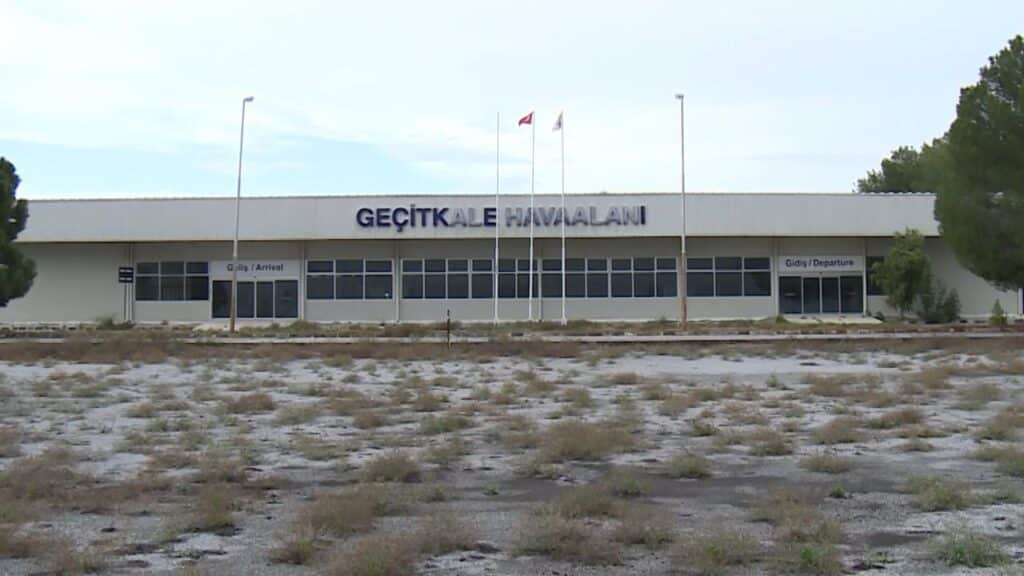
Gecitkale (Lefkoniko) airport

Opposition party says not given adequate information before a vote on airport’s contested future

The protocol between the north Cyprus and Turkey regarding the handing over of Lefkoniko airport to the Turkish army is being kept secret on the grounds that it constitutes classified military information. The protocol, backed unexpectedly also by the main opposition Republican Turkish Party CTP was unanimously approved by the Turkish Cypriot assembly in January.

The protocol to “allocate the Gecitkale (Lefkoniko) airport and its right of use to the Commandership of the Turkish Cypriot Peace Forces” is not published on any official website in the north or Turkey and attempts by the Cyprus Mail to obtain or see it were rejected as it is “classified and not public.” The Turkish Cypriot Peace Forces are under the direct control of the Turkish Armed Forces.

Before the unanimous vote at the assembly, which was broadcast live, the protocol’s aim was read out, which is “to improve the friendly and brotherly relations between the two countries and the military training and cooperation between the Armed Forces of the two countries.” The content of the protocol was withheld with the justification that it “includes many technical details.”

CTP has previously repeatedly objected to the use of Lefkoniko by the Turkish military as a landing airport and deployment hub for unmanned aircraft.

In a baffling address ahead of the vote, CTP head Tufan Erhurman said his party “will support the protocol” because Lefkoniko “will not become a military base” or “host warplanes.”

Minutes after the unanimous vote however, a triumphant Turkish media announced Lefkoniko as “Turkey’s first military base in the Eastern Mediterranean.”

Turkish state television TRT hailed the vote as a “historic step” that formalised “Gecitkale as an official base for Turkish Unmanned Aerial Vehicles (UAV) and Unmanned Combat Aerial Vehicles (UCAV).”

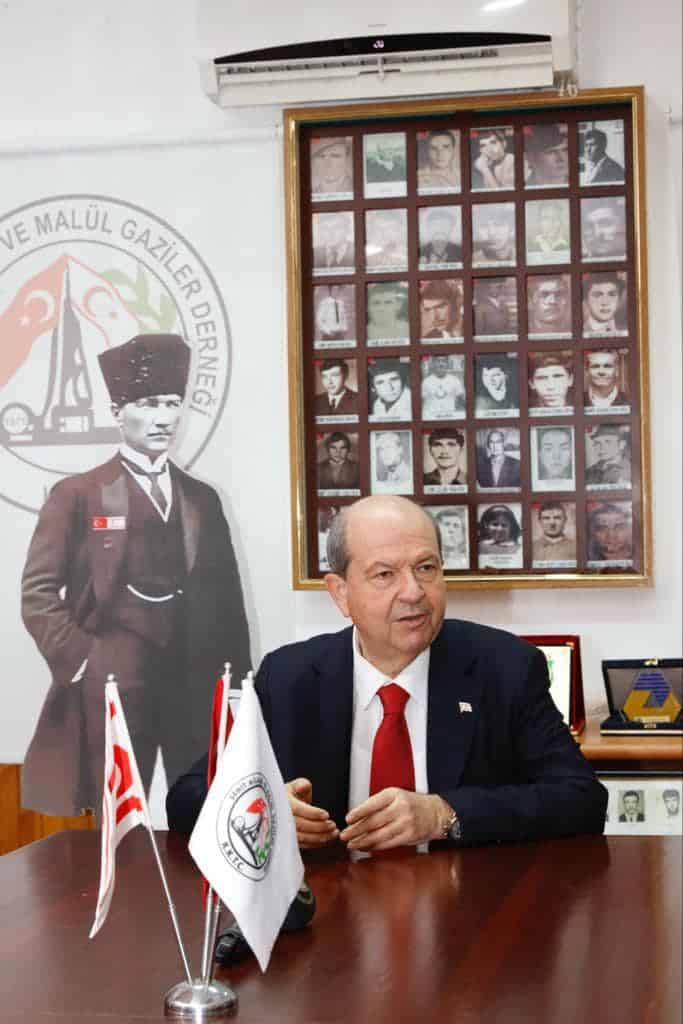
The same morning, Turkish Cypriot leader Ersin Tatar appeared live on a private Turkish television channel announcing, “Turkey now has a UAV and UCAV base in the TRNC.”

Amid the celebratory reports in the Turkish media and lack of transparency on the contents of the protocol, many found Erhurman’s justification far from convincing.

“Erhurman’s explanation… is unfortunate and serves nothing other than ridiculing our intelligence,” Fikri Marasali from the Turkish Cypriot Sol Hareket (Left Movement) said.

Journalist Ulas Baris also reacted on social media: “Gecitkale is already a military base. Erhurman either thinks we are stupid or he is joking… There is no other explanation.”

In fact, ten days prior to the unanimous vote in the assembly, CTP deputies Ongun Talat and Urun Solyali, who were members of the legal, political and foreign affairs sub-committee of the assembly, had voted against the protocol. They were outnumbered by the positive votes from the representatives of the ruling coalition and the protocol was referred to the assembly.

In an attempt to explain the contradiction, during his address Erhurman said Talat and Solyali rejected the protocol at sub-committee level because “they were not given adequate information” regarding its substance.

“We were put in a position where we had to contact the competent authorities ourselves,” Erhurman said. He added that Lefkoniko would be turned into an alternative airport without further land appropriations to be used in case Ercan/Tymbou is in any way disabled; it would not be a military base or a sovereign military base; that it would be used for air sports; and that civil aviation would remain in control.

Admitting that he had not seen the text of the protocol, Erhurman said: “The information we were able to obtain regarding the protocol is… within the parameters I have just mentioned… We reckon that we have obtained adequate information regarding the issue. Therefore, it is important to note that our positive vote is with these reservations and conditions. If there is any development outside these parameters, this would not be something we approve.”

The Cyprus Mail understands that the information was obtained by Erhurman in a private meeting with a high-ranking Turkish military official. It also anonymously confirmed that the deputies did not see the text of the protocol before the unanimous vote.

Turkish Cypriot Bagimsizlik Yolu (Path for Independence) questioned the basis of the statement that Lefkoniko airport will not become a military base.

“Who assured Mr Erhurman that the Gecitkale airport would not be used as a base for UAVs and UCAVs and that warplanes will not be deployed there,” it asked in a written statement. “Was this assurance verbal or written and documented? Does Mr Erhurman, as a legal expert, know that assurances are not binding unless they are written?

At least three CTP deputies walked out of the assembly just before voting began in an apparent protest against the party’s position.

In fact, plans to turn Lefkoniko into a permanent military base for Turkish UAVs and UCAVs were first voiced in 2021 by Turkish President Recep Tayyip Erdogan. “We have to be strong in case of any attacks in the region,” he had said. “And to be strong, we have to be present in the sky, on the land and in the seas.”

In 2023, the Turkish Cypriot ruling coalition gave authority to the ‘ministry’ responsible for transportation to prepare and sign the now-secret protocol with Ankara giving the right of use of Lefkoniko to the Turkish army. Erhan Arikli, who was then and still is responsible for the north’s transport dossier had hailed the decision on Turkish state television TRT: “Gecitkale airport will become a military base. And I will put the most honourable signature on it.”

Lefkoniko airport was first used for military purposes as a landing and stationing airport by Turkish UCAVs in 2019. The UCAVs were sent in response to oil and gas exploration activities by international energy companies licenced by the Cyprus government.

According to Turkish media reports, Turkey has been modernising the Lefkoniko airport since 2019, upgrading its infrastructure, building repair and maintenance stations, arsenals and storage for weapons systems. Military experts are quoted as saying that Lefkoniko airport was built in line with Nato standards and with a refurbishment it can in a short time become a base where F-16s can be deployed.

An intelligence report obtained by the Associated Press in 2021 indicated that Lefkoniko was receiving the upgrade for a planned deployment of additional drones, surveillance aircraft, training planes and advanced fighter jets.

Saturday, 6 January 2024

Crime heaven: corruption ‘worsening’ in north

By Esra Aygin 

1 January 2024 


Former Turkish vice president Fuat Oktay with Turkish Cypriot leader Ersin Tatar


‘Deterioration in terms of corruption has been evident in our reports’

Multiple bribery allegations surfacing over the past week involving senior Turkish and Turkish Cypriot officials have shaken the northern part of Cyprus and raised important concerns about the prevalence of corruption.

The first, which may indicate connections between politicians and mafia, involves former Turkish Vice President Fuat Oktay. Voice recordings published by Turkish investigative journalist in exile Cevheri Guven suggest that Oktay received $50 million (about €45 million) in bribes from the wife of gunned-down Turkish Cypriot mafia boss Halil Falyali.

According to the audio published on YouTube, Turkish Cypriot leader Ersin Tatar acted as a mediator along with a Turkish journalist Alihan Pehlivan in organising and coordinating the bribery.

The voice in the damning audio allegedly belongs to Falyali’s former accountant and close associate Cemil Onal, who is heard saying the bribe was paid “in exchange for not confiscating the Falyali family’s assets in Turkey and to end all investigations against them.”

Onal was recently arrested in the Netherlands in connection with Falyali’s murder and is currently in a Dutch prison, where he allegedly made the recordings. Guven claims that Oktay was replaced as Turkish vice president because word about the bribery got out.

Oktay, who at the time was also the Turkish minister responsible for Cyprus affairs, Tatar and Pehlivan have denied the allegations while Falyali’s wife Ozge has remained silent.

Turkish Cypriots leader Ersin Tatar


Hotelier, betting and casino tycoon Falyali was gunned down in February 2022 in a gangland-style execution involving Kalashnikovs and A47s while being driven home. His funeral was attended by high-ranking Turkish Cypriot politicians including Tatar.

Falyali, who was known as the main sponsor of the campaigns of Tatar’s National Unity Party UBP, faced criminal charges in the United States for money laundering. A 2015 US court affidavit said he rans“a large-scale drug and weapons trafficking organisation” in northern Cyprus and was “known to be associated with Turkish organised crime”.

In the same YouTube broadcast, Guven said Turkey has turned the northern part of Cyprus into a “crime heaven” and therefore, does not want a solution on the island or international recognition of the breakaway Turkish Cypriot state.

He also said this is why Oktay and other Turkish politicians intervened in the elections for the Turkish Cypriot leader in the north in 2020 in favour of Tatar.

“They clambered on [north] Cyprus, they literally staged a coup d’etat in the elections,” he asserted. “They got the man they wanted elected so that this… network of crime becomes stronger in [north] Cyprus; so that [north] Cyprus turns into a crime heaven for them; and so that they can fill their pockets… It has come to such a point that they don’t want [north] Cyprus to be recognised by the world or a solution there. They have themselves a grey area that is not recognised by anyone… and turned [it] into a crime heaven.”

Turkey’s interference in the 2020 elections was documented in an investigative report, which revealed shocking details of threats, pressures and blackmail against the incumbent leader Mustafa Akinci, as well as other candidates and journalists.

In a further bribery revelation in less than a week, a Turkish Cypriot businessman alleged on a live TV show that officials of the ruling right-wing coalition demanded a bribe in exchange for granting him a loan from the Development Bank.

Businessman Redif Nurel said Fikri Ataoglu, who is responsible for the tourism dossier in the north, and Hasan Tosunoglu, the then-chairman of the Development Bank demanded a bribe of 2.5 million Turkish Lira (about €77,000).

Nurel said he refused to pay the bribe and therefore never got his loan request approved.

Nurel also said that foreigners can “buy” Turkish Cypriot citizenship for 30,000 GPB (about €35,000).

Ataoglu and Tosunoglu filed a complaint with the police over the allegations.

These revelations “do not surprise me at all,” said Turkish Cypriot academic Sertac Sonan, who, with his colleague Omer Gokcekus, has been conducting annual studies on corruption in the north.

“The deterioration in terms of corruption has been evident in our reports,” Sonan told the Cyprus Mail. And it has got worse in the last three years, he said.

According to Sonan and Gokcekus’ latest study published in March and based on Transparency International’s Corruption Perceptions Index (CPI) methodology, the corruption perception score for the north for 2022, is 27 out of 100 (where zero indicates very high corruption and 100 no corruption). The north’s score was 40 when the academics first conducted the study in 2019.

“I am afraid there is a worsening trend,” added Sonan. These developments “demonstrate that we, as a society, are headed downhill.”

The score of 27 is far below the average score of 43 in 180 countries and places the north in the 140th position on the index along with Kyrgyzstan, Pakistan and Cameroon. The 2022 corruption perception score of Turkey is 36, placing it in 101st position, while that of the Republic of Cyprus is 52, placing it at 51.

According to the 2022 study, 40 per cent of the business executives interviewed resorted to bribery in the past year. Seventy-two per cent of the 350 interviewed said bribery and corruption was ‘very common’. Bribery was found to be most rampant among the ‘prime minister’ and ‘ministers’.

“Turkish Cypriots have gone through bad times but in terms of good governance, I don’t think we have seen worse,” Sonan said.

He added that the worsening trend over the past years has a lot to do with the current Turkish Cypriot right-wing coalition, which has very close ties with Ankara, seeing themselves as “irreplaceable.”

“They believe they will never be held accountable,” the academic said. “And this makes them more daring in putting their own personal interests in front of those of society.”

https://cyprus-mail.com/2024/01/01/crime-heaven-corruption-worsening-in-north/

Tuesday, 5 December 2023

Doubts cast on ‘giant project’ to supply north’s electricity

By Esra Aygin

September 10, 2023

An agreement signed with a private Turkish company to produce all the electricity in the north is riddled with problems say those in the field, who fear further dependence on Turkey


Turkish Cypriot head of coalition Unal Ustel and Turkish vice president Cevdet Vilmaz sign the agreement

Turkish Cypriot authorities have pledged to give up local electricity production entirely and become completely dependent on a planned cable from Turkey to the north.

The provisions of the recent agreement with private Turkish energy company Aksa to create the electricity cable link reveal that the pledge to get power exclusively through this cable was made blindly, as the details of the project – like the capital cost, sales price or transmission capacity – are still unclear.

According to the agreement, Aksa, which has close ties with Turkey’s ruling Justice and Development Party AKP, will carry out a feasibility study by July 2024. An ‘interconnection construction and operation agreement’ will then be signed, and within five years the cable link will be fully operational.

Following a memorandum of understanding for an electricity cable project from Turkey signed between Turkish Vice President Cevdet Yilmaz and ‘prime minister’ in the north Unal Ustel, an agreement was signed between Aksa and the Turkish Cypriot public electricity authority Kib-Tek on July 19. No public tender was held for the selection of the company to carry out the electricity cable project and it is not clear how Aksa was chosen.

With the agreement, Turkish Cypriot authorities have pledged that once the cable is operational all electricity needs in the north will be met by it. “The existing electricity plants will only be put into use if the electricity supplied through the cable is inadequate or there is a technical need,” the agreement states.

“After the feasibility study we will rapidly take the steps to materialise this giant project. We will put the signature of Aksa on this energy bridge with the TRNC,” Aksa CEO Cemil Kazanci said after the agreement was signed.

“We are realising a 30-year-old dream. This project will make TRNC a real part of the ‘Turkish Century’,” Ustel added.


Aksa’s facility in the north

Even though the idea of the cable link has been voiced at various points in the past, it was set as a top priority by Turkish President Recep Tayyip Erdogan after his re-election in May. Branded “the second project of the century” after the water pipeline from Turkey to the northern part of Cyprus, the cable link is promoted by Turkish and Turkish Cypriot officials as “the solution to the electricity woes on the island”.

Turkish Cypriots have been suffering from sweltering power cuts mainly due to lack of necessary maintenance, repair and investments in the electricity infrastructure. Moreover, as electricity is mainly produced using imported fuel oil, high electricity prices due to the volatility in fossil fuel prices, the war in Ukraine and the depreciation of the Turkish lira, are crippling the community.

Experts, civil society and opposition parties are questioning however, the logic of making such a huge commitment without a tender and without knowing the costs.

“Handing the electricity cable project to a private company without a public tender and with a guarantee to purchase… is in total violation of law. There is no provision in the agreement that stipulates how the costs will be calculated in the electricity cable project and this violates basic principles of economy. This agreement is aimed at selling off the assets of the community and is a destructive step and an illegal attempt that does not protect the interests of the people,” the Republican Turkish Party CTP, which took the agreement to the High Administrative Court along with the Cyprus Turkish Electricity Authority Workers Union El-Sen, said.

The Turkish Cypriot Chamber of Mechanical Engineers, which filed a criminal complaint over the agreement saying no regard was paid to public interest, said that the agreement only serves to give a private company a monopoly and increase its revenues.

“How can you ever say, ‘I will get 100 per cent of my country’s electricity through a cable?” asked chamber president Ayer Yarkiner. “How can you be this clueless? The term ‘project of the century’ is only being used out of ignorance. Nowhere in the world can a country put its signature under an investment without knowing its cost effectiveness.”

However, this is not the only point of contention. Although the agreement mentions an ‘interconnection’ none of the provisions describe a two-way transmission of electricity between Turkey and the north. The method that is envisaged in the agreement seems to be a system whereby electricity will be transmitted one-way from Turkey to the north by Aksa.

“Interconnection in the world is an alternative to diversify resources and decrease cost or ensure energy supply in case of failures,” explains energy economist and electrical engineer Yusuf Avcioglu. “There is no two-way transmission here. The agreement says ‘you will not produce electricity. I will give it to you through the cable.’ This is not interconnection… We have nothing to gain from this… We are totally surrendering to Aksa and Turkey.”


The second power station in the north near Kyrenia

The Turkish Cypriot ruling coalition sold the project to the public by reassuring them that they would be exporting the power generated by solar energy to Turkey through the cable and reducing energy costs.

Besides a solar farm, households in the north have the right to set up solar panels and sell to the grid.

“You lied to people,” CTP deputy Asim Akansoy said in a speech to the Turkish Cypriot assembly. “You said it would be a two-way transmission and we would sell our solar energy. Now you are handing 100 per cent of energy production to Aksa with a guaranteed purchase agreement.”

Experts agree that a simple one-way cable rather than an interconnection is detrimental for the Turkish Cypriot community, and being totally dependent on Turkey for electricity supply is one of its biggest risks.

Electricity prices are also expected to spike because the investment cost of the cable project plus all the operational and other expenses would be reflected in electricity bills. Reports in the Turkish media put the cost of the cable project to somewhere between $500 million to $1 billion.

At the same time, Turkey is an observer member of the European Network of Transmission System Operators for Electricity (ENTSO-E), which is the ultimate arbiter regarding the connection of a third state to the main grid. As long as the Cyprus problem remains unresolved, ENTSO-E is not likely to grant a permit to Turkey to make an interconnection with the northern part of Cyprus.

The contentious agreement also stipulates a guarantee of purchase whereby Aksa, through its electricity plant in Kalecik/Gastria in the Famagusta district, will produce at least 49 per cent of total electricity generated in the north for 15 years “during the transitional period until the cable is operational.” Despite persistent questions by opposition parties and civil society, Turkish Cypriot authorities have not been able to explain why this guarantee of purchase has been given.

This is seen by experts as a move to ensure Kib-Tek becomes idle even before the cable project begins operating.

“There is no limit to how much Aksa can produce,” explained president of the Chamber of Electrical Engineers Uner Kutalmis. “There should have been a limit so that the public electricity authority Kib-Tek remains relevant. There is no Kib-Tek anymore. There is only Aksa.”

After starting operations in the north in 2003, Aksa already produces 45 per cent of the electricity used in the northern part of Cyprus.

Furthermore, although the agreement gives the right to the Turkish Cypriot authorities to revoke it if Aksa fails to render the cable link operational in five years, an ensuing article states: “If either the Republic of Turkey or TRNC back out of the interconnection system, this will not be a reason for the revocation of this agreement.”

But you cannot just revoke this agreement after becoming so dependent on a private company, Avcioglu said.

“To be able to revoke this agreement, you need to have a production capacity that meets your needs. Right now, Aksa produces 45 per cent of the total electricity here. Do you have the capacity to cover that? No, not unless you make the necessary investments. Without doing that, you cannot just say, ‘I am revoking the agreement and I am surrendering half of the country to darkness’.”


https://cyprus-mail.com/2023/09/10/doubts-cast-on-giant-project-to-supply-norths-electricity/


Ergun Olgun: too yielding or too hardline?

By Esra Aygin

August 13, 2023


Speculation over the reasons for resignation of Turkish Cypriot leader’s representative


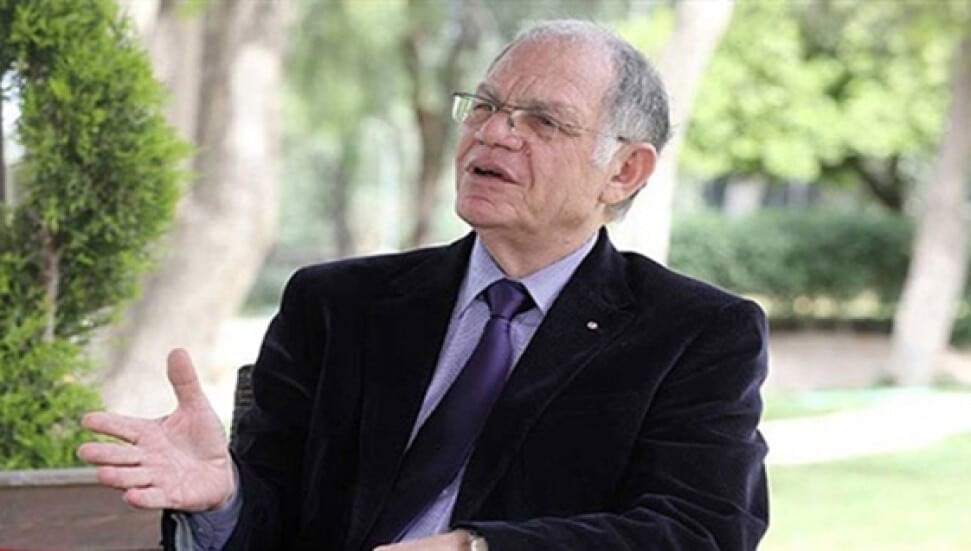
                                                                        Ergun Olgun

The Turkish Cypriot leader’s special representative Ergun Olgun recently unexpectedly resigned, sparking speculation that he was no longer seen fit for the job by Turkey. However, there are conflicting arguments over whether he was seen too yielding for a Turkey that has been insisting on a two-state solution in Cyprus; or whether he was seen too hardline for a Turkey that is recently signalling a more constructive stance.

Ergun Olgun, the 80-year-old die-hard advocate of an independent Turkish Cypriot state and the constant right hand of all hardline leaders from the late Rauf Denktash to Dervish Eroglu to the current Ersin Tatar, cited old age and said he was retiring rather than resigning.

“I am 80 years old. I don’t know how many more healthy years I have left. I want to spend time with my family,” he told the media, denying rumours of any disagreements on the Cyprus issue with Tatar or Turkey.

His resignation came a month after he was harshly criticised by ultra-nationalist circles for disclosing at a panel at Famagusta’s Eastern Mediterranean University DAU, that the Turkish side had abandoned its condition that the unilaterally declared Turkish Cypriot state – the ‘Turkish Republic of Northern Cyprus TRNC’ – be recognised by the United Nations Security Council.

“We have right now passed beyond that link about a Security Council decision, and we have conveyed this to the Greek Cypriot side,” Olgun said at a panel on Turkey’s Foreign Policy in the Mediterranean. “We said…negotiations between the two sides can begin without that link, or condition… This is not something we made public, but we can say it in a closed setting… We are looking for ways to find alternative formulas.”

He was responding to former negotiator and leader of the People’s Party HP, Kudret Ozersay, who, at the same panel, criticised the Turkish side of setting the condition that the UN Security Council recognises the Turkish Cypriot state before starting any kind of negotiations. This condition was tabled by the Turkish side during an informal meeting with UN Secretary General Antonio Guterres in Geneva in April 2021.

“Where did you find the right to abandon our national policy, which is to demand that the UN Security Council acknowledges our sovereign equality and equal international status?” asked ultra nationalist Sabahattin Ismail in his column in the daily Kibris after the recording of the panel was uploaded on YouTube. “Is Turkey and President Tatar aware of this?… What kind of an insanity is it to say one thing to the people and then compromise from the national policy behind closed doors?”

To ward off speculation that the special representative had left his post as a punishment for making this revelation or even this compromise, Tatar and Olgun gave a joint interview to the semi-official news agency TAK, constantly repeating they had no problems or disagreements. This only served to amplify the rumours. During the interview, the two also reiterated that the negotiations can only start with the acknowledgment of sovereign equality and equal international status.

“There were those, who were not comfortable with Ergun Olgun, and who even did not find him enough of a Turkish nationalist or pro-TRNC and kept attacking,” wrote journalist Serhat Incirli in the daily Yeniduzen. “And Ersin Tatar could protect Ergun Olgun. He didn’t.”

Other observers, however, underline that a small window of opportunity may have opened for Cyprus due to Ankara’s recent interest in reconciling with the European Union after the Turkish presidential elections and draw attention to the fact that Olgun’s resignation comes at a time of a seeming slight shift in Turkey’s position vis a vis the Cyprus problem.

In a recent statement, Turkish President Recep Tayyip Erdogan not only referenced the Annan Plan and expressed hope for a lasting and just peace in Cyprus, but he also spoke of a renewed rapprochement with the EU especially on visa-free travel and the customs union.

“We will not hesitate to take responsibility for the island of Cyprus to achieve a lasting and just peace,” said Erdogan following a cabinet meeting in Ankara. “We have shown our sincerity on this issue in every process up to now, including the Annan Plan, and we will [do it] again if necessary.”

Erdogan mentioned his meetings with world leaders including US President Joe Biden, Greek Prime Minister Kyriakos Mitsotakis and French President Emmanuel Macron at the recent Vilnius Nato summit and said: “We have seen during these meetings that we have no problems with any country that cannot be solved. Provided that dialogue and diplomacy are given a chance, we believe that misunderstandings will be overcome, and disagreements will be solved.”

Shortly after President Erdogan, Turkish National Defence Minister Yasar Guler called for a fair and permanent solution to the Cyprus problem.

“The immediate solution of the Cyprus problem through securing the legitimate interests and security of Turkish Cypriots is one of the most important priorities of our country,” he said. “We have cannot afford to lose another 50 years on this. Our wish is that…a strong will is put forward for the peaceful, equal, and fair solution of the Cyprus problem, based on international law…”

Asked about a possible policy change by Turkey vis a vis Cyprus, Turkish Cypriot leader Tatar was in full denial.

“The policy that we are pursuing is the correct policy,” he told the media. “AKP [Justice and Development Party] and MHP [Nationalist Movement Party] are supporting this policy. There can be no turning back after this point. This is now an established policy.”

Underlining that the fact that elections in Turkey are over also provides for a greater room for manoeuvre. Fikri Toros, a deputy from the main opposition Republican Turkish Party CTP, says he expects some movement in the Cyprus issue as of autumn this year when the UN General Assembly will be held.

“I believe that the fact that Turkey has prioritised the revival of its relations with the EU and the US will open a new window of opportunity for the solution of the Cyprus problem,” says Toros.

Former negotiator Ozdil Nami agrees:

“Turkey had to keep its guard up… before the elections in Turkey. Turkey backtracking to this extent in the Cyprus issue was not rational. It was about internal politics. It was aimed at winning the elections. And that has happened.”

Nami added that Tatar would change his current hardline policy with just a phone call from Turkey.

It is not unprecedented for Turkish Cypriot negotiators or special representatives to suddenly change when there is a shift in Turkey’s Cyprus policy. In 2014, during Dervish Eroglu’s leadership, Turkish Cypriot hardline negotiator Osman Ertug was replaced with Kudret Ozersay. This was seen as an indication of Ankara’s willingness to keep the process alive and even bypass Eroglu following the joint statement of February 2014.

Days after his resignation, Olgun warned against a Greek Cypriot aim to extort concessions from Turkey by exploiting its possible desire to improve relations with Brussels and said it is impossible for Turkey to change its Cyprus policy.

The coming days will demonstrate the true reasons of Olgun’s departure as the person to replace him will bear the hints of the course Turkey will want to take in the Cyprus problem.


https://cyprus-mail.com/2023/08/13/ergun-olgun-too-yielding-or-too-hardline/

Anger over administration-sanctioned Quran courses in north

By Esra Aygin

July 30, 2023


Secularism under threat as summer courses for children offered in mosques


Children in a mosque receiving instruction in the Quran during their summer break (Yeniduzen)

“Today, the tyranny of secularism [in the northern part of Cyprus] has matched the tyranny of Greek Cypriots. This secularist tyranny…must end now.”

These were the words of Ali Yıldız, the president of the Turkish trade union Diyanet-Sen, which represents employees of the Directorate of Religious Affairs in Turkey. Yıldız was reacting to the backlash in the secular and modern Turkish Cypriot community against Quran courses targeting minors in mosques during the summer.

Online Turkish Cypriot newspaper Bugun Kıbrıs revealed that the Turkish Cypriot education authorities had given permission for children to be taught the Quran by imams in mosques during the summer break.

In recent years, Quran courses were being offered illegally in mosques by imams without the permission of the Turkish Cypriot education department, which feared the reaction of the Turkish Cypriot community. Police occasionally raided these courses. As revealed by Bugun Kıbrıs, the Turkish Cypriot education department now seems to have bent under the pressure, and on July 3 gave official permission for Quran courses for children at mosques.

In 2021, the Turkish Cypriot constitutional court had ruled that Quran courses cannot be organised without the permission, supervision and control of the Turkish Cypriot education department, drawing the fury of Turkish President Recep Tayyip Erdogan.

“We will never tolerate steps that impede the Quran education of our children in northern Cyprus,” Erdogan had responded and urged the Turkish Cypriots to fully adopt Turkey’s practices on religious education.

“The notion of secularism is not what they imagine it to be and northern Cyprus is not France,” he had asserted.

The Bugun Kıbrıs newspaper ran photos of young boys and head-scarved girls attending these courses, where they are offered fruit juices, ice cream and other sweets. It also reported that the imams could, every now and then, be heard shouting at the children.

The courses are especially appealing to lower-income families, who need to go to work and do not want to leave their children alone at home during the summer months.

The Turkish Cypriot ruling coalition and the education department was under heavy criticism from the media, civil society organisations, opinion leaders and some politicians for giving permission for the Quran courses.

“The education ministry is committing a crime by allowing minors to be taught by imams with no pedagogical formation, who deceive and brainwash them with ice cream,” stated Selma Eylem, head of the Cyprus Turkish Secondary School Teachers Union Ktoeos.

Calling this an attempt to make Quran courses a part of formal education, Eylem added that these courses are part of the social engineering being carried out by Erdogan’s Justice and Development Party AKP.

While most Turkish Cypriots consider themselves Sunni Muslims, they practise a very peaceful and moderate version of Islam in contrast with the Turks of Turkey. Among the most liberal Muslims globally, Turkish Cypriots are not influenced by organised religion, rarely attend mosques, and adhere to a very strict form of secularism. The Turkish Cypriot constitution safeguards secularism in the northern part of Cyprus.

Mine Atli, head of the Social Democracy Party TDP, agrees that the Quran courses at mosques are part of the efforts of Ankara to change the secular characteristic of the Turkish Cypriot community.

“All this is being done under the name of ‘freedom of religion,’ but these courses are completely based on Sunni Islam,” says Atlı. “We will not remain silent in the face of this crime committed against our children. We will not let our country drown in the darkness of AKP.”

“Education should be given at schools by teachers,” the main opposition Republican Turkish Party CTP said in a written statement. “We are against reactionary impositions and illegal practices aimed at social engineering.”

In recent years there is an undeniable Islamisation in the northern part of Cyprus with the Turkish government providing significant support to Sunni Islamic activities here. Consequent economic protocols signed between the Turkish Cypriot administration and Ankara introduce conditions that constantly aim to consolidate the role of Islam in Turkish Cypriot society from strengthening the religious affairs department, to organising religious youth camps to building more theology schools, religious complexes, tekkes and shrines.

The backlash in the Turkish Cypriot community against the Quran courses grew even bigger with the statements of Diyanet-Sen president Yıldız from Turkey, who continued:

“49 years ago, the Turkish army risked their own lives and protected… our [Turkish] Cypriot brothers from the Greek invasion and the Greek Cypriot tyranny… Now a group in the northern part of Cyprus, which characterises itself as secular, and which has a mentality parallel to that of Greeks, is trying to eliminate all religious beliefs and values from public space, including education. What needs to be fought against is this mentality. Not those, who teach and study our glorious book Quran.”

A few days later another provincial head of Diyanet-Sen, Mehmet Akif Gerboga added flames to the fire by stating:

“The tyranny of this group, which is an enemy of Islam…is the same as the tyranny of Greek Cypriots. The tyranny of this group, which poses as secular, should end… We believe that the Turkish Cypriot people deserve neither the tyranny of Greeks nor this group, which has no national or moral values.”

Underlining that secularism is not only safeguarded in the Turkish Cypriot constitution but also the Turkish constitution since 1937, former ombudswoman and retired judge Emine Dizdarlı, said no one has the right to meddle with and attack the Turkish Cypriot way of life.

“Secularism is not tyranny, it is civilisation,” asserted Kudret Ozersay, head of the People’s Party HP, on his social media account. “It is the safeguard of all freedoms, and mainly freedom of religion and faith. Nobody has the right to present the secularism of Turkish Cypriots as blasphemousness.”

Burak Mavis, secretary general of the Cyprus Turkish Teachers Union Ktos, during a press conference last week, said small children are being subjected to religious exploitation at the Quran courses and defined these as part of efforts to institutionalise sharia law.

Cyprus Turkish Civil Servants Trade Union Ktams head Guven Bengihan agreed:

“Recently there are attacks against the Turkish Cypriot secular way of life. There are planned efforts to establish an anti-secular system here.”

“Religious culture and moral knowledge” classes, which basically consists of teaching Sunni Islam became a compulsory subject in Turkish Cypriot schools in 2009, with most teachers coming from Turkey. In 2012 the Hala Sultan theology college was inaugurated. Currently there are plans to establish a second theology college in Famagusta. Turkish financial support has been instrumental in these activities, funnelled via the assistance office at the Turkish embassy in Nicosia.

Many Turkish Cypriots feel threatened by the Islamic hegemony culminating in more and larger mosques, Quran courses, plans to establish more theological schools, more conservative imams and religion teachers coming from Turkey, the mushrooming religious cults and sects, and attempts to change the Turkish Cypriot education system.


https://cyprus-mail.com/2023/07/30/anger-over-administration-sanctioned-quran-courses-in-north/

North’s electricity deal with Turkey as elusive as ever

By Esra Aygin

July 2, 2023


The north suffered a total of 5,277 power cuts in 2022, two times worse than in Pakistan


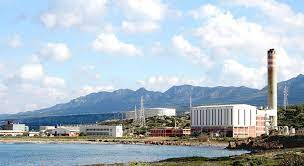
Teknecik power station in the north

Plans to create an electricity cable link from Turkey to the northern part of Cyprus are far from transparent, with experts warning that if the interconnection method isn’t implemented, the Turkish Cypriot electricity woes would be worsened rather than alleviated.

In recent weeks, newly re-elected Turkish President Recep Tayyip Erdogan and his vice president Cevdet Yılmaz, who paid separate visits to the island, listed among their priorities an undersea electricity cable project from Turkey to put an end to the power cuts in the north. This was taken as a sign that the project that has been voiced occasionally for the last decade will finally materialise.

Turkish Cypriots have been suffering from sweltering power cuts mainly due to lack of necessary investments in the electricity infrastructure and frequent fuel shortages. There were a total of 5,277 power cuts in 2022 according to economist Mertkan Hamit, which makes the country two times worse than Pakistan with the worst average monthly electricity supply according to World Bank data.

Moreover, as electricity is mainly produced using imported fuel oil, high electricity prices due to the volatility in fossil fuel prices, the war in Ukraine and the depreciation of the Turkish lira, are crippling the community. The price of electricity increased by over 190 per cent since the beginning of 2022, according to the figures from the Turkish Cypriot statistics department.

But will the undersea cable project, which according to Turkish ambassador Metin Feyzioglu, would cost US$780 million (€717 million) solve the problem?

While the finer details of the cable project have not been made public, experts are expressing concern over the lack of transparency and warning that if the plan is to merely buy electricity from a power generator in Turkey through a one-way system rather than an interconnection permitting a two-way transmission of electricity between Turkey and the north, this would worsen energy supply security and further increase prices.

“I fear that the project on the table right now might merely be an electricity transfer without interconnectivity,” says Ozdil Nami, who was responsible for the energy dossier in the north between 2018 and 2019.

“The truth of the matter seems to have changed.”

There are political difficulties in front of establishing an interconnection with Turkey, as the country is an observer member of the European Network of Transmission System Operators for Electricity (ENTSO-E), energy economist and electrical engineer Yusuf Avcıoglu explains to the Cyprus Mail.

ENTSO-E, which unites European Union member states’ transmission grids, was established by EU countries in 2009 to increase energy supply security. There is a permanent connection between Turkey and the ENTSO-E’s Continental Europe grid since 2015 via Bulgaria and Greece.

“ENTSO-E is the ultimate arbiter regarding the connection of a third state to the main grid,” says Avcıoglu, who is also the former vice-chairman of the board of directors of the Turkish Cypriot electricity authority Kıb-Tek. “Therefore, ENTSO-E’s permission and approval is needed for any interconnection made by Turkey.”

According to Avcıoglu, as long as the Cyprus problem remains unresolved, ENTSO-E will not grant a permit to Turkey to make an interconnection with the northern part of Cyprus, and the only method that can be approved and implemented at the moment is the “isolated area feeding” method.

This is exactly the method the experts are warning against.

“This means electricity can only be transmitted one way by Turkey to the north through a power generator set up separately from the main grid,” Avcıoglu says. “This is not interconnection. A two-way transmission will be impossible. We would not be able to export the power generated by solar energy.”

Besides a solar farm, households in the north have the right to set up solar panels and sell to the grid.

A simple one-way cable rather than an interconnection would be detrimental for the Turkish Cypriot community Nami tells the Cyprus Mail.

One of the biggest risks is becoming dependent on the electricity supply from Turkey.

According to reports, the cable from Turkey “will meet one thirds of the total demand. This is a huge share. The smallest problem or failure would make the country plunge into darkness,” says Nami. “On top of that, we would not be able to sell our extra electricity generated by solar panels and the electricity prices would spike because the investment cost of this huge project plus all the operational and other expenses would be reflected in the electricity bills.”

In this case, it is vital that other alternatives are considered, experts say.

Caglayan Cesurer, the president of the Cyprus Turkish Electricity Authority Workers Union (EL-SEN), also made a statement warning about the risks or the project.

“If you connect the north to Turkey through a system which will allow us to buy electricity when needed and to sell electricity when needed, then go ahead,” said Cesurer. “But what you are trying to do here is to set up a system for a one-way purchase from a power generator in Turkey. At all costs, we will never allow a one-way sales agreement with Turkey through a cable.”

A question that arises at this point is, would Turkey, which has an income of about €2 billion per year as a result of its membership in ENTSO-E, go ahead with an interconnection with the northern part of Cyprus and risk being sanctioned?

“It is possible,” says Nami. “It is totally up to the political will of Turkey.”

Nami says that during his tenure in 2018, there was not enough political will on the part of Turkey to push forward with this.

“Turkish officials wanted to realise the project but also did not want any problems with ENTSO-E.”

However, Nami also relays to Cyprus Mail that during his meeting with ENTSO-E officials in Brussels the same year, he was told that Turkey would not be massively sanctioned if it went ahead anyway and made an interconnection with the north without ENTSO-E’s permission, as many member countries are benefitting significantly from Turkey’s presence on the grid.

As the Turkish Cypriot community awaits to find out about the details of the cable project,

Olgun Amcaoglu, who is currently responsible for the economy and energy dossier in the north, recently told reporters that the Turkish Energy and Natural Resources Minister Alparslan Bayraktar “has assured us that there would not be any problems with ENTSO-E”.

Clearly clueless about the plans, Amcaoglu concluded: “President Erdogan also conveyed to us that they are taking full responsibility.”


https://cyprus-mail.com/2023/07/02/norths-electricity-deal-with-turkey-as-elusive-as-ever/

Sinister intelligence chief named Turkish foreign minister

By Esra Aygin

June 11, 2023

Will have huge impact on northern Cyprus


Turkey's newly appointed Foreign Minister Hakan Fidan and his predecessor Mevlut Cavusoglu attend a handover ceremony

The appointment of Turkey’s secretive intelligence chief as the country’s new foreign minister is a sign that Turkish foreign policy, which has been led through espionage, military measures and talks behind closed doors in the last decade, will continue to override public diplomacy, dialogue and peaceful relations.

Many analysts agree that Hakan Fidan, 55, who has led the Turkish National Intelligence Agency (MIT) since 2010, and has now become the foreign minister, was in the last decade the person shaping the foreign policies of Turkey, from Cyprus to the Middle East to the Balkans and the West.

Fidan replaced ex-foreign minister Mevlüt Çavuşoğlu, after Turkish President Recep Tayyip Erdoğan won the runoff elections on May 28 in Turkey.

“The one, who shaped foreign relations in the last decade, the one who fought with the whole world, who burned all the bridges, who formed hostile relations, and for this reason made Turkey pay a heavy economic price, was not the foreign minister,” said Turkish lawyer and political commentator Salim Şen during a TV programme earlier this week. “Nor was it the foreign ministry. Nor the Turkish armed forces. All these were done with Hakan Fidan.”

International Relations expert and academician Yonca Özdemir believes that Fidan’s recent appointment will only consolidate the security and intelligence-based foreign policy approach of Turkey.

“For a long time now, foreign relations have been managed through MIT,” says Özdemir. “With this appointment, this reality is materialising and becoming official.”

Fidan is a graduate of the army forces school and was a non-commissioned officer in the Turkish army. After serving in various government positions including as an adviser and a special envoy to the then-prime minister Erdoğan, he was appointed to head MIT at only 42 years of age. During his 13-year tenure, he transformed and strengthened MIT and elevated it to become the most important actor in Turkish foreign policy along with the presidency.


Hakan Fidan had a role in the elections which saw former leader Mustafa Akinci lose.

International relations expert İpek Borman underlines that Turkey in the last decade has led a securitised foreign policy, under which regular political issues have been transformed into matters of security, thus enabling extraordinary means to be used.

“Through official rhetoric and actions, many foreign relations issues are elevated to become matters of survival of the state,” says Borman. “Therefore, any action and operation become justified and legitimised.”

In a securitised geopolitical environment, the main actor is not the foreign ministry but the security apparatus, explains Borman.

Fidan who has been referred to as “my confidant” by Erdoğan, has been at the centre of many controversial issues.

In 2012, he led secret talks with the outlawed Kurdistan Workers Party (PKK) and became the subject of a terrorism inquiry until Erdoğan changed the law to protect him. In a notorious leaked recording in 2014 of a discussion of top security officials including Fidan, on how to justify an operation in Syria, the voice purportedly of Fidan says: “Now look, my commander, if there is to be justification, the justification is, I send four men to the other side. I get them to fire eight missiles into empty land. That’s not a problem. Justification can be created.” The Turkish government never denied the authenticity of the recording.

In another incident in 2014, Syria-bound MIT trucks were stopped in southern Turkey. Officials claimed the trucks were carrying humanitarian aid to the Turkmens in Syria, but a newspaper later revealed that the trucks were carrying weapons to the rebel groups fighting against the Syrian government. The prosecutors, police, gendarmerie, and military personnel involved in the stopping of the trucks had their positions changed, were suspended, and some were arrested. Journalists, who reported the incident, were sentenced to prison.

Fidan was also one of the most discussed names in the coup attempt in 2015, with questions revolving around why the MIT had not informed or warned Erdoğan although it was aware of the plan. Opposition leader Kemal Kılıçdaroğlu alleged that the coup was a conspiracy planned by the intelligence and the government. Fidan refused to testify before an investigative parliamentary commission regarding the coup attempt.

The consequences of the securitised policies have also been visible in the northern part of Cyprus, which in recent years, has been witnessing a very heavy-handed control by Turkey.

“Cyprus is an extremely securitised area,” says Borman. “It is seen as a ‘strategic asset.’ Therefore, the approach here is to do away with any opinion or activity that may undermine this ‘strategic asset’.”

One investigation has revealed shocking details of threats, pressure and blackmailing by Turkey’s MIT during the 2020 elections against the then Turkish Cypriot leader Mustafa Akıncı in favour of right-wing politician and current leader Ersin Tatar.

According to the investigation report published in 2021, Akıncı’s private secretary Cenk Gürçağ was invited to meet with the MIT officials, where he was told:

“The enemy is at the door. We need people, who love Turkey, who will not betray Turkey, who will cooperate with Turkey, to lead this place. We don’t want Akıncı here. He will not win. We will make sure he doesn’t win. Even if he does, nothing will be the same. We know everything about the people close to him. We know every breath they take…”

The MIT official continued: “I urge you to convey to Akıncı. It will be the best for him, his family, and his close colleagues to withdraw his candidacy. Tell him to announce this on Facebook tonight. We come from the very top. Nobody and nothing is more important than Turkey’s survival.”

According to the report, after finding out about this threat, Akıncı summoned Turkey’s ambassador to his office. The Turkish ambassador refused saying: “It is Ankara’s orders. I cannot come.”

“MIT has been working as if it was the one responsible from Cyprus anyway,” says journalist Aysu Basri Akter. “It has been very active. It intervened in elections, it was here on the ground, people were threatened, people were pulled aside and intimidated.”

Akter, who is one of the ten Turkish Cypriot journalists, writers, and intellectuals, who have been denied entry into Turkey on grounds that they pose a threat to Turkey’s national security, also underlines that the list of banned Turkish Cypriots is prepared by the MIT.

“We were all told as we were denied entry that there is a MIT report against us,” says Akter. “With Fidan now at the foreign ministry, Turkey’s interventionist approach in Cyprus based on conspiracy theories, deep relations and intelligence will continue.”

International relations expert and academician Özdemir believes that the oppression in the north will get even worse especially because of the results of the Turkish presidential elections. Some 140,000 Turkish nationals living in the north had the right to go to polls.  Opposition leader Kemal Kılıçdaroğlu won 60 per cent of the votes in the north.

“I am sure this has been noted somewhere,” says Özdemir. “I am sure the control on the northern part of Cyprus will become even firmer.”

“The man is not a diplomat, he is a soldier,” stresses Akter. “Turkish foreign policy is being fully surrendered to the hands of deep intelligence and military.”

https://cyprus-mail.com/2023/06/11/sinister-intelligence-chief-named-turkish-foreign-minister/


‘Famagusta has had wars, but never such a pain’

By Esra Aygin

February 19, 2023

Turkish Cypriots left reeling after Turkey earthquake deaths


Rescuers in the rubble of the Isias hotel

The Turkish Cypriot community, and especially Famagustians, are mourning the deaths of 24 of their brightest and most accomplished children along with 11 parents and teachers in the devastating earthquake that hit southern Turkey last week.

The students, aged between 11 and 14, were all from a Famagusta secondary school and were in the Turkish city of Adıyaman for a volleyball championship along with 15 parents and teachers. They were all staying at the Isias hotel. Thirty-five of them including all the children died, while four adults managed to get out of the rubble by themselves.

As the bodies of 24 children and 15 adults were recovered from the Isias hotel rubble and brought back to Cyprus over the course of a week, Turkish Cypriots were likening their pain to none other they had felt before.

“Famagusta has had wars, but never such a pain,” said peace activist and doctor Okan Dağlı, who lost his cousin’s wife and two children in the Adıyaman Isias hotel. “These children did not go to war. These children went to play volleyball and they got buried alive under the rubble.”

In the worst natural disaster in the region of the last century, as the World Health Organisation has called it, two earthquakes of magnitude 7.8 and 7.5 struck southern Turkey and north-western Syria within hours on Monday, February 6 and killed a total of over 41,000 people – a figure that is expected to rise. The total number of Turkish Cypriots to have died in the earthquake in different parts of Turkey now stands at 48.

Dağlı explains that the grief has touched everyone in Famagusta in some way, as every child that has died, or their parents are friends with or known to someone in the closely knit and small town.

“Some people in Famagusta lost all their family in the earthquake, some children lost both their parents, some parents lost both their children,” says Dağlı. “The whole town is crying. We don’t only have pain at the funerals, cemetery, or memorial services. We have pain everywhere.”

Thousands attended the funerals of the schoolchildren and their parents and teachers held in Famagusta and the surrounding villages over the course of a week as bodies were brought back from Turkey. The streets of Famagusta were largely empty while many restaurants and shops remained closed until later this week. Social media in the northern part of Cyprus has been filled with black profile pictures or a cartoon by Iranian cartoonist Ali Reza Pakdel, which pictures a boy and a girl playing volleyball with a moon and stars.

“An undefinable pain was raining on the 700-year-old cathedral,” wrote journalist Cenk Mutluyakalı, after the funeral for the last bodies was held at Famagusta’s the Lala Mustafa Paşa Camii or the Ayios Nicholas cathedral last Sunday.

“Thousands of faces, who have grown old in a matter of seven days, were looking at each other meaninglessly; sounds of prayer were interrupted with sobs; the feeling of helplessness in the face of death was rolling down from the eyes. Everyone in Famagusta lost someone close to them. The city lost its colours, thousands of people lost their children, and a school lost its voice.”

Anger

Alongside grief, there is also a huge anger among the Turkish Cypriot community towards not only the owner of the Isias hotel and the contractor who built it, but also towards the Turkish officials, who gave permits and licences to the building, which collapsed like a sandcastle.

“The building was a death trap,” Cemal Betmezoğlu, who participated in the search and rescue effort at the Isias hotel told the daily Yenidüzen. “There was no concrete. The rubble was just a pile of sand with no concrete… Unfortunately, it was obvious at first sight that we would not find many people alive.”

Murat Aktuğralı, who managed to get out of the rubble by himself, but lost his 13-year-old son Aras, says that the hotel collapsed in the first 15-20 minutes. Turkish tourist guide Anıl Zeybek, who was pulled out of the rubble of the Isias hotel alive after 30 hours, confirms Aktuğralı’s account.

Turkish Cypriots have taken the social media to demand that a criminal investigation be opened into the owners of Isias, and all the others responsible for the hotel that killed so many children. #isiaskatilleriyargilansin (#prosecuteisiasmurderers) became the number one trend topic on Twitter in Turkey.

“We are all very angry,” says Dağlı. “These children were killed. This is not the worst natural disaster of the century. This is the worse negligence of the century.”

Journalist Sami Özuslu, who has friends that lost their children in the earthquake, likens the Isias hotel rubble to the mass graves from 1974.

“After Muratağa, Atlılar, Sandallar, we have a new mass grave in Adıyaman,” says Özuslu.

The board of directors of the Union of the Chambers of Cyprus Turkish Engineers and Architects KTMMOB stated that it is working closely with the Turkish chamber and will publicise the results of the study conducted on the samples taken from the rubble of the Isias hotel. The Turkish Cypriot Bar Association also said it is cooperating with the Turkish Bar Association to bring those responsible to account for the lives that have been lost.

Four people, Ahmet Bozkurt, Efe Bozkurt, Amine Bozkurt and Şule Özbek have been apprehended in relation with the Isias Hotel collapse, the Adıyaman Chief Public Prosecutor’s Office stated on Wednesday.

However, there are doubts in the community that justice will be served, as the hotel’s owner, Ahmet Bozkurt, and his family are supporters of Recep Tayyip Erdoğan’s Justice and Development Party AKP. Bozkurt openly supports AKP during elections and had a large poster of Erdoğan unfurled from the Isias hotel during the 2018 elections.

According to the Turkish OdaTV, the hotel construction had previously been closed and sealed twice for not conforming with the earthquake safety standards, but the seals were broken and the construction continued because of the owners’ close relations with AKP.

Solidarity

Amid grief, heartbreak and anger, the Turkish Cypriot community was overwhelmed by the unprecedented solidarity and support it received from the Greek Cypriots.

From the first moment that it was confirmed that there were Turkish Cypriot children under the rubble in Adıyaman, hundreds of Greek Cypriots took to social media to write messages of empathy. Some Greek Cypriot schools and volleyball teams prepared banners and posted messages of solidarity. Politicians, political parties and civil society organisations released statements in support of the Turkish Cypriot community.

As bodies started to be recovered, many Greek Cypriots changed their profile pictures to black. Many attended the funerals in Famagusta. Some Greek Cypriots placed flowers on the gate of the school where the children, who died, attended. On Sunday, Greek Cypriot civil society activists held a symbolic vigil outside the Presidential Palace in Nicosia.

Nicosia municipality and others placed their flags at half-mast.

In response, the Nicosia Turkish municipality posted on its social media page: “We will forever remember how you shared our pain and showed your support in these difficult times.”

The House of Representatives and the Cyprus university also lowered their flags to half-mast.

“The loss of these young people’s lives fills us with immense sadness. Some of them, in a short time, could have been members of our university community. The flags of the University of Cyprus fly at half mast,” rector Tasos Christofidis posted on his social media page.

“So many Greek Cypriot friends called, sent messages, came to the funerals, brought flowers,” says Dağlı, who is very much touched by how this tragedy has brought the two communities closer together. “There is an unbelievable feeling of empathy. They are feeling our pain.”

https://cyprus-mail.com/2023/02/19/famagusta-has-had-wars-but-never-such-a-pain/

‘Step by step’ moves to annexation of north

By Esra Aygin

February 6, 2023

The current extent of integration with Turkey is unprecedented


(At the time) Prime Minister of Turkey Binali Yıldırım with former Turkish Cypriot leader Mustafa Akıncı in 2017

It has been almost six years since the then-prime minister of Turkey, Binali Yıldırım, who was visiting former Turkish Cypriot leader Mustafa Akıncı to discuss the crisis in the ongoing federal solution negotiations, proclaimed: “Whatever there is in Turkey, it will be in Cyprus.”

In these six years, the United Nations-sponsored negotiations failed, Turkey declared the UN parameters for a solution invalid and started promoting a two-state solution in Cyprus. Meanwhile, with the collaboration of the obeying Turkish Cypriot politicians, Turkey’s control over the northern part of Cyprus grew bigger than ever. Among other things, the Turkish Cypriot community saw unprecedented interventions in their elections; a stark rise of political Islam, reactionism and conservatism in the north; suffocating control of the Turkish embassy over every single internal dossier from education to health; increased daily financial, administrative and political dependence on Ankara; smashing pressure on media and civil society; plans to establish more military bases and open the fenced-off city of Varosha; and an accelerated demographic change.

Turkish Cypriots learned the hard way that Yıldırım was not joking, and almost everyone in the community admits that right now, there is an unprecedented integration of the northern part of Cyprus with Turkey. However, recent developments – from an Ankara-appointed mufti, who is pushing the buttons of the secular Turkish Cypriot community to a bid to change the legislation and enable Ankara to go ahead with any building project in the north without local approval – are making more and more people question what Ankara’s ultimate aim in Cyprus is, and whether the annexation of the northern part of Cyprus may be on the cards.

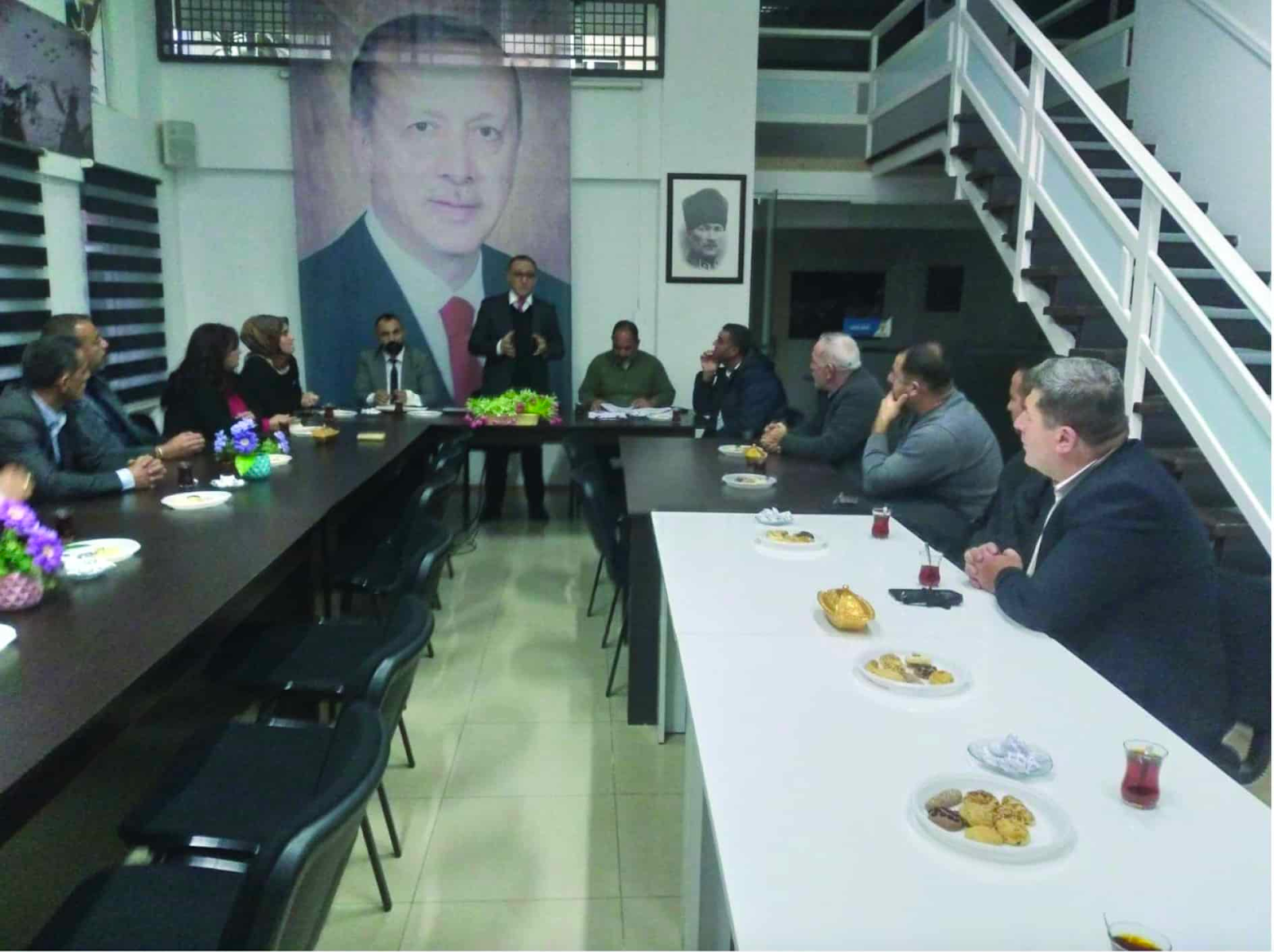
Most recently, the north Cyprus representation of Turkish President Recep Tayyip Erdoğan’s Justice and Development Party AKP organised a meeting with the Turkish Cypriot mukhtars, who are elected local authorities, in Kyrenia, during which, head of the representation Fahri Yönlüer told them to convey their problems to Ankara instead of the Turkish Cypriot administration.

“I know the capacity of the TRNC,” Yönlüer was reported as saying. “You cannot rely on help from the central administration. The right address for meeting your needs is the Republic of Turkey.”

“Nothing that is happening is a coincidence,” wrote the daily Özgür Gazete earlier this week, saying that all these developments are step by step taking the Turkish Cypriot community to an annexation.

“The footsteps of Turkish Enosis,” was the title of journalist Hasan Kahvecioğlu’s column in the daily Halkın Sesi. He argued that the upcoming difficult presidential elections in Turkey is likely to make a panicking Erdoğan “from whom anything can be expected” to annex the northern part of Cyprus.

“The essence of the deep ‘two-state’ project is becoming more and more clear,” wrote Kahvecioğlu. “And the excuse is ready: ‘Federation was not possible; we said two states, this was not possible either; so, what should we do? Wait for the Greek Cypriots for another 50 years?’ And then they will say that the only option that remains is ‘annexation.’ This will make Erdoğan – the ‘Conqueror of Cyprus’ – come out of the 14 May elections victorious.”


Akp representatives meeting with mukhtars in the north (ozgur gazete)

Kahvecioğlu also claimed that gatherings are already being held at Turkish Cypriot leader Ersin Tatar’s office with civil society organisations, which bring together people of Turkish origin living in Cyprus, to prepare for a possible annexation referendum.

This week, many Turkish Cypriot social media users posted on their pages a black background with the word “Enosis” written on it, implying that the northern part of Cyprus is being united with Turkey.

Adding fuel to the flames, right-wing Turkish Cypriot leader Tatar, who is a strong opponent of a federal solution in Cyprus and a staunch supporter of Turkey’s increased role, in an interview to The Guardian newspaper last week, said unless there is a two-state solution on the island, the northern part of Cyprus would integrate even more with Turkey.

“Obviously, if there is no agreement, in the long run we will have more and more Turkish influence on the island because we will over time become more and more dependent on Turkey,” he asserted.

According to Mine Atlı, who is the head of the Social Democracy Party TDP of former Turkish Cypriot leader Mustafa Akıncı and the current mayor of the Nicosia Turkish municipality Mehmet Harmancı, the foundations of an annexation were laid through the latest financial aid protocol between the northern part of Cyprus and Ankara.

The ‘Economic and Financial Cooperation Protocol’ promised loans for the Turkish Cypriot community in exchange for conditions that call for limited fundamental rights and freedoms including the freedom of expression; an undermined civil society; a strengthened role of Islam; easier Turkish Cypriot citizenship for Turkish nationals; no restrictions on Turkish nationals to acquire property and to invest; and the preparation of Varosha for daily use.

Atlı argues that Turkey finds little resistance from the international community, the Republic of Cyprus, and the Turkish Cypriot opposition in reaching its objective in the north and that the current environment enables Turkey to implement every policy it has on Cyprus.

“Turkey is carrying out its project with utmost diligence and ease,” says Atlı.

While conceding that an annexation of the northern part of Cyprus is possible, PRIO Cyprus Centre’s Senior Researcher Mete Hatay underlines that this will have consequences for Turkey and warns that talking so much about this possibility may prove to be a self-fulfilling prophecy.

“Yes, it’s possible, Turkey may annex the north,” Hatay says. “But is Erdoğan ready to pay the price of doing this? We already have a de-facto integration. In the past, Turkey would let us play in our middle earth [the world between heaven and hell according to Islam]. Now that middle earth too has collapsed, and Turkey is directly in control… Therefore, it doesn’t really need to annex the north. But as we voice such an eventuality over and over again, we are, in a way, preparing the grounds for it. Because no matter how well-meaning, such presuppositions serve to break people’s mental resistance.”


https://cyprus-mail.com/2023/02/06/step-by-step-moves-to-annexation-of-north/

Secular Turkish Cypriot community under threat

By Esra Aygin

January 22, 2023


From the new mufti to illegal cults, the north is being swamped by Islamisation


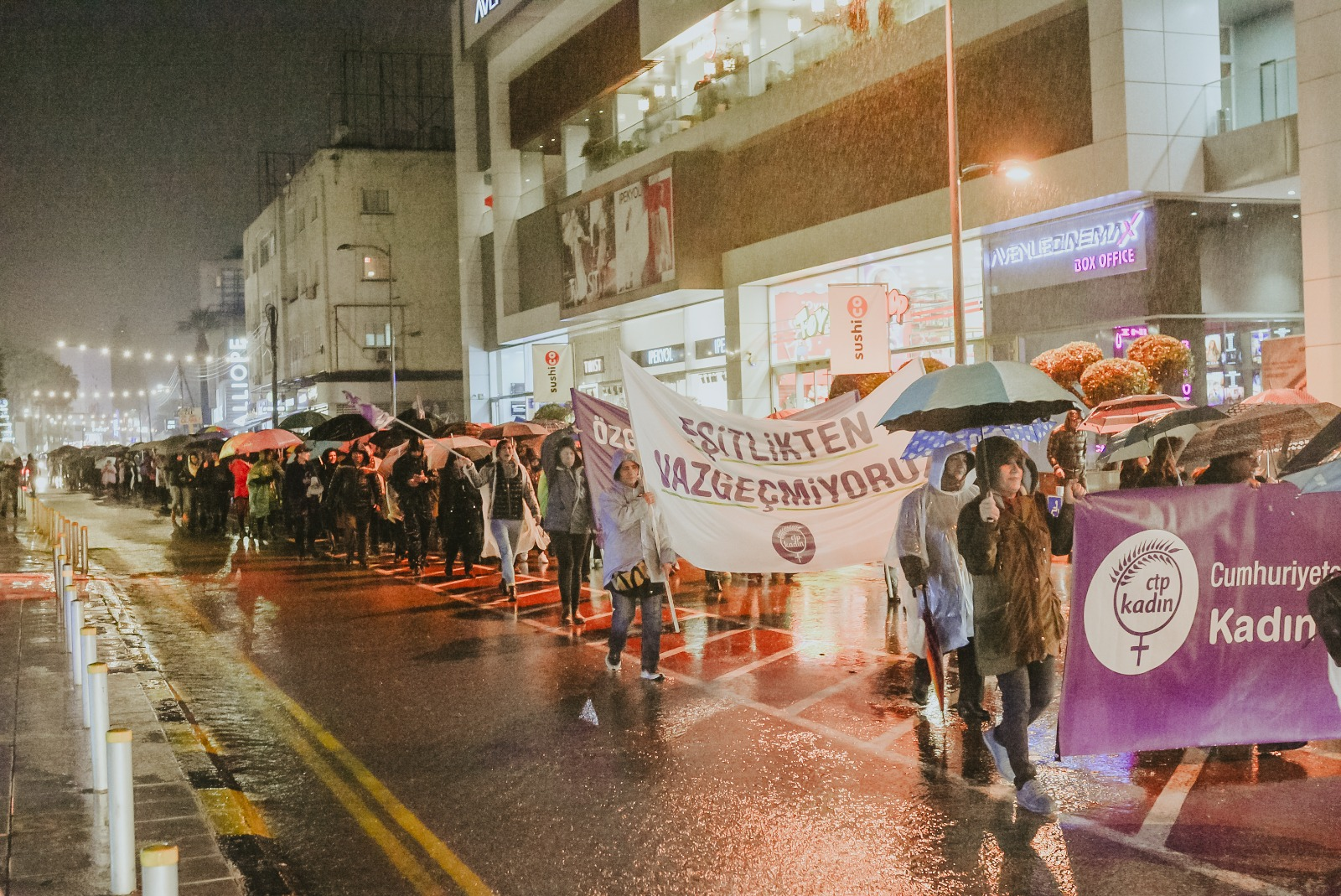
Turkish Cypriots brave the pouring rain to protest Islamification

A series of revelations since the beginning of this year have shaken the secular and modern Turkish Cypriot community to the core and heightened concerns about Islamisation and radicalisation of the northern part of Cyprus as part of an Ankara-orchestrated project.

At the beginning of January, online newspaper Özgür Gazete reported that dozens of associations and cults – with the aim of promoting Islam among the Turkish Cypriot community – are active in the north. The newspaper published photographs of young boys gathered at one of these Islamic associations – the Turkey-based Association of Love and Brotherhood Sevkad – in mosques, flats and offices, being subjected to Islamic teachings by older men. The association, which, on its website professed that there is need for ‘morals’ in the north, but then deleted this phrase after a backlash from the community, also organises events where banners displaying the word ‘jihad’, which means ‘fight against the enemies of Islam’, are held celebrating the conquest of Mecca.

There are illegal cult houses, secretary general Burak Maviş of the Turkish Cypriot Teachers Union Ktos told Özgür Gazete.

“We make complaints,” he said. “Police go and raid a place and close it down. The next day, they receive a phone call. The house is reopened, and they continue their activities. These sects and cults are fearless because of the Turkish embassy and Turkey.”

Ozan Elmali, the head of the Turkish Cypriot Secondary School Teachers Union Ktoeos said that all these are being done in the name of “religion” and with a focus on “morality”, but in fact, the real aim is political.

“Everyone, who so wishes, is gathering children under 15 anywhere, and giving them courses that are in contradiction with scientific, secular education,” Elmali said. “Those, who attempt at social engineering, should know that we will not give way to bigots. This country will not turn into the country of sheiks, dervishes, disciples and lunatics.”

Before the Turkish Cypriot community could get over the shock of Islamic cults approaching minors all over the north, another online newspaper, Bugün Kıbrıs published the blood chilling voice recording of Ahmet Ünsal, the head of the religious affairs department and the new mufti of Turkish Cypriots.

During a seminar in Famagusta on “The rights and obligations of spouses in marriage under Islam”, targeting women and girls only, Ünsal said: “The only reason for getting married is to reproduce, and therefore, women have to obey their husbands’ invitation to bed and meet his needs.” He also said, “girls should be married off as soon as someone suitable comes across.” The seminar was organised by the Religious Services Consultancy of the Turkish embassy in Nicosia.


Young boys at one of the islamic associations (Ozgur Gazete)

The mufti is appointed through the joint signature of the Turkish Cypriot leader and the head of the Turkish Cypriot administration. Until now, all muftis were selected among either Turkish Cypriots, or among people of Turkish origin, but who had grown up in Cyprus and knew the culture and the lifestyle here. The new mufti Ünsal, on the other hand, being appointed to Cyprus directly from Turkey, is not accustomed to the Turkish Cypriot way of life. He was granted the Turkish Cypriot citizenship in a matter of days before being appointed mufti and this is why he is being referred to as the “imported mufti” in the media.

A number of Turkish Cypriot imams, who spoke to Bugün Kıbrıs on condition of anonymity, said that they are struggling with the ‘incompatibility’ they have with the new mufti.

Questioning why, while there are qualified Turkish Cypriots for the job, someone from Turkey has been appointed as mufti, one of the imams said: “When we warn him about a mistake he has made, he says: ‘the [Turkish] National Intelligence Organisation MİT asked me to do this.’”

“He complains to important people in Turkey about those of us who stand up to him,” the imam added.

There is a widespread demand for Ünal’s dismissal in the community. Some, including former senior judge and former ombudswoman Emine Dizdarli, are calling for him to be prosecuted and punished for violating the secularism principle of the Turkish Cypriot constitution.

The right-wing ruling coalition has stated that there would be an investigation into the issue. However, no such step has been taken so far.

The revelations sent Turkish Cypriots from all walks of life – from doctors to teachers, from journalists to lawyers, from engineers and architects to politicians, and even the retired civil servants of the religious affairs department out on the streets earlier this week. Under pouring rain, a total of 46 political parties, non-governmental organisations and unions protested “the attacks against the community’s modern, secular and democratic structure and the [religious] conservatisation policies that are being imposed.”

“We are here against those, who are trying to design and change our way of life,” said the press statement read by Duygu Geylan, the secretary of Ktoeos.

“Bigoted mufti, get out of Cyprus,” and “We don’t want cults in Cyprus,” shouted the crowd.

A group of demonstrators placed a black wreath outside the Turkish embassy.

Turkish Cypriots are among the most liberal Muslims globally, and traditionally practise a very peaceful, moderate version of Islam. In recent years, however, there has been a significant increase in the religious activities and organisations in the north – all originating from Turkey – leading to concerns about the radicalisation and Islamisation of the Turkish Cypriot community.

The Turkish governments before the Justice and Development Party AKP, were implementing educational, cultural, social projects to increase the consciousness of “Turkishness” among Turkish Cypriots. With the AKP coming to power, this aim became to increase the consciousness of “Islam”. Turkish Cypriots have particularly been feeling threatened recently by more and larger mosques, illegal Quran courses, plans to establish more theological schools, more conservative imams and religion teachers coming from Turkey, and attempts to change the Turkish Cypriot education system.

“These activities are aimed at…eroding our culture and values, at preventing liberation and democratisation and at realising the goal of AKP, which is political Islamisation,” said Növber Gürtay, the secretary of the Turkish Cypriot Press Workers Union, Basın-Sen. “In this way, the foundations of this country will be replaced by the AKP culture, and they will guarantee their political future here.”

Commentators agree that the increase in Islamic activities in the north in recent years is part of a social engineering project by Ankara to maintain control on the Turkish Cypriot community.

“The Turkish Cypriot community is a community that has embraced a secular way of life,” says academician Yonca Özdemir. “It’s clear that this secular social structure is increasingly disturbing those, who have different plans for the northern part of Cyprus. The goal is to establish a hegemony in the northern part of Cyprus. And if this community’s social and cultural structure is an obstacle to that, of course, changing this structure becomes an important political target. Therefore, yes, all these are part of a comprehensive plan to render the Turkish Cypriot community more controllable.”

https://cyprus-mail.com/2023/01/22/secular-turkish-cypriot-community-under-threat/

Thursday, 28 July 2022

Youth camps in Turkey ‘indoctrinating children’

Turkish Cypriot parents complain of them promoting Islamic agenda

By Esra Aygin


The Turkish Cypriot community was once again bewildered earlier this week by revelations that children, who were taken to a youth camp in Turkey, were subjected to religious teachings, Islamic ceremonies and hymns.

The programme of the Kırşehir Ahi Evran youth camp provided to families included activities like theatre, volleyball, handicraft, horse riding, and rafting, but had no mention of any Islamic activities or teachings. After the first day of the camp, the 46 female secondary school students were reportedly calling their parents crying and asking to return to Cyprus.

The incident came to light when some parents got in touch with Republican Turkish Party CTP deputy Devrim Barçın and shared with him voice recordings and videos evidencing that the girls had been subjected to Islamic ceremonies, teachings in prayer rooms, and hymns.

“The families are crying out,” Barçın posted on his social media account. “They are seriously concerned about their children,” he added and demanded an explanation from the Turkish Cypriot department responsible for education, which sent the children there. The Kırşehir camp was organised by the Turkish Ministry of Youth and Sports.

Turkish Cypriots are among the most liberal Muslims globally and traditionally practise a very peaceful and moderate version of Islam. In recent years however, there has been a significant increase in the religious activities and organisations in the northern part of Cyprus, leading to concerns about the conservatisation and Islamisation of the Turkish Cypriot community.

Turkish Cypriots feel particularly threatened by more and larger mosques, illegal Quran courses mushrooming everywhere, plans to establish more theological schools, more conservative imams and religion teachers coming from Turkey, and attempts to change the Turkish Cypriot education system and curriculums.


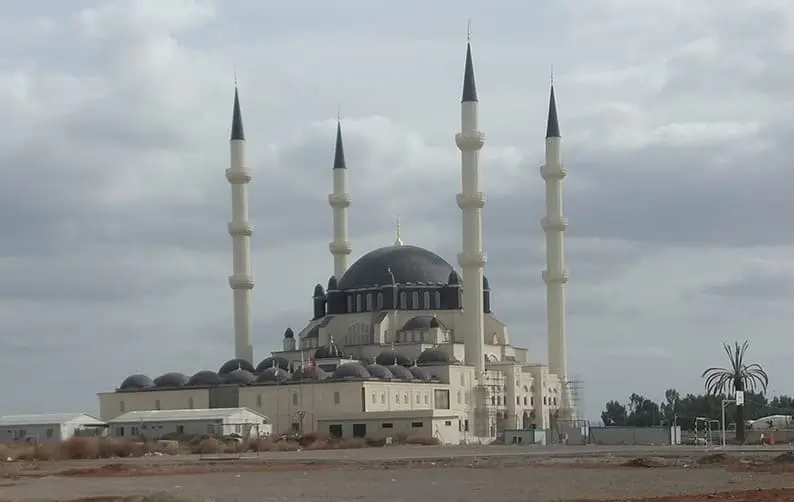
                                                            The mosque at Mila Milia

After the incident came to light, the Turkish Cypriot Secondary School Teachers Union Ktoeos, organised a protest outside the department responsible for education and questioned the reasons for sending children to these camps.

“Are you not bothered by the fact that the camp programme given to the parents is different than the programme that is being implemented?” asked Ktoeos. “Isn’t it against the secularity principle, which is one of the basic staples of our education system, to hold Islamic ceremonies or to force students to participate in religious teachings?”

In an attempt to appease the reactions, the Turkish Cypriot department responsible for education made a statement and stated that the Islamic ceremony at the camp was held “in memory of those who fell martyr” during the 15 July coup attempt. The department did not however, provide an explanation as to the rest of the discrepancies in the programme.

“The problem here is the fact that there was no information that the children would be subjected to religious teachings and that our children have been sent to a camp without knowing what it is about,” said Barçın. “Nobody has the right to deceive and send our children to camps with religious teachings.”

There have been problems with youth camps in Turkey previously too. A few years ago, some Turkish Cypriot families complained that children in the Çanakkale camp in Turkey were separated into groups according to their gender and were exposed to religious propaganda and preaches. Girls were not allowed to wear shorts. In another occasion, voice recordings emerged with the camp leaders yelling at Turkish Cypriot children, cursing at them, and threatening to kill them by slitting their throats.

Sending Turkish Cypriot students to youth camps in Turkey appear year after year in every financial protocol signed between the northern part of Cyprus and Ankara, among other provisions that cause concern about Turkey’s increasing grip on the Turkish Cypriot way of life.

A controversial financial aid protocol signed earlier this year – the ‘Economic and Financial Cooperation Protocol’ – foresaw a loan of 4.25 billion TL (around €240 million) payable in dollars to the Turkish Cypriot community in 2022. In exchange, the protocol introduced conditions that, according to observers, will among others, strengthen the role of Islam in Turkish Cypriot society. Some of the most controversial provisions include strengthening the religious affairs department, in what is perceived widely as an attempt to change the secular character of the Turkish Cypriot community; organising more youth camps; and building more religious complexes, tekkes and shrines.

Uğur Erilen, press and publicity secretary of the Turkish Cypriot Teachers Union Ktos issued a written statement after the latest incident, saying that the “Protocols signed with Turkey are aimed at altering and transforming the Turkish Cypriots’ identity, culture, existence, and their perception of religion and social life.”

The camps are free and are especially appealing for low-income families, who otherwise do not have the means to send their children abroad.

“In fact, the aim is to indoctrinate the children with a certain identity,” says journalist Pınar Barut. “Be it at these camps or be it in our country, with the policies that they are implementing, they are aiming at doing away with the cultural and lifestyle differences between Turkey and Cyprus from childhood. The goal is to raise a generation – like they did in Turkey – that is conservative, that obeys, that lives with national feelings and that is closed to the world. Because the future of such political powers depends on the presence of a society that can be controlled like this.”

https://cyprus-mail.com/2022/07/24/youth-camps-in-turkey-indoctrinating-children/

The Turkish Cypriots who are paying the price of speaking out against Ankara

Observers draw attention to the fact that all seven Turkish Cypriots, who were deported, are intellectuals or opinion leaders who advocate a federal solution in Cyprus

By Esra Aygin


A seventh Turkish Cypriot has been denied entry into Turkey in an unprecedented practice that has seen intellectuals, writers and journalists sent back to Cyprus from Turkish airports on the grounds that they pose a threat to Turkey’s “national security.”

Turkish Cypriot academician, writer and politician Abdullah Korkmazhan, the Secretary-General of Sol Hareket (Left Movement) was traveling to Ankara earlier this week, with other members of the movement to hold talks with several Turkish political parties and civil society organisations. On his arrival at the Ankara Esenboğa Airport, he was told that he was not allowed to enter Turkey because of his “activities against national security of the Turkish Republic” and was deported to Cyprus.

“We are fighting so that our country does not become a colony and they are scared of this,” said Korkmazhan. “They are scared of people who talk, who think. This list is a result of a policy. AKP is telling the Turkish Cypriot community ‘You will accept, you will obey, you will not talk, or you can’t enter Turkey.’”

Korkmazhan said he would press charges.

Before Korkmazhan, six other Turkish Cypriots, including medical doctor and peace activist Okan Dağlı and President Ali Kişmir of the Journalists Union BASIN-SEN were denied entry into Turkey on grounds that they are a “threat to national security” or committed “acts against the Turkish Republic” coded as G-82 on the official form they were handed.

Observers draw attention to the fact that all seven Turkish Cypriots, who were deported, are intellectuals or opinion leaders who advocate a federal solution in Cyprus and criticise AKP’s policies. It is believed that a large number of Turkish Cypriots are included in this list of individuals banned from entry into Turkey. However, it has not been possible to find out exactly who is on this list. Appeals to the Turkish embassy in the north of Nicosia and the Turkish Cypriot ruling coalition in this regard have proven to be in vain.

In a written response to Republican Turkish Party CTP deputy Asım Akansoy’s question on the bans, the Turkish Cypriot department responsible for the foreign affairs dossier, stated a few months ago that: “States do not have the obligation to share with us decisions and justifications of entry bans they take due to activities against their security.”

In a similar vein, Turkish Foreign Minister Mevlüt Çavuşoğlu back in November 2021, in response to a question by opposition parliamentarians on why some Turkish Cypriots were banned from entering Turkey had said: “Decisions about foreigners entering the country are within the sovereign powers of each state.”

On the other hand, Erhan Arıklı of the Rebirth Party – also known as the settler party – which is a junior coalition partner in the northern part of Cyprus, gave a hint of the reasoning behind the ban earlier this week.

“Do you expect Turkey to accept the fact that some people insult it every day?” said Arıklı in the assembly. “Is this possible? Those who (insult) should know the consequences. No state can tolerate for long, people, who make such statements against it.”

In February, Dağlı of the Famagusta Initiative and UniteCyprusNow, who is also a former deputy from CTP, was denied entry to Turkey. Dağlı had travelled to the İzmir Adnan Menderes Airport with a Turkish Cypriot diplomatic passport.

“I was told I am involved in acts against Turkey’s security,” Dağlı explained. “If defending peace and a federal solution in Cyprus, opposing human rights violations, and advocating more democracy and justice are acts against Turkey’s security, then I will not stop doing these.”

Turkey’s new practice against a certain segment of Turkish Cypriots, has indeed intimidated many, who avoid going to Turkey or using the Turkish airports even in transit.

“Progressive Turkish Cypriot peace activists are paying the price of speaking out against Turkey’s policies on Cyprus,” said Social Democracy Part TKP head Mine Atli. “The AKP regime’s efforts to silence progressive Turkish Cypriots will be fruitless. We will continue to voice the human rights violations it is committing and struggle for a bi-communal bi-zonal federal Cyprus.”


https://cyprus-mail.com/2022/07/03/the-turkish-cypriots-who-are-paying-the-price-of-speaking-out-against-ankara/