Showing posts with label Famagusta. Show all posts

Tuesday, 5 December 2023

‘Famagusta has had wars, but never such a pain’

By Esra Aygin

February 19, 2023

Turkish Cypriots left reeling after Turkey earthquake deaths


Rescuers in the rubble of the Isias hotel

The Turkish Cypriot community, and especially Famagustians, are mourning the deaths of 24 of their brightest and most accomplished children along with 11 parents and teachers in the devastating earthquake that hit southern Turkey last week.

The students, aged between 11 and 14, were all from a Famagusta secondary school and were in the Turkish city of Adıyaman for a volleyball championship along with 15 parents and teachers. They were all staying at the Isias hotel. Thirty-five of them including all the children died, while four adults managed to get out of the rubble by themselves.

As the bodies of 24 children and 15 adults were recovered from the Isias hotel rubble and brought back to Cyprus over the course of a week, Turkish Cypriots were likening their pain to none other they had felt before.

“Famagusta has had wars, but never such a pain,” said peace activist and doctor Okan Dağlı, who lost his cousin’s wife and two children in the Adıyaman Isias hotel. “These children did not go to war. These children went to play volleyball and they got buried alive under the rubble.”

In the worst natural disaster in the region of the last century, as the World Health Organisation has called it, two earthquakes of magnitude 7.8 and 7.5 struck southern Turkey and north-western Syria within hours on Monday, February 6 and killed a total of over 41,000 people – a figure that is expected to rise. The total number of Turkish Cypriots to have died in the earthquake in different parts of Turkey now stands at 48.

Dağlı explains that the grief has touched everyone in Famagusta in some way, as every child that has died, or their parents are friends with or known to someone in the closely knit and small town.

“Some people in Famagusta lost all their family in the earthquake, some children lost both their parents, some parents lost both their children,” says Dağlı. “The whole town is crying. We don’t only have pain at the funerals, cemetery, or memorial services. We have pain everywhere.”

Thousands attended the funerals of the schoolchildren and their parents and teachers held in Famagusta and the surrounding villages over the course of a week as bodies were brought back from Turkey. The streets of Famagusta were largely empty while many restaurants and shops remained closed until later this week. Social media in the northern part of Cyprus has been filled with black profile pictures or a cartoon by Iranian cartoonist Ali Reza Pakdel, which pictures a boy and a girl playing volleyball with a moon and stars.

“An undefinable pain was raining on the 700-year-old cathedral,” wrote journalist Cenk Mutluyakalı, after the funeral for the last bodies was held at Famagusta’s the Lala Mustafa Paşa Camii or the Ayios Nicholas cathedral last Sunday.

“Thousands of faces, who have grown old in a matter of seven days, were looking at each other meaninglessly; sounds of prayer were interrupted with sobs; the feeling of helplessness in the face of death was rolling down from the eyes. Everyone in Famagusta lost someone close to them. The city lost its colours, thousands of people lost their children, and a school lost its voice.”

Anger

Alongside grief, there is also a huge anger among the Turkish Cypriot community towards not only the owner of the Isias hotel and the contractor who built it, but also towards the Turkish officials, who gave permits and licences to the building, which collapsed like a sandcastle.

“The building was a death trap,” Cemal Betmezoğlu, who participated in the search and rescue effort at the Isias hotel told the daily Yenidüzen. “There was no concrete. The rubble was just a pile of sand with no concrete… Unfortunately, it was obvious at first sight that we would not find many people alive.”

Murat Aktuğralı, who managed to get out of the rubble by himself, but lost his 13-year-old son Aras, says that the hotel collapsed in the first 15-20 minutes. Turkish tourist guide Anıl Zeybek, who was pulled out of the rubble of the Isias hotel alive after 30 hours, confirms Aktuğralı’s account.

Turkish Cypriots have taken the social media to demand that a criminal investigation be opened into the owners of Isias, and all the others responsible for the hotel that killed so many children. #isiaskatilleriyargilansin (#prosecuteisiasmurderers) became the number one trend topic on Twitter in Turkey.

“We are all very angry,” says Dağlı. “These children were killed. This is not the worst natural disaster of the century. This is the worse negligence of the century.”

Journalist Sami Özuslu, who has friends that lost their children in the earthquake, likens the Isias hotel rubble to the mass graves from 1974.

“After Muratağa, Atlılar, Sandallar, we have a new mass grave in Adıyaman,” says Özuslu.

The board of directors of the Union of the Chambers of Cyprus Turkish Engineers and Architects KTMMOB stated that it is working closely with the Turkish chamber and will publicise the results of the study conducted on the samples taken from the rubble of the Isias hotel. The Turkish Cypriot Bar Association also said it is cooperating with the Turkish Bar Association to bring those responsible to account for the lives that have been lost.

Four people, Ahmet Bozkurt, Efe Bozkurt, Amine Bozkurt and Şule Özbek have been apprehended in relation with the Isias Hotel collapse, the Adıyaman Chief Public Prosecutor’s Office stated on Wednesday.

However, there are doubts in the community that justice will be served, as the hotel’s owner, Ahmet Bozkurt, and his family are supporters of Recep Tayyip Erdoğan’s Justice and Development Party AKP. Bozkurt openly supports AKP during elections and had a large poster of Erdoğan unfurled from the Isias hotel during the 2018 elections.

According to the Turkish OdaTV, the hotel construction had previously been closed and sealed twice for not conforming with the earthquake safety standards, but the seals were broken and the construction continued because of the owners’ close relations with AKP.

Solidarity

Amid grief, heartbreak and anger, the Turkish Cypriot community was overwhelmed by the unprecedented solidarity and support it received from the Greek Cypriots.

From the first moment that it was confirmed that there were Turkish Cypriot children under the rubble in Adıyaman, hundreds of Greek Cypriots took to social media to write messages of empathy. Some Greek Cypriot schools and volleyball teams prepared banners and posted messages of solidarity. Politicians, political parties and civil society organisations released statements in support of the Turkish Cypriot community.

As bodies started to be recovered, many Greek Cypriots changed their profile pictures to black. Many attended the funerals in Famagusta. Some Greek Cypriots placed flowers on the gate of the school where the children, who died, attended. On Sunday, Greek Cypriot civil society activists held a symbolic vigil outside the Presidential Palace in Nicosia.

Nicosia municipality and others placed their flags at half-mast.

In response, the Nicosia Turkish municipality posted on its social media page: “We will forever remember how you shared our pain and showed your support in these difficult times.”

The House of Representatives and the Cyprus university also lowered their flags to half-mast.

“The loss of these young people’s lives fills us with immense sadness. Some of them, in a short time, could have been members of our university community. The flags of the University of Cyprus fly at half mast,” rector Tasos Christofidis posted on his social media page.

“So many Greek Cypriot friends called, sent messages, came to the funerals, brought flowers,” says Dağlı, who is very much touched by how this tragedy has brought the two communities closer together. “There is an unbelievable feeling of empathy. They are feeling our pain.”

https://cyprus-mail.com/2023/02/19/famagusta-has-had-wars-but-never-such-a-pain/

Thursday, 28 July 2022

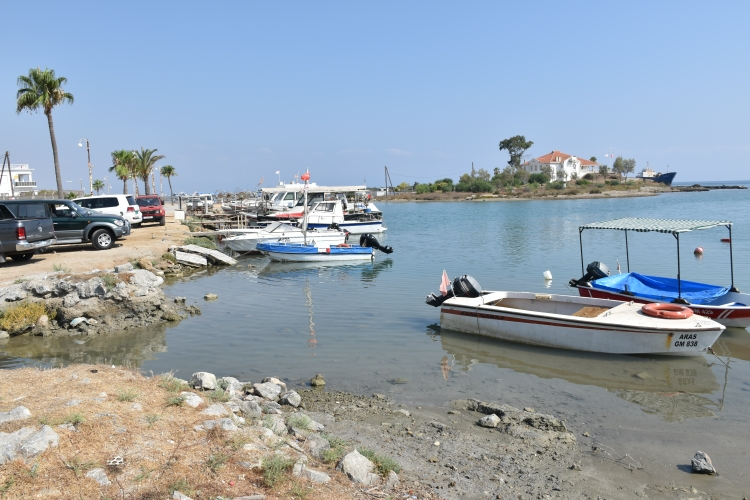
Untreated waste in Famagusta port halts fish sales to Greek Cypriots

Electricity woes in north puts waste treatment plant out of action leading to sea pollution

By Esra Aygin


The European Commission has banned the sale of fish from Famagusta in the northern part of Cyprus to the Republic of Cyprus, after detecting that untreated wastewater is being discharged into the sea in the area.

As a result of the inspection carried out by European Union experts, some 30 boats docked in the Famagusta fishing port were taken off the list of boats approved to sell fish to the Republic through the Green Line Regulation.

The regulation, which was introduced when Cyprus joined the European Union in 2004, sets out the rules under which people, goods and services can cross the Green Line. As part of goods, some food products, including fish, are allowed to be traded across the Green Line to the Greek Cypriot community. However, EU experts have to carry out regular inspections to ensure that these products comply with the relevant EU legislation including hygiene standards.

“The EU experts first detected two months ago that untreated wastewater was being released into the sea in the Famagusta fishing port, where the fishing vessels are docked,” explains Kemal Atakan, head of the fishermen’s association. “After three consecutive inspections and when all the warnings fell on deaf ears, the commission decided to exclude fish from that area from the Green Line trade.”

Atakan criticises the local authorities for not doing anything in these two months to improve the situation. “We give them 10 days to fix the problem,” says Atakan. “If they don’t, we, as fishermen, will take matters into our own hands. We will block the discharge pipe with cement.”

Atakan states that the wastewater treatment plant in the area was first out of order due to a malfunction. After the local authority announced this had been fixed, the EU experts found that the water being discharged in the sea was still untreated.

“This time because there was no electricity at the treatment plant,” says Atakan.

The Turkish Cypriot community has been suffering from constant electricity cuts due to lack of investments in the electricity infrastructure, fuel shortages and the inability to buy some very expensive spare parts for failed turbines.

Atakan clarifies that the waters where fishing takes place are clean.

“The untreated wastewater is being released into the fishing port, where the fishing vessels are docked,” explains Atakan. “There is no pollution in the open waters, where fishing is done.”

Even if this is the case, İzzet Adiloğlu from the Turkish Cypriot Chamber of Commerce, which issues the necessary documentation needed for products to be able to cross the Green Line, underlines the hygiene risk.

Fresh fish sold to the Republic through Green Line trade in 2021 was worth about €780,000.


“Of course, the fish are from open waters,” says Adiloğlu. “But there is always the danger that polluted water will infiltrate into the deck of the vessel, come in contact with the fish and pose a risk… EU experts make the necessary inspections for trading fish across the Green Line. These experts determine which vessels are in line with hygiene and other standards. We give the documentation in accordance with these inspections. And we are no longer providing documentation for the vessels using the Famagusta fishing port.”

According to the chamber, the total value of goods for which accompanying documents had been issued for the Green Line trade amounted to about €6 million in 2021. Fresh fish was among the most traded products. Total value of fresh fish sold to the Republic of Cyprus through Green Line trade increased 25 per cent in 2021 compared to 2020 and was about €780 thousand.

A total of about 170 boats in the north are on the list of approved boats by the European Commission to sell fish to the Republic of Cyprus across the Green Line. Besides Famagusta vessels, which are now banned, other fishermen are from the areas of Trikomo, Rizokarpaso, Kyrenia and Xeros.

“Let Green Line trade aside,” says Atakan. “Forget about the financial loss we will bear. How about Turkish Cypriots? Will they eat fish from vessels docked in sewage? Who will ensure their health and wellbeing?”

The problem is unfortunately not limited to Famagusta. Lack of sufficient sewerage and water treatment infrastructure in many areas cause the sewage to directly end up in the seas, according to the Green Peace Movement.

The movement, which issued a statement earlier this week, called on the authorities to stop “using the sea as a sewerage”.

“Due to lack of sufficient treatment infrastructure, especially deficient and/or insufficient treatment infrastructure, faulty and/or out of use treatment systems, sewage and wastewater are directly polluting our seas and our water resources,” the movement said. “The Green Peace Movement is receiving videos on a daily basis from all corners of our country, showing that sewage is being discharged into the sea. This problem is escalating every day because of the oblivion of relevant authorities…  The livelihood of fishermen and the health of the people are in danger.”

According to data published by Turkish Cypriot health authorities, out of a total of 38 samples taken from various parts of coast in the north in April, 17 were found to contain Enterococci and Escherichia coli bacteria, which are a direct result of releasing sewage in the sea.

“We will go to Paphos, Larnaca, Limassol to swim,” tweeted editor-in-chief Cenk Mutluyakalı of the daily Yenidüzen on Friday after the data was published. “Because our beaches are covered in waste.”

https://cyprus-mail.com/2022/05/22/untreated-waste-in-famagusta-port-halts-fish-sales-to-greek-cypriots/


Friday, 14 April 2017

Turkish Cypriot leader Akinci is powerless in the face of Easter ban and here is why...

The Turkish Cypriot ban on the Good Friday service at Famagusta's St. Exorinos Church is inexplicable, shameful and unacceptable. This ban was imposed by the right-wing National Unity Party UBP-Democratic Party DP coalition. And unfortunately,Turkish Cypriot leader Mustafa Akinci has no power to do anything about it. The system in the north is such that the president- aka Turkish Cypriot leader- is largely symbolic. Akinci's sole authority is to lead the Cyprus negotiations. He is not related to the coalition parties and his party Social Democracy Party TDP is in opposition. This is very different from the Republic of Cyprus, which has a presidential system, whereby the president is both head of state and head of government.

Sunday, 13 July 2014

Article - Was constitutional referendum a rehearsal of possible settlement referendum? (Published in Greek in 24h on 13 July 2014)


Was constitutional referendum a rehearsal of possible settlement referendum?

On 29 June, the Republican Turkish Party (CTP) did not only suffer a huge wound by losing the three biggest cities – Nicosia, Famagusta and Kyrenia - in the local elections, but was also shaken by the rejection of a set of constitutional amendments that it advocated strongly. The amendments were submitted to a referendum on the same day as the local elections.  

The constitution of the “Turkish Republic of Northern Cyprus,” adopted in 1985, is a shameful copy of the 1982 constitution of Turkey – the product of the 12 September 1982 military coup. For the first time in almost 30 years, some changes – albeit small – were made through the efforts of mainly the CTP deputies and adopted unanimously by all the parties in parliament – the bigger party of the ruling coalition CTP, the smaller party of the ruling coalition right-wing Democratic Party (DP), main opposition right wing National Unity Party (UBP), and the left-wing Social Democracy Party (TDP).

The proposed amendments had initially called for the lifting of temporary article 10 - which is the legal basis for the Turkish Cypriot police to be under the control of the Turkish military, and the introduction of conscientious objection. However, CTP could not get the required support in parliament to go ahead with these changes and therefore, limited the amendments to some 20 articles. 

Although the amendments, which among others, introduced children’s rights, limited the immunity of politicians, improved fundamental rights, and lifted the political ban on civil servants, were adopted unanimously by all the parties in parliament, they were rejected by 65% in the referendum.  

Two major factors seem to have played an important role in the rejection of the constitutional amendments. First is the radical approach of the left-wing parties and non-governmental organisations, which criticised the amendments for being “cosmetic” and not touching on the substantial provisions – such as the temporary article 10.

The second, and the scarier, is the undercover, ear-to-ear no-campaign led by hardliner Turkish Cypriot leader Derviş Eroğlu, who has a significant influence on both UBP and DP, and the supporters of his ideology.

Although the more optimistic in the northern part of Cyprus would argue that the ‘no’ vote is the victory of the radical left, a strong message of rejection of the status quo and the 1985 constitution, I fear that this referendum was a rehearsal of the nationalist guardians of the status quo, to test the grounds. And I fear very much that this method of undercover campaigning against a unanimously adopted text, tested and proven to be successful, can be put to work during a possible referendum for a federal settlement in Cyprus.

Those, against the reunification of Cyprus through a federal solution know now that giving approval to a settlement text does not necessarily lead to a ‘yes’ vote in the referendum.


Article - CTP receives major blow in local elections (Published in Greek in 24h on 6 July, 2014)


CTP receives major blow in local elections

Last Sunday’s municipal elections dealt a huge blow to the Republican Turkish Party (CTP), the biggest pro-solution party in the northern part of Cyprus, and the outcome is expected to have major implications on April’s elections for the Turkish Cypriot leader. CTP, which held the municipalities in the three biggest cities in the northern part of Cyprus, lost all three.

A successful outcome in municipal elections would have considerably strengthened CTP, and served as a strong indication of people’s inclinations for the ‘presidential elections.’ CTP would have most probably nominated former Turkish Cypriot leader Mehmet Ali Talat, who has been open about his willingness to run again, and would had a good chance of coming out of the elections victorious.

However, to the amazement of many, CTP lost the ‘flagship’ Nicosia Turkish Municipality, as well as the Kyrenia and Famagusta Municipalities. The Kyrenia and Famagusta municipalities, which belonged to CTP for more than 15 years, were lost to candidates backed by hardliner Turkish Cypriot leader Derviş Eroğlu, and the right-wing National Unity Party (UBP) and the Democratic Party (DP).

Challenging times lie ahead of CTP officials not only because they will most probably be required to re-design their plans for the April elections in this new political atmosphere, but also because of the internal conflicts within the party. There are allegations that long-standing disagreements among party officials and the municipal candidates have grown into full-blown retaliation during the municipal elections and led to CTP’s defeat. Some party members are being accused of openly or secretly backing competing candidates. The party will also have to solve these internal conflicts, which were used very efficiently by the right-wing parties to defeat CTP, if it is to enter a healthy election period.

An important outcome of the local elections is the rise of veteran politician Mustafa Akıncı as a strong potential candidate for the ‘presidential elections’ after Social Democracy Party’s (TDP) Mehmet Harmancı won the Nicosia Turkish Municipality with almost 40 per cent of the votes. In the Turkish Cypriot political arena, a special importance has always been placed on who wins the Nicosia Turkish Municipality, with many arguing, often rightly so, that the Nicosia Turkish Municipality is a ‘flagship’ municipality and the party that wins it, has an advantage during the ensuing elections for the Turkish Cypriot leader.

It will be interesting to watch the developments in the run-up to the April elections.