Showing posts with label north Cyprus. Show all posts

Monday, 20 May 2024

Clampdown on foreign property buyers in the north

 May 19, 2024


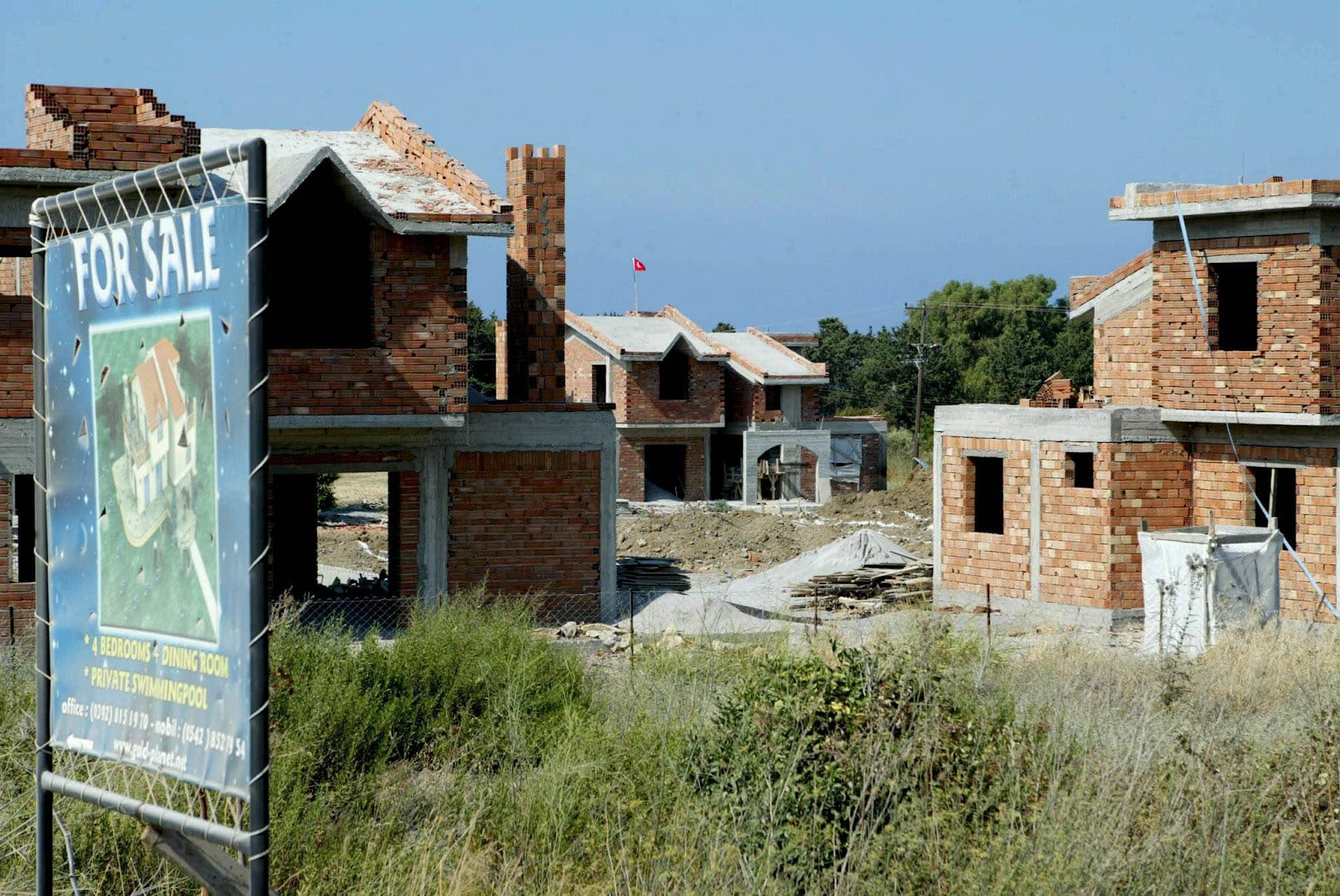
There are fears the new regulations may cause more ghost towns with unfinished buildings

But an exception is made if the buyers are Turks

The Turkish Cypriot administration is working on a set of legal amendments to limit the number of properties that foreigners can purchase in the northern part of Cyprus. The amendments will also put an end to the current loophole that allows property purchases to go unrecorded.

According to the amendments expected to soon be approved by the Turkish Cypriot assembly, foreigners will not be able to purchase more than one property or one piece of land in the north. The purchase will be subject to the permission of the administration.

The amendments include provisions that limit foreign property ownership to seven per cent in any district and three per cent in the north as a whole.

Under current laws, foreigners are legally able to buy up to three properties subject to permission, but this limitation has long been bypassed through the establishment of trusts that allow lawyers to purchase properties on behalf of foreigners. Such purchases have created a large gap between actual transactions and official records, as well as obscuring property ownership.

Sector experts estimate that over 50 per cent of property transactions in the north are not recorded. Dursun Oguz, who is responsible for the interior affairs dossier in the north, recently acknowledged that there are foreigners who have purchased up to 30 properties in the north and never recorded them under their own name.

According to the amendments, any foreigner, who has purchased more than one property before the amendments but have not registered these with the land registry department, will have to get rid of these properties within 24 months.

The amendments include provisions that outlaw multiple property purchases done through lawyers and stipulate that purchase agreements will be null and void unless the transfer of property is finalised at the land registry department within six months.

Turkey FATF

The amendments to the property regime are understood to be part of Turkey’s efforts to combat money laundering as it strives to get out of the international crime watchdog Financial Action Task Force FATF’s grey list.

FATF grey-listed Turkey in 2021 for failing to supervise its sectors such as real estate and banking that are vulnerable to money laundering and to financing terrorist groups. Turkey needs to get out of the grey list to improve confidence among foreign investors as it grapples with a deep economic crisis. According to official data Turkey’s annual inflation was almost 70 per cent in April.

Turkey’s “AKP government targets to get Turkey out of the grey list in June,” wrote Turkish journalist Zeynep Gurcanli in the financial news website ekonomim.com recently. “Until today, the grey list issue has always been discussed only in relation to Turkey… It appears that Ankara has realised that it will not be able to get out of the grey list unless north Cyprus stops being mentioned in connection with black money.”

Gurcanli added that Ankara wants the amendments to be approved by the Turkish Cypriot assembly by the end of this month.

Money laundering

The recent spike in property sales to foreigners in the northern part of Cyprus coupled with legal loopholes and lack of adequate controls had led to increased concerns about money laundering and calls for measures to regulate the sector.

Multiple reports in international media had pointed to north Cyprus as a destination for foreigners – especially Russians – to park their money without any questions asked. Russians can easily buy property in the northern part of Cyprus as banks there are not part of the international Swift system and operate via Ankara, which has not put sanctions on Russia.

In a speech last year, Turkish Cypriot judge Fadil Aksun, who is the head of the north’s Nicosia High Criminal Court, had made a stark warning about the large amounts of money coming into the north for real estate purchases.

“But there is no control over whether a real estate purchase indeed takes place,” said Aksun. “There is a risky money circulation in our country.”

Criticisms

The amendments have drawn criticism however, as they create a differentiation between foreigners and Turkish citizens and provide exceptions for the latter. While foreigners are limited with one property only, “natural persons who are citizens of a state that recognises the Turkish Republic of Northern Cyprus” have the right to buy up to three properties, according to the amendments.

“The plan is clear: Annexation didn’t happen so let’s sell for money,” was the headline of daily Ozgur Gazete, which argued that the amendments are aimed at enabling Turkish citizens to buy more properties in the north.

In fact, Hakan Akcam, the head of the Chamber of Real Estate Agents in Turkey, in a statement he made after the amendments were made public said: “The law in TRNC is changing. The way is being cleared for Turkish investors.”

Economic concerns

While the amendments are deemed positive for preventing money laundering, they have caused controversy because of the impact they are expected to have on the economy.

The Association of Real Estate Agents in the north held a press conference against the amendments saying they will “destroy the sector, cause chaos and serious economic loss”.

“The foreigners will leave,” asserted the association’s lawyer Husnu Tokatlioglu.  “The state will not get revenue because there will be no sales. Real estate agents will have no customers. Contractors will not be able to sell what they have built.”

Economist Mertkan Hamit states that the amendments will not only impact the real estate sector but the whole economy.

“Being outside international supervisory mechanisms, north Cyprus has become a destination for black money,” says Hamit. “If these amendments are implemented effectively, north Cyprus will no longer be an option for those, who would like to keep their assets outside supervision… The problem is we don’t know what the exact effects will be… In the pessimistic scenario, we may have more ghost towns with unfinished buildings and derelict apartments.”

Increasing tolerance of corruption in the north

 April 29, 2024


In 140th position on the corruption perception index along with Cameroon

Turkish Cypriots took the streets on Friday in a march against corruption, demanding that the “swamp is dried and those responsible are brought to account.”

In the demonstration, supported by some 30 civil society organisations and political parties, protesters chanted against the “theft, bribery, nepotism, money laundering” in the northern part of Cyprus.

The protest came days after a 2023 study on corruption revealed “very common” and “worsening” corruption in the north along with bribery, money laundering and political corruption.

According to the comprehensive study based on Transparency International’s Corruption Perceptions Index (CPI) methodology, the north has a corruption perception score of 27 out of 100. On a scale of 0-100, zero indicates very high corruption and 100 indicates no corruption.

The score of 27 is far below the average score of 43 in 180 countries and places the north in the 140th position on the index along with Cameroon, right after conflict-ridden countries of Gabon, Laos, Mali and Paraguay. The corruption perception score of Turkey in 2023 is 34, placing it in 115th position, while the corruption perception score of the Republic of Cyprus is 53, placing it at 49. The average score for the European Union is 65.

“There is a very clear downwards spiral,” says Omer Gokcekus, one of the academics who has conducted the study for the past seven years. “And it is accelerating. This result is not coincidental or a product of the margin of error. The situation is serious.”

The score for the north has been significantly decreasing since 2017 when the first study was conducted. The score for the north at the time was 40. It ranked 81 among other countries, much higher than the current rank of 140.

Transparency International, which publishes the corruption perception scores annually for 180 countries, does not actually cover the northern part of Cyprus. But academics, Gokcekus and Sertac Sonan, with the sponsorship of German Friedrich-Ebert-Stiftung (FES) foundation, have been measuring the perception of corruption in the north for the last seven years. They use Transparency International’s methodology based on surveys done among business executives and a group of retired senior civil servants.

Corruption rampant among ministers

A staggering 93 per cent of the 324 business executives in senior managerial positions surveyed said that there is corruption, with 80 per cent believing that corruption ‘is a very serious problem’. About 67 per cent said corruption increased in the past year.

Corruption was found to be most rampant among ministers (58 per cent) and politically appointed senior civil servants (54 per cent). The least corrupt were police, prosecutors and judges. According to participants, the most effective institution in the fight against corruption is police but by only 22 per cent.

Bribery

Twenty-five per cent of the business executives surveyed admitted to giving bribes, gifts or “offering a favour” in the past year, while a further 14 per cent refused to give an answer.

“Many people do not want to answer,” a question about bribery, Gokcekus told the Cyprus Mail. “It is not something to be proud of.” He added that the 14 per cent, who refused to answer the question, can definitely not be considered in the same category as those who said they did not resort to bribery.

The top three reasons for giving bribes were listed as “expediting procedures”, “finalising procedures” and “getting better treatment”. According to the business executives, “bribery or undocumented extra payments” are most common in public tenders, issuing of permissions and licences, land registry procedures and allocating and leasing public land and buildings. It is least common in obtaining favourable judicial decisions.

Money laundering

The study also revealed that 53 per cent of the participants believe that activities aimed at money laundering are common. The recent increase in the number of foreigners settling and investing in the northern part of Cyprus has heightened concerns about money laundering and led the Turkish Cypriot assembly to approve stricter anti-money laundering provisions.

Political corruption

The survey also gave indications about political corruption with 58 per cent of respondents saying that it is common to buy votes or offer special favours during election periods. Thirty-eight per cent said voters are frequently threatened with punishment unless they vote in a certain way.

Corruption at the top

Fifty-five per cent said the government is run by a group that largely only cares about its own interests while 64 per cent said officials involved in corruption are “not prosecuted” or “very rarely prosecuted”.

In fact, Turkish Cypriots are no stranger to top officials being involved in alleged corruption or corruption.

Turkish Cypriot leader Ersin Tatar has been under investigation by United Kingdom’s Serious Fraud Office (SFO) as one of Asil Nadir’s main helpers in the Polly Peck case in 1987. Tatar, who was the assistant treasurer, was alleged to have shredded evidence. He was unable to travel to the UK from 1991 until 2019 when the SFO confirmed that it was discontinuing proceedings against Tatar on the grounds that it is not now in the public interest to prosecute him.

Head of the Turkish Cypriot ruling coalition, Unal Ustel, has been embroiled in the infamous ‘jet scandal’ of 2020. Ustel, who was the then ‘tourism minister’, gave special permission for a group of nine Turkish businessmen and three Russian escorts to fly into Ercan (Tymbou) in a private jet and bypass the strict Covid-19 testing and quarantine rules.

Speaker of the Turkish Cypriot assembly Zorlu Tore, meanwhile, was arrested in Istanbul in 2006 trying to smuggle cigars. He avoided prosecution when he got elected in the assembly in 2009 and gained immunity.

Tolerance is increasing

Perhaps one of the most worrying findings of the study was the increase in the community’s tolerance of corruption. The percentage of those, who agreed with the statement “It is acceptable to use personal relations and connections with those working in public institutions to expedite procedures,” increased to 17 per cent from 5 last year. The percentage of those, who agreed with the statement “it is acceptable for the government to be involved in corruption as long as it provides good service,” increased to nine per cent from three per cent last year.

“Many Turkish Cypriots have normalised corruption,” says Gokcekus, adding that this is very troublesome. “If you don’t see something as a problem, if it doesn’t bother you, you don’t try to fight it.”

https://cyprus-mail.com/2024/04/29/increasing-tolerance-of-corruption-in-the-north/

The worst economic crisis in Turkish Cypriot history

 April 14, 2024

We have lost hope in this country, shopkeepers say

The annual inflation rate in the northern part of Cyprus hit 94.5 per cent in March as Turkish Cypriots continue to experience the worst economic crisis in their history. Inflation compared to February rose by 6.9 per cent – the highest monthly inflation since the crisis began in 2021.

According to the official figures announced by the Statistical Institute, monthly food inflation in March was 3.4 per cent, which brought the food inflation to 220 per cent since 2022. The price of bread has increased by 25 per cent since the start of this year alone.

‘Bairam meal turns sour,’ a front page on daily Halkin Sesi read, reporting about the exorbitant food prices ahead of the Eid festival (Bairam) this week. The festival marks the end of the holy month of Ramadan.

Even though Turkish Cypriots are among the most liberal Muslims globally, the Eid festival is a very important time of the year when families come together for feasts and celebrations.

‘Barbecue remains a dream during Bairam,’ wrote Star Kibris. ‘Baklava is for the price of gold this Bairam,’ headlined Kibris Postasi.

The Turkish Cypriot economy has been in freefall since 2021 as the Turkish lira continuously declined in value against most major global currencies because of the unorthodox interest-rate-cutting policies of Turkish President Recep Tayyip Erdogan. The official currency in the north is the Turkish lira, which lost some 40 per cent of its value in the past year alone. It has shed a further nine per cent this year. Keeping rates artificially low led to skyrocketing inflation, placing Turkey among the top five inflation champions in the world along with Zimbabwe, Sudan, Venezuela and Argentina.

Annual inflation in Turkey in March was 68.50 per cent, while the monthly inflation was 3.16 per cent.

Last month, Turkey’s central bank raised its key interest rate to 50 per cent in an attempt to combat inflation. Policymakers cited a “deterioration in the inflation outlook.” The central bank predicts Turkish inflation will rise towards 80 per cent by the summer.

The north adopts the Turkish key interest rate.

The fall in the value of the Turkish lira affects Turkish Cypriots even more as the economy is almost completely dependent on imports. Even imports from Turkey are indexed to the dollar. Transportation and import costs are also exacerbated by a cumbersome public administration that creates additional expenses. Moreover, many goods, services and expenses such as real estate, cars, rent and school fees are in foreign currencies although people’s salaries are paid in Turkish liras.

The flow of foreign currency into the Turkish Cypriot market through the increasing number of foreigners living there has also worsened inflation as each sector started to determine prices according to the higher purchasing power of foreigners, according to economists. Unlike in a normal economy, where the value of the local currency would increase with foreign currency inflow, the value of the Turkish Lira didn’t increase as it is not determined by the Turkish Cypriot economy.

“The money inflow with uncertain sources plays a big role in the increase [in inflation],” Turkish Cypriot economics professor Engin Kara of Cardiff University wrote on his social media account. “In the near future, a large part of the economy will be comprised of this money.”

Soaring prices in the northern part of the island have left people, especially those on low or fixed incomes, with plummeting purchasing power and a decline in their living standards. The Cyprus Turkish Civil Servants Union (KTAMS) calculated that a family of four earning the minimum wage is living right at the hunger threshold.

According to KTAMS, the hunger threshold – the amount needed to maintain a healthy, balanced and adequate diet – for a family of four as of the end of March, was 23,644 Turkish Lira (about €687). The minimum wage in the north is currently 24,000 Turkish lira (about €697).

As Turkish Cypriots experienced a huge drop in their purchasing power leading to a decline in their living standards, they also saw their debts rocket.

According to the official figures of the Turkish Cypriot central bank, total borrowing from banks increased 61 per cent as of the end of 2023 compared to the previous year to 87 billion Turkish lira (about €2.5 billion). As of 2022, the total borrowing stood at 53.9 billion (about €1.6 billion).

Together with borrowing, the amount of non-performing loans also increased 58.2 per cent by the end of 2023 compared with 2022 to 4,176 million Turkish liras (about €121 million).

The uncontrollable price increases also deeply affect businesses that have to grapple with constant increases in costs. In the last two months alone, bottled gas and electricity prices increased 7.8 per cent, while fuel prices increased 10.8 per cent.

Head of the chamber of shopkeepers and artisans (KTEZO) Mehmet Ali Ardic told daily Yeniduzen last week there is a 70 per cent closing rate in small food and beverage businesses as they cannot keep up with the increasing costs.

“We have lost our hope in this country,” head of the association of restaurant owners Arif Bayraktar said. “We are just rowing the boat in vain. We are not getting anywhere.”

https://cyprus-mail.com/2024/04/14/the-worst-economic-crisis-in-turkish-cypriot-history/

North a safe haven for criminals

 March 17, 2024


Australian underworld boss Mark Douglas Buddle

‘North Cyprus can easily be a safe shelter for those wanted by Interpol or involved in illegal dealings’

At least 11 fugitives wanted by Interpol have been pinned down in the northern part of Cyprus in the last 20 months, as this unrecognised piece of land increasingly becomes a safe haven for criminals looking to evade the law.

The fugitives, including Australian underworld boss Mark Douglas Buddle, Russian drug lord Viktor Panyushin, Chinese criminal Yanxi Xia also known as Arman Kaya, and Italian mafioso Sebastiano Claudio Saia had purchased real estate after obtaining residence permits from the Turkish Cypriot administration and were leading lavish lives here. Some had also established businesses.

All the arrested fugitives were extradited to Turkey. The northern part of Cyprus, not recognised by any state other than Turkey, has no extradition treaties in force and all the Interpol-related arrest and extraditions can only be made through Turkey.

Lack of recognition means there is no oversight of international institutions and that international law and legal order do not apply. This, coupled with lack of adequate controls on who enters the country, on what the status of their visas or permits are once there, as well as on their activities has increasingly turned the north into a place where fugitives can easily hide.

Not surprisingly, Moldovan authorities believe that fugitive oligarch Vladimir Plahotniuc, one of the most influential Moldovan politicians until 2019, is hiding in the north. Plahoutniuc, who is sanctioned by the USA and the EU, is wanted for embezzlement of state funds, fraud and bribery.

The lack of international recognition “creates serious legal gaps in terms of crime and criminals”, explains Dr Yonca Ozdemir of International Relations. “Moreover, existing laws are inadequate, there are huge shortcomings in their implementation, and there is lack of supervision… Therefore, north Cyprus can easily be a safe shelter for those wanted by Interpol or involved in illegal dealings.”

According to the 2023 Global Organised Crime Index, in the northern part of Cyprus “there are a number of people wanted by Interpol” and “these foreign criminal actors collaborate closely with domestic criminals.” The index also shows that organised crime; human, sex and drug trafficking; money laundering; and gambling networks are largely operating there with impunity.

The widespread bribery mechanism also supports the system, according to Ozdemir.

A study on corruption in the northern part of Cyprus based on Transparency International’s Corruption Perceptions Index (CPI) methodology published last year revealed that 40 per cent of the business executives interviewed resorted to bribery in the past year. Seventy-two per cent of the 350 interviewed said bribery and corruption was ‘very common’. Bribery was found to be most rampant among the ‘prime minister’ and ‘ministers.’

Security threat

The uncontrolled flow of individuals into the north has also proven to be a security threat. Shamil Kalaev, a member of the terrorist organisation Islamic State Isis was among the 11 people wanted by Interpol and apprehended in the north in the last 20 months.

Last year, three separate Iranian terror attacks against Israelis and Jews in the Republic of Cyprus were foiled. In all three cases, the arrested suspects had come into the Republic of Cyprus from the north. In December, Israeli Prime Minister’s Office made a statement with the Mossad intelligence agency and the National Security Council saying that Israel was “troubled” by Iranian use of the northern part of Cyprus “both for terrorism objectives and as an operational and transit area”.

Although there are no exact figures, authorities estimate that the number of Iranians living in the north have reached 15 thousand. Over 40 thousand Iranians entered the north through air and seaports in 2023 according to official statistics.

Chief Justice Narin Ferdi Şefik in her speech at the opening of the 2023-2024 judicial year underlined that there should be increased controls at entry into the country and called for “urgent measures”.

Other deportations

In addition to the fugitives wanted by Interpol, 21 other individuals including Iranian Arash Maheri were deported from the north in the last 20 months for reasons like ‘threatening public law and order’, ‘spreading enmity among people and against the state’ and ‘conspiracy’. Seventeen of them were Turkish nationals.

Separately, and during the same period, 29 Nigerians were deported from the northern part of Cyprus. Many of them were members of violent cults such as Bucaneers and Black Axe, which are considered among the most far-reaching and dangerous organised crime groups in the world. A BBC investigation on Black Axe in 2021 for example, unearthed evidence of infiltration of politics, sexual attacks and killings across the world. All 29 had entered the north with student visas to attend university.

The ease with which student visas are issued paired with inadequate legal framework and the general lack of controls have turned universities into a backdoor to enter the county. There currently are 23 universities here that host almost 110,000 students. Close to half of these students are from countries in Africa, the Arabian Peninsula, the Middle East and the Far East. According to estimates at least 30 per cent of the enrolled students are “passive”, meaning they have entered the country on a student visa, but are not attending any classes.

According to the US State Department’s Trafficking in Persons Report in 2023, once in the north, these people, who have come in with student visas, end up being forced into prostitution, drug trafficking or other illegal dealings.