Showing posts with label foreigners. Show all posts

Monday, 20 May 2024

Clampdown on foreign property buyers in the north

 May 19, 2024


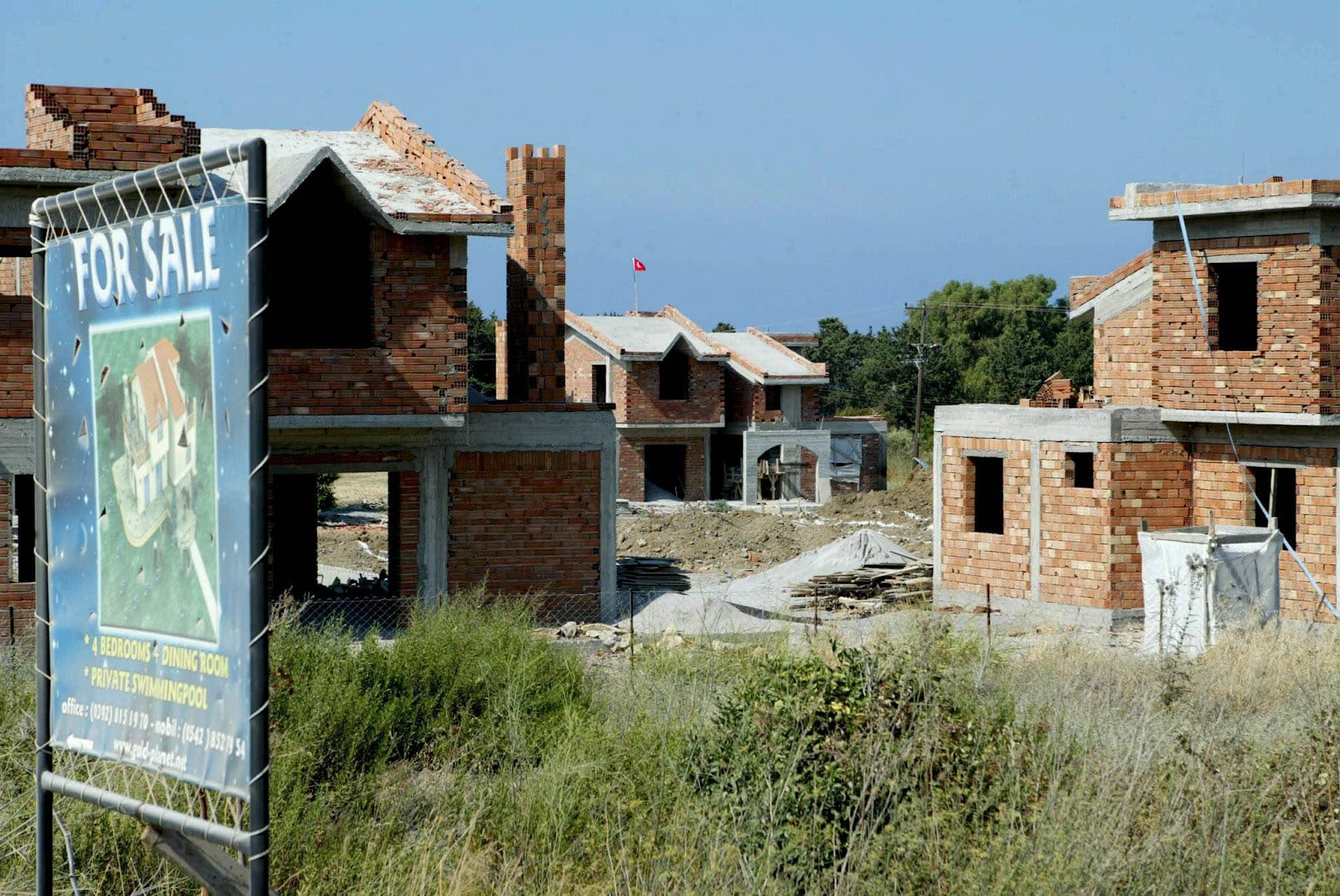
There are fears the new regulations may cause more ghost towns with unfinished buildings

But an exception is made if the buyers are Turks

The Turkish Cypriot administration is working on a set of legal amendments to limit the number of properties that foreigners can purchase in the northern part of Cyprus. The amendments will also put an end to the current loophole that allows property purchases to go unrecorded.

According to the amendments expected to soon be approved by the Turkish Cypriot assembly, foreigners will not be able to purchase more than one property or one piece of land in the north. The purchase will be subject to the permission of the administration.

The amendments include provisions that limit foreign property ownership to seven per cent in any district and three per cent in the north as a whole.

Under current laws, foreigners are legally able to buy up to three properties subject to permission, but this limitation has long been bypassed through the establishment of trusts that allow lawyers to purchase properties on behalf of foreigners. Such purchases have created a large gap between actual transactions and official records, as well as obscuring property ownership.

Sector experts estimate that over 50 per cent of property transactions in the north are not recorded. Dursun Oguz, who is responsible for the interior affairs dossier in the north, recently acknowledged that there are foreigners who have purchased up to 30 properties in the north and never recorded them under their own name.

According to the amendments, any foreigner, who has purchased more than one property before the amendments but have not registered these with the land registry department, will have to get rid of these properties within 24 months.

The amendments include provisions that outlaw multiple property purchases done through lawyers and stipulate that purchase agreements will be null and void unless the transfer of property is finalised at the land registry department within six months.

Turkey FATF

The amendments to the property regime are understood to be part of Turkey’s efforts to combat money laundering as it strives to get out of the international crime watchdog Financial Action Task Force FATF’s grey list.

FATF grey-listed Turkey in 2021 for failing to supervise its sectors such as real estate and banking that are vulnerable to money laundering and to financing terrorist groups. Turkey needs to get out of the grey list to improve confidence among foreign investors as it grapples with a deep economic crisis. According to official data Turkey’s annual inflation was almost 70 per cent in April.

Turkey’s “AKP government targets to get Turkey out of the grey list in June,” wrote Turkish journalist Zeynep Gurcanli in the financial news website ekonomim.com recently. “Until today, the grey list issue has always been discussed only in relation to Turkey… It appears that Ankara has realised that it will not be able to get out of the grey list unless north Cyprus stops being mentioned in connection with black money.”

Gurcanli added that Ankara wants the amendments to be approved by the Turkish Cypriot assembly by the end of this month.

Money laundering

The recent spike in property sales to foreigners in the northern part of Cyprus coupled with legal loopholes and lack of adequate controls had led to increased concerns about money laundering and calls for measures to regulate the sector.

Multiple reports in international media had pointed to north Cyprus as a destination for foreigners – especially Russians – to park their money without any questions asked. Russians can easily buy property in the northern part of Cyprus as banks there are not part of the international Swift system and operate via Ankara, which has not put sanctions on Russia.

In a speech last year, Turkish Cypriot judge Fadil Aksun, who is the head of the north’s Nicosia High Criminal Court, had made a stark warning about the large amounts of money coming into the north for real estate purchases.

“But there is no control over whether a real estate purchase indeed takes place,” said Aksun. “There is a risky money circulation in our country.”

Criticisms

The amendments have drawn criticism however, as they create a differentiation between foreigners and Turkish citizens and provide exceptions for the latter. While foreigners are limited with one property only, “natural persons who are citizens of a state that recognises the Turkish Republic of Northern Cyprus” have the right to buy up to three properties, according to the amendments.

“The plan is clear: Annexation didn’t happen so let’s sell for money,” was the headline of daily Ozgur Gazete, which argued that the amendments are aimed at enabling Turkish citizens to buy more properties in the north.

In fact, Hakan Akcam, the head of the Chamber of Real Estate Agents in Turkey, in a statement he made after the amendments were made public said: “The law in TRNC is changing. The way is being cleared for Turkish investors.”

Economic concerns

While the amendments are deemed positive for preventing money laundering, they have caused controversy because of the impact they are expected to have on the economy.

The Association of Real Estate Agents in the north held a press conference against the amendments saying they will “destroy the sector, cause chaos and serious economic loss”.

“The foreigners will leave,” asserted the association’s lawyer Husnu Tokatlioglu.  “The state will not get revenue because there will be no sales. Real estate agents will have no customers. Contractors will not be able to sell what they have built.”

Economist Mertkan Hamit states that the amendments will not only impact the real estate sector but the whole economy.

“Being outside international supervisory mechanisms, north Cyprus has become a destination for black money,” says Hamit. “If these amendments are implemented effectively, north Cyprus will no longer be an option for those, who would like to keep their assets outside supervision… The problem is we don’t know what the exact effects will be… In the pessimistic scenario, we may have more ghost towns with unfinished buildings and derelict apartments.”

Tuesday, 5 December 2023

Property sales in north going unchecked

By Esra Aygin

August 27, 2023

Estimates suggest that about 50 per cent of foreign transactions are not recorded


Some 7,000 permissions were given to foreigners to buy property in the northern part of Cyprus since January 2021.

According to the figures in the Turkish Cypriot official gazette, a total of 1,179 permissions were given in 2021, and 2,810 permissions were given in 2022. In 2023 however, in just the first eight months, the permissions given to foreign nationals has already reached  almost at 3,000.

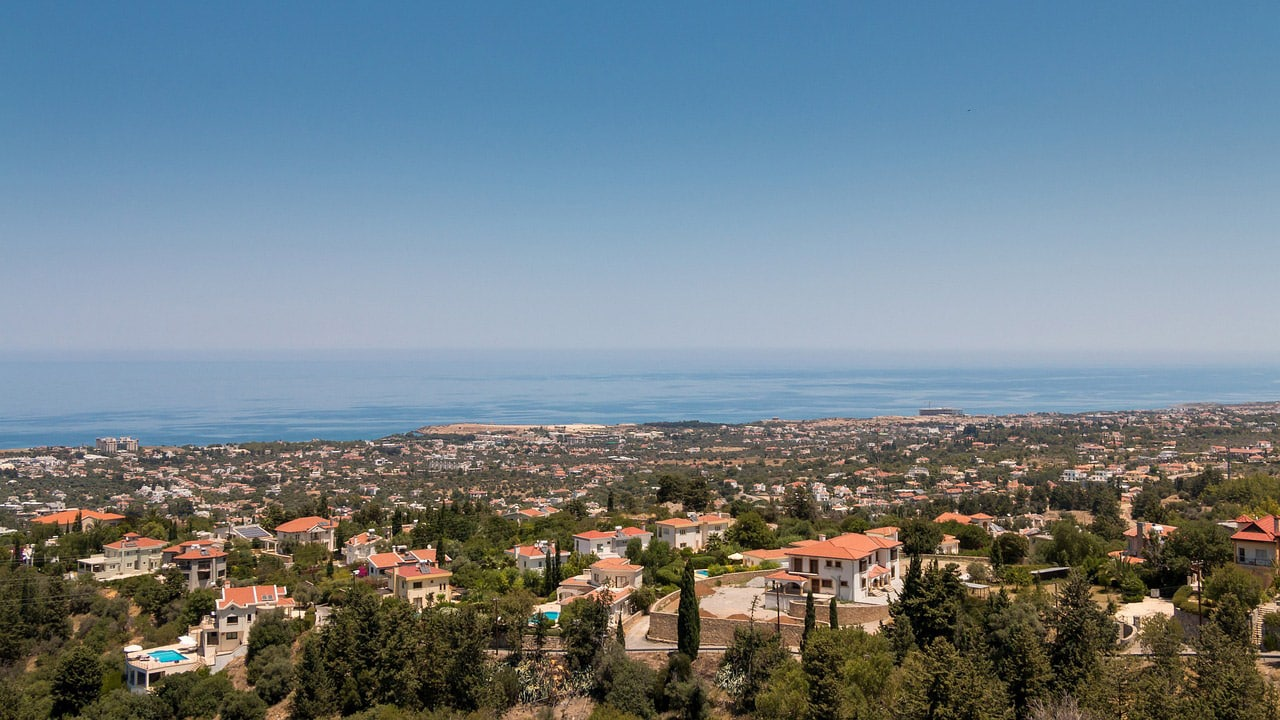
The buyers are mostly Turkish nationals investing in the Kyrenia area in Esentepe/Ayios Amvrosios and Tatlısu/ Akanthou. They are followed by an ever-increasing number of Russians investing in İskele/Trikomo.

Experts, however, insist that as high as the figure 7,000 sounds, the actual number of properties purchased by foreign nationals is much higher.

Far more properties are being bought in the north by lawyers on behalf of foreigners, or Turkish Cypriot companies with “silent foreign partners” than what official records show for such transactions, according to economist Mertkan Hamit.

Foreign nationals need a permission from the Turkish Cypriot administration and are currently limited with only three property purchases. Moreover, the controlling 51 per cent of companies investing in real estate must belong to a Turkish Cypriot ‘citizen’.

However, local lawyers acting on behalf of foreigners or Turkish Cypriot companies with foreign multinationals in the background can and do buy as many properties as they want.

“There are tons of property sales that are not included in the official figures,” says Hamit. “These are mostly to foreign investors, who buy tens of properties in one transaction through a Turkish Cypriot partner.”

Hamit estimates that about 50 per cent of transactions are not recorded.

Board member Hüseyin Sadeghi of the Turkish Cypriot Real Estate Agents Union agrees.

“Many multi-national companies are overcoming the limitations imposed by law by either establishing companies “just for show” in the north, or using a lawyer as a front and getting the right to purchase unlimited number of properties,” says Sadeghi.

According to Hamit, looking at the construction projects and the prices, it can very roughly be estimated that the property sales generate an annual 1 billion dollars. This is almost one thirds of the gross domestic product of the northern part of Cyprus.

TURKISH NATIONALS 

While 90 per cent of foreign buyers in 2022 were Turkish nationals, the rate has dropped to 70 per cent this year with significant investments coming from Russians.

Russians can easily buy property in the northern part of Cyprus as banks here are not part of the international Swift system and operate via Ankara, which has not put sanctions on Russia. In fact, the numbers in the official gazette show that the number of foreigners – mostly Russians – investing in property has significantly increased as of November 2022, which coincides with the sanctions on Russian nationals due to the war in Ukraine. As of that date, the Turkish Cypriot administration’s officials granted hundreds of permits in each sitting as can be seen from the decisions published in the official gazette.

In fact, Russian news agency Itar Tass reported earlier this month that some 50,000 Russians live in the northern part of Cyprus, where Kremlin recently said it would open an office to provide consular services.

Following Russians, other buyers are from Israel, Ukraine and Iran.

In 2021, Forbes Magazine named İskele/Trikomo as the best place in the world for beachfront property investment for those looking to live or retire abroad. The other four top spots listed by Forbes were in Columbia, Brazil, Mexico and Belize.

Property sales are especially noteworthy in İskele/Trikomo, which according to estimates tripled in population in the last ten years.

“Especially in the Long Beach area in İskele/Trikomo, 90-95 per cent of our clients are foreigners,” says real estate sales representative Özder Özbulut. “The majority of our clients are from Russia.”

It is not unusual to see billboards advertising homes for sale in Cyrillic in the area.

THE LIRA

The depreciation of the Turkish lira and the economic crisis mean that Turkish Cypriots cannot afford to buy property, especially in areas like İskele/Trikomo, where high demand has spiked prices.

“Local buyers cannot really take advantage of the investments in Long Beach in İskele/Trikomo,” adds Özbulut. The price of land and property is very high due to high demand by foreigners.”

The shopkeepers in Trikomo, who recently spoke to the Yenidüzen newspaper, acknowledge that foreigners are now keeping them afloat.

“The crisis has affected us immensely,” Ayşen Biçici told Yenidüzen. “We would have closed our shops down a long time ago if it were not for the foreigners. The foreigners have kept the local economy alive.”

“Locals are not buying anything,” said Meycan Rıylı. “They come into the shop, ask for the price of things, and leave without buying anything. I can say that recently our sales are entirely to foreigners. If it were not for the foreigners, I would have closed my shop down a long time ago.”

DISPLACED GREEK CYPRIOTS

The land in İskele/Trikomo area is almost entirely owned by Greek Cypriots, who were displaced in 1974.

Recently, Yeni Bakış newspaper reported that most of the property recently being sold to foreigners in the northern part of Cyprus is on Greek Cypriot land. Citing data released at the end of July, the paper said that 4,209 properties were listed for sale in Kyrenia, Trikomo, Famagusta, Nicosia, Morphou and Lefka – out of which only 975 had a Turkish Cypriot title deed. The rest were Greek Cypriot properties.

Recently, Greek Cypriot media has reported that the government of the Republic of Cyprus is considering legal measures to deal with the sale of Greek Cypriot properties in the northern part of Cyprus.

In a speech he gave to mark the closing of the 2022-2023 judicial year in June, judge Fadil Aksun, who is the head of the Nicosia High Criminal Court, made a stark warning about the large amounts of money coming into the northern part of Cyprus for real estate purchases.

“Large amounts of money are coming into the country, but there is no control over whether a real estate purchase indeed takes place,” said Aksun. “I would like to draw attention to the fact that there is a risky money circulation in our country.”

Aksun added that the court determined 12 flats purchased as part of a money laundering scheme in the 2022-2023 judicial year. The flats were seized.

OTHER ISSUES

The endless construction in İskele/Trikomo is giving rise to problems, as necessary infrastructure is not in place to accommodate the thousands moving into the new buildings. The biggest problem is the sewerage.

Last summer, photographs surfaced on social media of raw sewage in the sea off Long Beach and green water on the coast. Earlier this month, an analysis by health officials in the same area found potentially dangerous levels of intestinal enterococci, a bacteria characteristically found in human faecal matter.

“Wastewater and the ensuing seawater pollution in İskele are environmental disasters that have arisen from years of unplanned development,” says Sibel Paralik, head of the Turkish Cypriot Chamber of Environmental Engineers.

Another problem is the significant water shortage, which İskele/Trikomo mayor Hasan Sadıkoğlu says is due to the rapid increase in population.

The lack of planning coupled with such an influx of foreign population has not only lead to infrastructure problems but also integration problems.

“There are serious insufficiencies in terms of the orientation, integration, language learning, and education of the foreigners who buy properties and start living here,” says Sadıkoğlu. “There are not enough classrooms. Teachers have a difficult time because the children don’t speak Turkish.”

Last month the Turkish Cypriot Teachers Union KTÖS said according to a survey it conducted in 72 primary schools, 62 per cent of the schools do not offer language support for students who don’t know Turkish.

“In at least 15 primary schools, ten per cent of students are foreigners and don’t speak Turkish,” the union stated. “The school with the highest percentage of foreign students is in İskele, with 40 per cent. In many places in the world, foreign students cannot make up more than ten per cent of a classroom and they are offered special programmes. In our country, some classrooms are made up of 40-50 per cent foreigners. There are no orientation programmes for them. This will inevitably lead to irreversible problems.”


https://cyprus-mail.com/2023/08/27/property-sales-in-north-going-unchecked/