Showing posts with label imagine. Show all posts

Friday, 2 December 2022

Noose is tightening around Turkish Cypriots


Fears that worse is yet to come in north in protest over Erdogan’s policies

By Esra Aygin

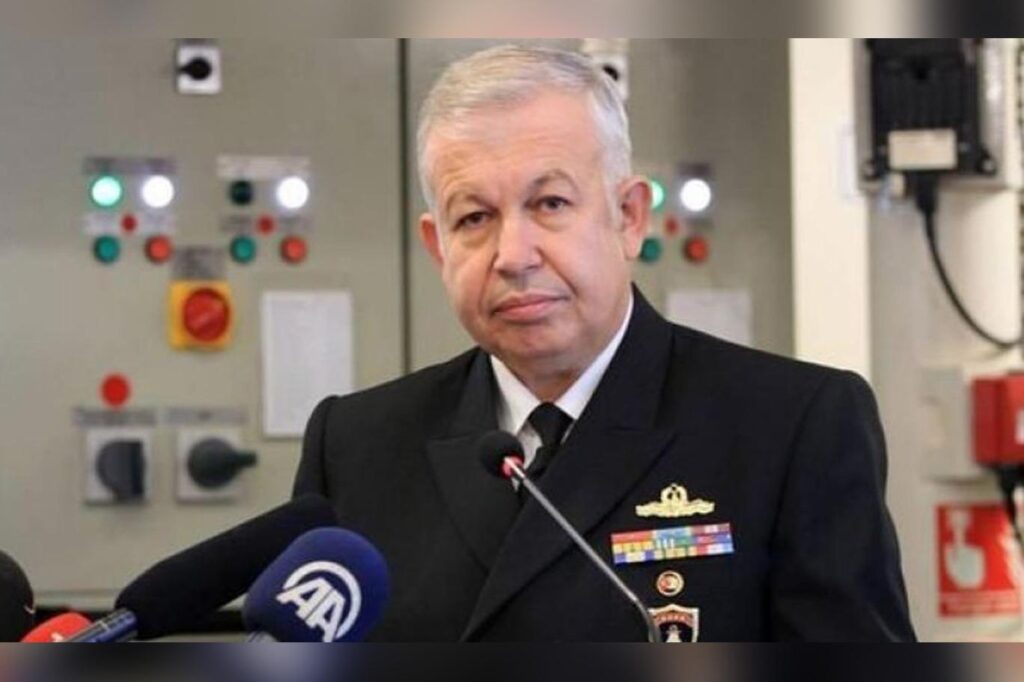
Northern Cyprus is slipping out of the hands of the Turks, warned a Turkish ex-rear admiral and called on the authorities to push for severe criminal sanctions on Turkish Cypriot individuals and institutions “acting against the Turkish Republic of Northern Cyprus, Turkey and Turkishness.”

These words of the former chief of staff of the Turkish naval forces Cihat Yaycı, and aimed at journalists and trade unionists among others, sent chills down the spine of Turkish Cypriots, as commentators warn that the worst – in terms of the pressure Turkey exerts on the community – is yet to come.

“This man is deep state and what he says is important,” says Turkish Cypriot Akel MEP Niyazi Kızılyürek, whom Yaycı called a “servant of the Greeks and Greek Cypriots, who claims to be a Turk”.

Yaycı, in his article published in Turkish news portal TV100.com on November 17, said that in early 2000s, during the Annan Plan period, the then-Turkish Cypriot leader Rauf Denktash was side-lined and the Turkish Cypriot institutions, labour unions and journalists were left vulnerable to EU’s interferences. From then on, “there has been a political and sociological design on the island by the West,” continued Yaycı.
feature esra cihat yaycı
Cihat Yaycı

Yaycı claimed that, as part of this, Greece and the Greek Cypriots – under the pretence of EU aid – have been funding opposition newspapers and journalists in the northern part of Cyprus, the trade unions and many other initiatives; and in this way, have been expanding their area of influence in the north.

As a result of this, Turkish Cypriot “youth are in admiration of the West, the Greek Cypriots and Greece,” according to the rear admiral, who stated that those “loyal to their state, country and nation are going extinct.”

To overturn this process, the ‘TRNC’ should be strengthened: by changing the Turkish Cypriot education curriculum to instil students with a consciousness of Turkishness; depriving opposition trade unions of financial resources and closing them down; bringing Greek, Greek Cypriot, and European NGOs and foundations under intense surveillance and if necessary not permitting them to operate; and monitoring the financial resources of newspapers and journalists and questioning suspicious flows from abroad, the former rear admiral said.

These comments could have easily been brushed aside as sensational, had Yaycı not been the very architect of the recent neo-Ottoman “Blue Homeland” or Mavi Vatan doctrine, which has been adopted by the current Turkish government as an official policy, and which is regularly cited by Turkish officials, including President Recep Tayyip Erdoğan.

This expansive and nationalist doctrine encompasses Turkey’s maritime jurisdictions in the Black, Mediterranean and Aegean seas, as well as the country’s exclusive economic zone and continental shelf. It envisions Turkey’s power projected far into the contested waters off the country’s shores and emphasises the idea that Turkey should pay more attention to the maritime sphere, focus on marine delimitation agreements, tap into potential resources as a heavily energy-dependent country and be aware of its interests.

“The things this man says should be taken seriously because he is the creator of theories that were taken very seriously by those, who govern Turkey and turned into official policies,” said Kızılyürek.

In fact, the recommendations by Yaycı regarding trade unions and journalists are perfectly on par with what Erdoğan’s Justice and Development Party AKP has been demanding from the Turkish Cypriot ruling coalition for some time now.

For example, a controversial ‘Economic and Financial Cooperation Protocol’ signed between the northern part of Cyprus and Ankara earlier this year introduced conditions that, among others, limit the activities of trade unions by banning them from “engaging in political or ideological activities that go beyond their reasons of establishment”; eliminate disinformation “used by civil society organisations and third countries that targets the TRNC-Turkey relations”; introduce an effective control against “disinformation” on social media; limit freedom of expression by making amendments to the penal law; and regulate the rules regarding the right of assembly and demonstration to introduce additional punishment “where the right to protest is used beyond the legal definition”.

Lately, Turkish Cypriot journalists especially have been under growing pressure, facing detentions, criminal court-cases and a ban on entering Turkey. Just this week, journalist Kazim Denizci was detained and charged with “defending and promoting an illegal organisation” and “being in possession of malicious publications intended for propaganda that belong to an illegal organisation”, for sharing a news report published by the Kurdish Fırat News Agency on his social media page and on his news website.

“They are trying to silence certain voices in the Turkish Cypriot community,” says Kızılyürek, who has taken the issue of the Turkish stop-list to the European Commission. “This is all part of the attack the Turkish Cypriots are faced with. They don’t want to hear anything about a ‘Turkish Cypriot identity.’ They want everyone to be in line with Turkey’s policies. There is a mainstreaming going on in the community.”

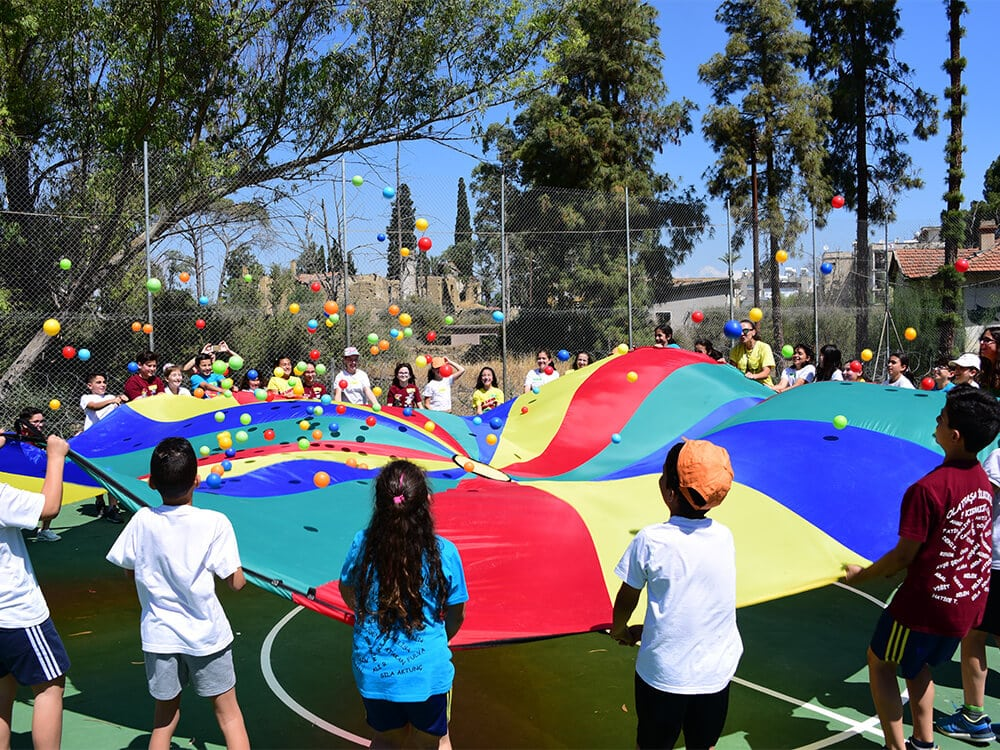
Kızılyürek recalled that earlier this year, a Turkish politician, Doğu Perinçek, who, like Yaycı, represents the nationalist wing in Turkey, had criticised in a series of articles the bicommunal education programme Imagine, saying that it aims at “brainwashing the youth” and creating “a consciousness of Cypriotness to make the Turkish Cypriot a minority to Greek Cypriots in a united Cyprus”. Shortly after, Turkish Cypriot leader Ersin Tatar cancelled the participation of Turkish Cypriots in the programme, alleging it undermines the existence and policy of two states in Cyprus.

Commentators agree that in the coming period, Turkey’s pressure on democratic, pro-peace, opposition Turkish Cypriots will increase.

“The AKP has the aim of establishing a hegemony in Cyprus,” explains international relations expert Yonca Özdemir. “And they are determining who would be an obstacle in front of doing that. This is a process of determining who is against this hegemony and eliminating them. In the near future, the pressures on trade unions, NGOs and the media will further increase. Things will get worse. People will be targeted and silenced.”


https://cyprus-mail.com/2022/11/27/noose-is-tightening-around-turkish-cypriots/

Sunday, 22 February 2015

I Skipped Work Today - Crossing to the other side


Esra Aygin

Right now, I should be sitting at the birds-eye balcony allocated to media at the European Parliament, listening to the debate on genetically modified organisms (GMOs). However, since I set foot on Strasbourg to follow the plenary sessions of the Parliament, I have been having this burning urge to sneak out and cross the ‘border’ – or rather the non-existing border – between France and Germany and to speak to the people living in the area.


I have tens of questions that I would like to ask the people, who live together on the French-German border which, for centuries, was stage to terrible wars that took the lives of millions. What do they feel? How do they live together after countless wars, pain and destruction? Did they really manage to form a common life? Can hatred, distrust and enmity become something of the past? These questions roam in my head as I travel towards the ‘Pont de l’Europe Bridge’ in a taxi.

Suddenly, I am startled with the deep voice of the taxi driver:
“Voila madame, Le Pont de l’Europe!”

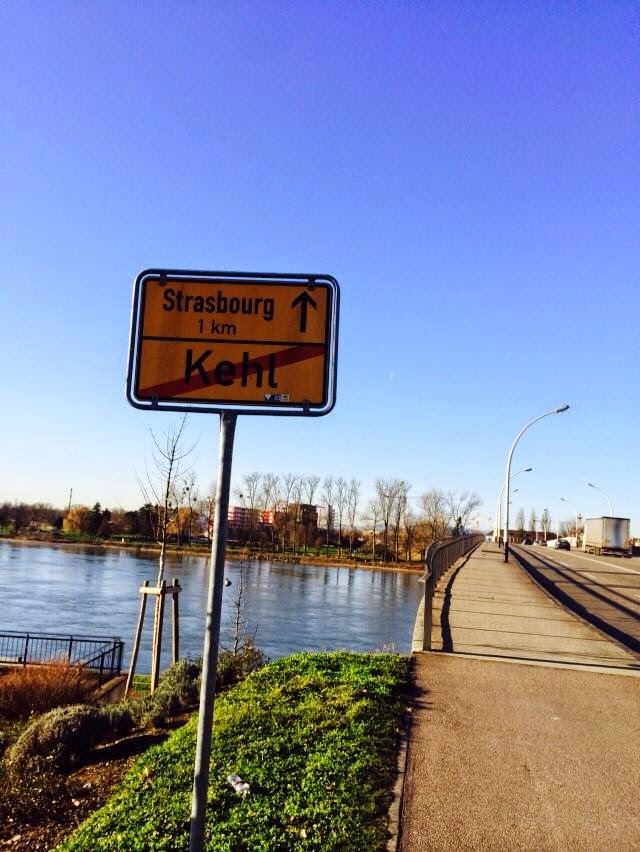
Before my eyes lays solely the River Rhine in the name of a ‘border.’ On the bridge over it, there are people riding their bicycles, walking their dogs, and lazily swinging their fishing rods in the river. As a traumatized Cypriot, who cannot travel across a tiny island without filling papers, showing identity cards and going through controls, my eyes impulsively search for a barrier, a wall, some sort of a barbed wire, a uniformed official, a police booth, or at least a ‘line’ on the ground - even if symbolic. I realize that I automatically reach inside my bag ready to ‘draw’ my ID any moment as I cross the bridge. I laugh at myself.

As I freely cross the bridge between France and Germany - the opposing sides of the Second World War, which was stage to unbelievable massacres only 70 years ago, I see the sign ‘Bundesrepublic Deutschland’ and understand that I am now in Germany. It’s a beautiful day. I decide to enter the park stretching along the River Rhine right at the entrance of the town Kehl. 

I first come across Yannick, a young 23-year-old teacher. His class of 3-4 year-old nursery students is with him. Under my scrunity, he talks to the children he has taken for a walk in the park both in German and French. He tells me that an increasing number of kids are learning both languages in the nursery, primary and elementary schools. Starting from secondary school both German and French are compulsory.

“The war was a stupid thing… We now live together. I am German but I don’t feel any different from someone who is French” he says. “Don’t you have any disagreements or problems at all?” I insist. “There is no difference between us. We are the same,” he says. His great-grandfather had fought against the French during the Second World War. “How do you think he would feel if he saw you living like this now?” I ask. “I am sure he would be very happy” he answers.

I leave Yannick with the kids, who are starting to get really bored, and continue to walk. My next target is Niklas, who is walking his dog. “Do you live here?” I ask him. “That’s a a difficult question,” he says. “Actually I live both in France and in Germany.” He must have understood my confusion, so he rushes to explain: “My girlfriend is here in Germany, and I work in France. Therefore, I sometimes live here, and sometimes there…” I ask him how it feels to be able to go back an forth like this between two countries with a history full of wars: “It’s wonderful to be free,” he says.

I approach another person who is taking a walk. Yann is a French taxi driver. He says he crosses to Germany every morning to walk in the woods. As I bombard him with questions impatiently, he calmly smiles at me and says, “The war was a long time ago. Is it so surprising that we have no discrimination amongst us anymore and that we live in peace?” Yes, unfortunately for me, it is suprising. I feel embarassed.

I get out of the park and walk towards the town centre of Kehl. A small market has been set up in the church square. I watch the salesmen and the people shopping. I hear them speak both in French and in German. At times, the conversations start in French and end in German. I approach a woman, whom, I gather must be French. I ask her why she is shopping here. “Because things are much cheaper here than in Strasbourg,” she replies. According to Ingrid, many people, who live in Strasbourg, do their food shopping in Kehl, which is cheaper. “But don’t French authorities react against this? You are contributing to the German economy instead of the French economy?” I hear myself asking. I understand from the way she looks at me that this question does not mean anything to Ingrid. It isn’t even comprehensible. She works at a French elementary school in Strasbourg. She explains to me that French kids take some of their classes at a school in Germany within the framework of exchange programs, and that some German kids come to her school for certain classes. I ask her what she thinks about the past. “The French and the German have realized that war brought them nothing,” she says. “If you want to live, you need to stop living in the past.”

From the people I speak with, I find out that around 60 thousand cars commute between Strasbourg and Kehl daily. A lot of French prefer to live in Kehl and work in Strasbourg since the property prices in Kehl are lower. They particularly shop for food, clothes, alchohol and cigarettes in Kehl, and buy luxurious goods in Strasbourg. They prefer Kehl for a quiet day in a small town, for taking walks and spending time in the park, and go to Strasbourg for a city life, cultural activities and entertainment. The majority speaks both languages with ease. The number of mixed schools are increasing each day. Especially the youngsters don’t see any difference between themselves and ‘the other.’

Just as I begin to think that such lack of ‘national consciousness’ is getting a little bit too much for my Middle Eastern mind, Ingo Wilmer comes to my rescue. He is a 53-year-old musician, who says that living on the French-German ‘border’ is sometimes “difficult” for him. “The youngsters speak both German and French. They live and work on whichever side they want. It is no longer possible to recognize who is French and who is German here. They have no national identity whatsoever,” he says. I see the annoyance in his face and hear it in his voice… He tells me that his father fought against the French during the Second World War. But immediately after, he adds: “What can we do, at least there is peace and quiet.”
As I walk back towards the bridge to return to Strasbourg, I feel a bit stupidified by this experience which has affected me more than I could have imagined... On the way to the bridge, I come across two singers on the street. The song they are playing is very familiar. My eyes fill with tears:

Imagine there’s no countries.
It isn’t hard to do
Nothing to kill or die for
And no religion too
Imagine all the people
Living life in peace...