Showing posts with label property. Show all posts

Monday, 20 May 2024

Clampdown on foreign property buyers in the north

 May 19, 2024


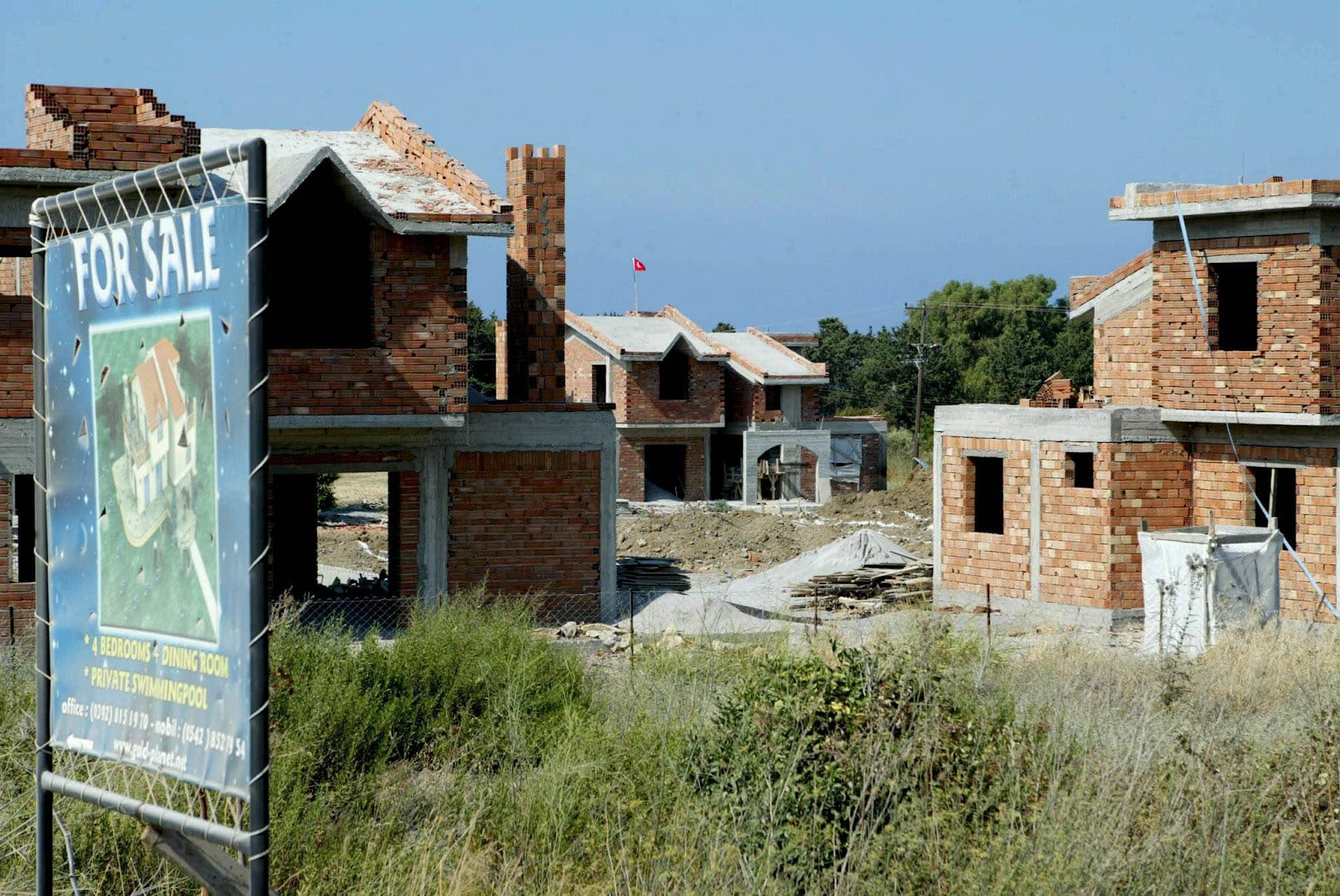
There are fears the new regulations may cause more ghost towns with unfinished buildings

But an exception is made if the buyers are Turks

The Turkish Cypriot administration is working on a set of legal amendments to limit the number of properties that foreigners can purchase in the northern part of Cyprus. The amendments will also put an end to the current loophole that allows property purchases to go unrecorded.

According to the amendments expected to soon be approved by the Turkish Cypriot assembly, foreigners will not be able to purchase more than one property or one piece of land in the north. The purchase will be subject to the permission of the administration.

The amendments include provisions that limit foreign property ownership to seven per cent in any district and three per cent in the north as a whole.

Under current laws, foreigners are legally able to buy up to three properties subject to permission, but this limitation has long been bypassed through the establishment of trusts that allow lawyers to purchase properties on behalf of foreigners. Such purchases have created a large gap between actual transactions and official records, as well as obscuring property ownership.

Sector experts estimate that over 50 per cent of property transactions in the north are not recorded. Dursun Oguz, who is responsible for the interior affairs dossier in the north, recently acknowledged that there are foreigners who have purchased up to 30 properties in the north and never recorded them under their own name.

According to the amendments, any foreigner, who has purchased more than one property before the amendments but have not registered these with the land registry department, will have to get rid of these properties within 24 months.

The amendments include provisions that outlaw multiple property purchases done through lawyers and stipulate that purchase agreements will be null and void unless the transfer of property is finalised at the land registry department within six months.

Turkey FATF

The amendments to the property regime are understood to be part of Turkey’s efforts to combat money laundering as it strives to get out of the international crime watchdog Financial Action Task Force FATF’s grey list.

FATF grey-listed Turkey in 2021 for failing to supervise its sectors such as real estate and banking that are vulnerable to money laundering and to financing terrorist groups. Turkey needs to get out of the grey list to improve confidence among foreign investors as it grapples with a deep economic crisis. According to official data Turkey’s annual inflation was almost 70 per cent in April.

Turkey’s “AKP government targets to get Turkey out of the grey list in June,” wrote Turkish journalist Zeynep Gurcanli in the financial news website ekonomim.com recently. “Until today, the grey list issue has always been discussed only in relation to Turkey… It appears that Ankara has realised that it will not be able to get out of the grey list unless north Cyprus stops being mentioned in connection with black money.”

Gurcanli added that Ankara wants the amendments to be approved by the Turkish Cypriot assembly by the end of this month.

Money laundering

The recent spike in property sales to foreigners in the northern part of Cyprus coupled with legal loopholes and lack of adequate controls had led to increased concerns about money laundering and calls for measures to regulate the sector.

Multiple reports in international media had pointed to north Cyprus as a destination for foreigners – especially Russians – to park their money without any questions asked. Russians can easily buy property in the northern part of Cyprus as banks there are not part of the international Swift system and operate via Ankara, which has not put sanctions on Russia.

In a speech last year, Turkish Cypriot judge Fadil Aksun, who is the head of the north’s Nicosia High Criminal Court, had made a stark warning about the large amounts of money coming into the north for real estate purchases.

“But there is no control over whether a real estate purchase indeed takes place,” said Aksun. “There is a risky money circulation in our country.”

Criticisms

The amendments have drawn criticism however, as they create a differentiation between foreigners and Turkish citizens and provide exceptions for the latter. While foreigners are limited with one property only, “natural persons who are citizens of a state that recognises the Turkish Republic of Northern Cyprus” have the right to buy up to three properties, according to the amendments.

“The plan is clear: Annexation didn’t happen so let’s sell for money,” was the headline of daily Ozgur Gazete, which argued that the amendments are aimed at enabling Turkish citizens to buy more properties in the north.

In fact, Hakan Akcam, the head of the Chamber of Real Estate Agents in Turkey, in a statement he made after the amendments were made public said: “The law in TRNC is changing. The way is being cleared for Turkish investors.”

Economic concerns

While the amendments are deemed positive for preventing money laundering, they have caused controversy because of the impact they are expected to have on the economy.

The Association of Real Estate Agents in the north held a press conference against the amendments saying they will “destroy the sector, cause chaos and serious economic loss”.

“The foreigners will leave,” asserted the association’s lawyer Husnu Tokatlioglu.  “The state will not get revenue because there will be no sales. Real estate agents will have no customers. Contractors will not be able to sell what they have built.”

Economist Mertkan Hamit states that the amendments will not only impact the real estate sector but the whole economy.

“Being outside international supervisory mechanisms, north Cyprus has become a destination for black money,” says Hamit. “If these amendments are implemented effectively, north Cyprus will no longer be an option for those, who would like to keep their assets outside supervision… The problem is we don’t know what the exact effects will be… In the pessimistic scenario, we may have more ghost towns with unfinished buildings and derelict apartments.”

Cyprus hits back at ‘skyscrapers on stolen lands’

 January 21, 2024


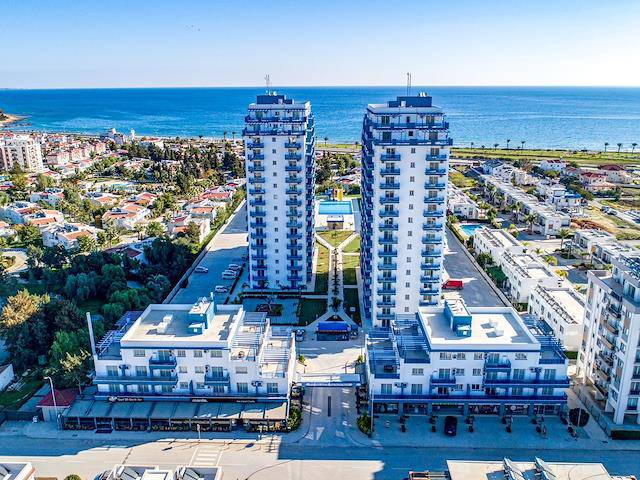
Ad on a real estate website for flats in Trikomo

Arrest of Turkish Cypriot lawyer shakes up sales of Greek Cypriot properties in north

The arrest of a Turkish Cypriot lawyer in Italy over exploitation of dispossessed Greek Cypriot property in the northern part of Cyprus has sent a shockwave through the society.

There is widespread panic that the development will affect the locomotive property sector as investors will likely no longer feel that the north is a safe place to invest, as well as threaten other individuals – especially investors, lawyers, contractors, developers and realtors involved in the sale or purchase of Greek Cypriot properties.

“New Threat for the Real Estate Sector,” “Crisis Around the Corner,” “This Could Spell the End for the Sector,” “This Will Cost Us Dearly,” “Investors Not Safe,” were some of the newspaper headlines following the arrest early January.

Legal counsel Akan Kursat was apprehended in Italy based on a 2007 European arrest warrant issued by the Republic of Cyprus for fraud and exploitation of properties without approval of their rightful owner when he was legal counsel to development company AGA Development owned by British con man Gary Robb. Kursat, who remains under arrest, has objected to the Republic of Cyprus’ request for his extradition. The court will convene on February 6 to assess what happens next.

It is the first time a Turkish Cypriot bearing Cypriot citizenship will be tried for exploitation of Greek Cypriot properties in the north. Kursat is married to deputy speaker of the Turkish Cypriot assembly Fazilet Ozdenefe of the left-wing Republican Turkish Party CTP.

There are reports that at least four other lawyers have outstanding arrest warrants. There also are unconfirmed reports of a file being prepared by the Republic of Cyprus with complaints from Greek Cypriots over developments on their properties in the north. Unconfirmed posts on social media by a user claiming to be close to President Nikos Christodoulides about arrest warrants having been issued against 95 people in the north is feeding fuel to the fire.


Property for sale in Kyrenia

“Now everyone…is on a knife’s edge,” wrote prominent journalist Cenk Mutluyakali. “Everyone will be worried when going to Europe or crossing to the south. We are trapped.”

“The sleeping giant has woken up,” wrote another journalist Rasih Resat. “Nobody is safe.”

‘Ruthless’ sales

Observers agree that the move to try a Turkish Cypriot lawyer for exploitation of Greek Cypriot property is more of an attempt by the Republic of Cyprus to avert the “ruthless” property sales in the north than anything else.

Back in December, Greek Cypriot officials had indicated that legal measures were being examined to deal with the sale of Greek Cypriot properties in the north and explained these will act as deterrents to the “usurpation”.

While legal expert Latif Aran acknowledges that more arrest warrants could be issued, he expresses doubt these will be against Turkish Cypriot dispossessed owners, who are currently using Greek Cypriot properties.

“But we have to acknowledge that the property sales have long become ruthless,” he adds. “The north has turned into a concrete jungle.”

Akan Kursat

Senior researcher Mete Hatay of PRIO Cyprus Centre, who has done extensive studies on the property issue, underlines that there are problems with the property regime in the Republic of Cyprus too, since Turkish Cypriots are not allowed to return to or get compensated for the properties they left in the south before a comprehensive solution to the Cyprus problem is found.

They are not treating the dispossessed Turkish Cypriots justly either. “Therefore, they will not go after a Turkish Cypriot displaced person,” says Hatay. “They are after the shameless exploitation of properties in the north… We have greedily erected buildings on every plot of land with undue haste. We have created a huge sector on a slippery ground with a looter spirit.”

“Greek Cypriot properties are being purchased, sold, marketed in an uncontrolled, vulgar, greedy way,” says journalist Mutluyakali.

Sixty-five to 80 per cent – depending on which side you ask – of the privately owned land in the northern part of Cyprus belongs to Greek Cypriots. It is estimated that Turkish Cypriots left behind some 400 thousand donums of land in the south while Greek Cypriots left behind some 1.5 million donums in the north in 1974.

Boom

There has been a boom in the property sector in the north as sales especially to foreigners skyrocketed in recent years.

Many of the properties are being bought by lawyers on behalf of foreigners or by Turkish Cypriot companies with “silent foreign partners”. These sales are not registered in the official figures. Turkish Cypriot officials have themselves suggested that many properties being sold are not controlled or checked.

Economist Mertkan Hamit estimates, looking at the construction projects and prices, that the property sales roughly generate an annual one billion dollars. This is almost one third of the gross domestic product of the northern part of Cyprus.

Impact

President Hasan Sungur of the Cyprus Turkish Realtors Association scrambled to calm the fears in statements to the daily Kibris earlier this week. He downplayed the arrest of the lawyer and accused the media of creating panic among investors.

“The case of Akan Kursat will not affect the foreign investors,” Sungur said. “What really will affect them are the media reports… We are shooting ourselves in the foot… There are no risks, no danger whatsoever,” in investing in property in the north. “It is wrong to report that things will escalate. Let’s not kill the sector by such media reports. Let’s put an end to this panic.”


Hasan Sungur

However, Cafer Gurcafer, president of the Contractors Association, in statements to the same daily, did acknowledge that European investors may be discouraged.

The development seems to have already affected the property sector. Daily Yeni Bakis reported this week that the value of Turkish Cypriot-owned properties in the north has increased 100 per cent as investors are shying away from buying Greek Cypriot-owned properties following the arrest.

Questioning the property regime

The arrest led to the questioning of the property regime in the northern part of Cyprus, whereby Greek Cypriot properties are being exploited with impunity.

Turkish Cypriot authorities not only gave right of usage but in time also issued ‘title deeds’ to displaced Turkish Cypriots as well as any other users of Greek Cypriot properties. Nepotism, favouritism and political interests played a role in the way Greek Cypriot properties were distributed. The number of Greek Cypriot properties developed and/or sold under a new “ownership” multiplied creating a problematic situation in terms of international law. In various rulings, the European Court of Human Rights has recognised the displaced Greek Cypriots as the legal owners of the properties they left in the north and said that their property rights are being violated.

The Immovable Property Commission, established in the 2000s to resolve property issues locally in an attempt to bring the property regime more in line with international law, hit a financial dead end.

Many editorials and columns appeared over the past week in Turkish Cypriot dailies of a wide political spectrum, concluding that the property regime, created by not just by right-wing but also left-wing parties over the years, has hit a wall.

“This is the consequence of this whole system,” journalist Ulas Baris wrote. “The system, which has enabled looting… issuing title deeds for Greek Cypriot properties for years.”

“Skyscrapers rose on ‘stolen’ lands,” wrote journalist Hasan Kahvecioglu. “Did we expect Greek Cypriots to just watch this overt ‘looting’, which was not prevented but, on the contrary, encouraged?”

“This is the crash of the false, fake, makeshift order they created,” said journalist Mutluyakali. “You cannot create a state on somebody else’s land! … They will come after you… There is no more peace of mind in this fake heaven.”

Saturday, 6 January 2024

Property-owning Jews in north increasingly targeted

By Esra Aygin

17 December 2023


Turkish Foreign Minister Hakan Fidan

‘The opposition to Israel’s actions against Palestinians has turned into an unconscious attack on all Israelis and Jews’

Since the Hamas attack on Israel in early October and Israel’s subsequent bombardment of Gaza, the Jews living in the northern part of Cyprus are increasingly becoming a target, particularly by nationalist circles.

The aggression often involves the disclosure of identities and in some cases photographs of Jews living among the Turkish Cypriot community on social media. The posts are widely circulated.

Most recently, a group led by Yasemi Ozturk, a member of the Turkish Cypriot assembly from the majority coalition partner right-wing National Unity Party (UBP), staged a demonstration in front of a Jewish centre, Chabad, in Kyrenia, calling it “a concrete step towards the building of a Zionist structure in [the northern part of] Cyprus”. Back in November, the Chabad building was sealed off by local authorities pressured by the same nationalist group on the grounds that it didn’t have the necessary documentation.

Late last month, five business organisations including the Cyprus Turkish Businesspeople Association, in a statement that condemned Israel’s attack on Gaza and called for a ceasefire, said: “The Jewish colony settled in our country should be controlled and the necessary measures should be taken regarding their residency here.”

“There is a very dangerous and concerning trend,” says Middle East expert professor Nur Koprulu. “Incriminating individual Jews or the whole Jewish community is antisemitism, hate speech and discrimination… What we cannot tell apart here is the distinction between the Jewish community and the Israeli state… And the stereotypes about Jews that are still very present in the society, are revived with negative developments such as war.”

She underlines that the trauma of war and killing of innocent people on both sides is also playing a big role worldwide which manifests itself at times as antisemitism and at times as Islamophobia.

Image from one of the newspapers accused of antisemitism


Property ownership

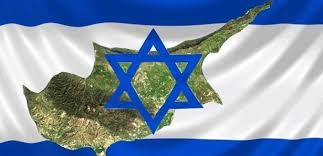
The aggression against Jews mainly focuses on their land and property ownership amid claims that they want to establish an Israeli state in northern Cyprus as part of the “Great Israel Project”.

Last month, a Turkish Cypriot nationalist journalist disclosed on social media the names of hundreds of real estate development companies owned by Jews along with their identities as well as their Turkish Cypriot partners under the heading “The Zionists among us.” The Jewish people identified in the post – also widely circulated in Turkey – were mostly the citizens of the unrecognised Turkish Cypriot state, which gives them the right to reside, buy property, and work freely in the north.

The antisemitic sentiment was exacerbated by a number of mainland Turkish media outlets that picked up on the post and did their own reports on the issue.

Sabah, which is among one of the biggest dailies in Turkey, claimed that there are 35,000 Jews living in northern Cyprus, who have bought 25,000 donums of land. The daily added that there are some 2,000 construction companies owned by Jews, which are building properties and selling only to Jews in the north.

“Israel is conquering TRNC [Turkish Republic of Northern Cyprus],” said Sabah.

Another Turkish daily, the Islamist Milli Gazete, claimed that “Zionists are amassing land in Cyprus, especially in areas that face Tel Aviv” and said an “unarmed invasion” is taking place.

International Relations associate professor Yonca Ozdemir warns against this mentality. “If there is any concern about the environmental, social or any other consequence of land sales then they should be looking at all sales,” she says. “It shouldn’t matter who is buying the land. Otherwise, this is antisemitism.”

“Who will be responsible of the horrific consequences of making targets of Jews, who have been living and investing in the northern part of Cyprus for decades?” asked journalist Pinar Barut at the online Ozgur Gazete newspaper. “The opposition to Israel’s actions against Palestinians has turned into an unconscious attack to all Israelis and Jews… Does this not bother the government and the law enforcement?”

The commotion about Jewish land ownership led a right-wing Turkish politician to ask Turkish Foreign Minister Hakan Fidan about “allegations that tens of thousands of donums of land in the north had been purchased by middlemen connected to Israel” in the Turkish parliament.

Fidan downplayed the Israeli property ownership but said that the land purchases by foreigners are being monitored since he was the chief of the Turkish intelligence agency MIT.

“We are conveying our concerns to the [Turkish] Cypriot authorities,” Fidan said.

Soon after Fidan’s statements, the department responsible for the interior affairs announced last week that it is preparing legal amendments that will bring limitations on property sales to foreigners.

“It is important to protect the land in the TRNC and not give it over to foreigners,” said Fikri Ataoglu, who is responsible for the tourism dossier in the north. “I don’t want TRNC land to be sold to anyone other than Turks.”

The amendments will not affect foreigners, who have been granted Turkish Cypriot citizenship.

“The territories of TRNC…were taken by guns,” wrote journalist Serhat Incirli in the daily Yeniduzen, after the announcement. “And now foreigners are buying these lands. The fuss is especially about some Israeli individuals or companies… Is there a problem if the looted territories are bought by Turkish companies rather than Israeli ones? No… We are being racist… Did we not steal the land over which we are fighting, being antisemitic, disgracing ourselves? The essence of the issue is very simple: ‘Fascists Turks cannot stomach that the stolen land is now being sold to some Israeli companies’.”

There has been a sharp increase in construction and property sales in northern Cyprus in recent years. Some 4,600 foreigners were given permission to buy properties in the first ten months of 2023. However, far more properties are being bought in the north by foreigners who have been granted Turkish Cypriot citizenships; by lawyers on behalf of foreigners; or Turkish Cypriot companies with “silent foreign partners” to avoid limitations imposed on foreigners. Official records do not show such transactions and estimates are that about 50 per cent of transactions are not recorded.

Is the north harbouring terrorism?

Meanwhile, Last Sunday, Israel said that it was “troubled” by use of the northern part of Cyprus “both for terrorism objectives and as an operational and transit area”. The statement described the north “as an area of activity and transit to attack Israeli and Jewish targets. [This] constitutes a disturbing issue.”

The statement came after Israel helped Republic of Cyprus foil an Iranian-ordered attack against Israelis and Jews on the island and captured two Iranian nationals. They were believed to have come to the Republic from the north.

Turkish Cypriot officials were quick to brush off Israel’s statement, with the speaker of the assembly Zorlu Tore labelling it as an “attempt to conceal the genocide it is committing in Palestine”.


https://cyprus-mail.com/2023/12/17/property-owning-jews-in-north-increasingly-targeted/

Saturday, 12 August 2017

Property claims: How Germany did it

September 18, 2016

By Esra Aygin
Following WWII, nearly 4.9 million Germans abandoned their properties in East Germany and fled to the West.
When Germany was united on August 31, 1990, a new Division for Open Property Questions was established under the Federal Ministry of Finance to settle the property disputes that had arisen in 40 years of division.
Dr Hermann-Josef Rodenbach, a specialist in the fields of constitutional, civil and commercial law, in particular as regards property rights, served as Head of Division for four years.
At the beginning of the process, there were thousands of workers in a decentralised system that had 220 offices in different federal states. Today, with nearly 99% of the property disputes solved, only a hundred people are employed.
“The remaining are mostly Jewish property because it is very difficult to find the heirs,” said Rodenbach.
At the beginning, the principle was for the restitution of properties, but this worked out differently in practice.
“In practice, there were many more cases of compensation than restitution. We had about 2.7 million claims for restitution – 2.2 million for real estate – and the restitution rate has been only 23%.”
As a result, around €6.4bn was paid in compensation. The main reason for low restitution rates was the principle of acquisition in good faith. 
“That means people who had acquired property after WWII in East Germany are protected against restitution. But it is necessary that it was in good faith, in a correct order, and that a normal East German price was paid,” he explained. Purchases deemed to be in good faith covered around 95% of cases.
As for the small percentage who acquired a property by force or by not paying for it, “they were not protected against restitution”.
Handling the opposition
There was, of course, opposition.
“The expectations of the older owners were very high, especially because West Germany, until the reunification talks, never formally accepted or formally recognised these expropriations.”
Politicians swore they would never recognise expropriations and the media objected to what it described as “victims compensate victims”.
Low compensation payments also created resentment. However, the desire for peace was paramount.
“We wanted to have peace in Germany and we didn’t want to have war between old owners and new owners. I think that was one price for the reunification. No new compulsions,” he said.
Many of the decisions taken by the Property Division were challenged in the courts. However, out of 64,000 procedures and 40,000 judgments, the state won in 35,000 cases.
“The decisions were found correct,” Rodenbach said.
Fixing compensation levels
Rodenbach said at the beginning they thought of paying a small amount of compensation based on east German prices and levying a property tax for those who received their properties back, with the logic that those being reinstated would benefit from the rapid increase in values. However, this was rejected by parliament.
“The final decision was to pay it on the basis of a so-called fictive market value of 1990 – the date of reunification. The second step was that all payments the old proprietors had already got – in Germany we had already paid compensations for the loss of property in East Germany – would be deducted.”
On the other hand, if a property was reinstated, the owner had to pay back any compensation received by the state before reinstatement.
“That also diminished compensations,” he said. On the other hand, in retrospect, he says: “Today I can say that the compensations should have been a little bit higher because it would have brought more peace and justice.”
Privatisation paid
Compensation funding came primarily through privatisation revenues and taxation.
“We said the Trust Company, which had the job to privatise these, had to pay 1.5 billion German marks [about €750m] to the compensation fund.”
Another €1 billion came from selling property of the former German Democratic Republic, including state forests.
A small amount came from people who left unbuilt land but were reinstated with land plus buildings (known as ‘significant improvement’ in Cyprus). In these cases the state took ‘equalisation pay’, although Rodenbach says there were few cases like these.
As unresolved property cases had a negative impact on the East German property market, the Property Division also prioritised purchases for investment.
If a prospective buyer promised investment or guaranteed employment they would get priority over the owner.
“The applicant for restitution is then excluded but gets the result of this purchase and even has to get at least the market value of the asset,” Rodenbach explained.
Advice for Cyprus
Asked for advice in the Cyprus case Rodenbach called for simplicity.
“Don’t make it too complicated. We had a very complex system in Germany, very difficult to read, especially in the field of restitution of enterprises,” he said.
“I think description of the facts in the law should be very clear. There should be only little room for interpretation because interpretation is always a cause of dispute … Then very short, fixed deadlines.”
He also advises against long formal procedures.
“Make it as simple for the people, to avoid people having to go to a lawyer and paying a lot of money for it.”
He also advises a “public law determined procedure”, for those who are dissatisfied.
“The office makes a decision and anybody, either the applicant or users, has a right to go to the court then.”
A fair and fast system is his main advice.
“I think the faster you give back the property, and if you have a just system, the more people will be content.”

Monday, 12 October 2015

Cyprus reunification to cost €20-25 billion (The Cyprus Weekly, 9 October 2015)

By Esra Aygin
The total cost of a bizonal, bicommunal federal solution in Cyprus will be an estimated €20-25 billion said Baris Burcu, the spokesperson of Turkish Cypriot leader Mustafa Akinci.
Options for raising funds for financing the solution were among the main issues discussed during the meetings held by the Turkish Cypriot leader and his team in New York last week on the sidelines of the 70th session of the General Assembly of the United Nations, Burcu said.
The figure of €20-25 billion includes the compensations that will have to be paid as part of the solution of the property problem; the amount that will be needed for the relocation and resettlement of those who will have to move due to territorial adjustments; the cost of establishing the federal structures of a united Cyprus; and the investment needed to bring the northern part of Cyprus into conformity with European Union standards.
The Turkish Cypriot side was pleased to see that the international actors are very willing to help finance a solution, Burcu said.
“This money will mainly come from donations and long-term loans from international institutions,” he added.
“And of course, there will be an opportunity to maximise the currently depressed values of Greek Cypriot properties in the north and the Turkish Cypriot properties in the south.”
There are efforts on different fronts for building economic support for a settlement, including by UN Secretary General Ban Ki-moon’s Special Advisor on Cyprus Espen Barth Eide, the United States and the European Union, Burcu said.
In fact, there have been some encouraging messages from a number of actors regarding the financing of a solution in Cyprus.
Most recently, United Kingdom’s Foreign Secretary Philip Hammond stated that his government is working with international partners in order to financially support a settlement in Cyprus.
“We have undertaken to work with our partners in the EU, with the United States, to ensure that the international community is able to mobilise to support a settlement with the necessary financial underpinning,” Hammond said last Sunday, addressing an event on the sidelines of the Conservative Party’s annual conference.
“I think you can rely on the USA, the UK, the EU to come together to support a settlement.”
During his visit to Cyprus in July, European Commission President Jean-Claude Juncker had also pledged that the EU would financially assist Cyprus when a solution is found.
“The Commission will be there when it comes to the financial consequences of the unification,” Juncker stated.
“As a matter of principle, I indicated to the two leaders and to those who are with them that the Commission at the very end of the process will be deeply involved in the financial consequences of the reunification.”
A significant portion of the €20-25 billion will constitute compensations to resolve the property issue, said spokesperson Baris Burcu.
The Turkish Cypriot side maintains that the bizonal and bicommunal character of a future federal Cyprus means that the Turkish Cypriots would have population and property ownership majority in the Turkish Cypriot constituent state, and the Greek Cypriots would have population and property ownership majority in the Greek Cypriot constituent state. This consequently means that the property issue will have to largely be solved through compensations.
Turkish Cypriot leader Akinci, following his meeting with UN Secretary General Ban in New York last week had stated: “The property regime should not disrupt social order. The remedies will be mainly through compensation.
“Therefore, we will need to focus on the financing of the comprehensive settlement.”
Burcu said that there is an understanding between the Turkish Cypriot and Greek Cypriot leaders that the property issue will have to be solved mainly through compensations.
“But the sides have not yet determined the criteria, which will serve as a basis for deciding which of the three remedies – compensation, exchange and reinstatement – will be applied in each case,” Burcu added.
Turkish Cypriot leader Mustafa Akinci and Greek Cypriot leader Nicos Anastasiades agreed on June 27 that the individual’s right to property – both the original owner’s and the current user’s – will be respected and that the exercise of this right will be regulated through compensation, exchange and reinstatement decided on by a property commission based on mutually agreed criteria.

Monday, 14 September 2015

Fear factor at work (The Cyprus Weekly, 11 September 2015)

Esra Aygin 
Ever since the two leaders – Mustafa Akinci and Nicos Anastasiades – started discussing the topic of property little over a month ago, Turkish Cypriots have come under a heavy bombardment of disinformation and speculation.
Fabricated maps showing an exorbitant amount of territory being given to a future Greek Cypriot constituent state, rumours that all the Greek Cypriot properties in the northern part of Cyprus will be reinstituted to their original owners and exaggerated news reports of Greek Cypriots pounding at the door of their homes now inhabited by Turkish Cypriots are doing the rounds.
Although some of this may be due to misunderstanding or lack of knowledge, the greater part of it is clearly deliberately aimed at inciting fear, creating doubts and turning Turkish Cypriots against a prospective settlement. Misreporting by some Greek Cypriot media and failure of the Turkish Cypriot leadership to address the spread of disinformation and has added fuel to the fire.
Akinci and Anastasiades agreed during their meeting on July 27, that the individual’s right to property would be respected under a solution and that an independent property commission comprised of an equal number of Turkish Cypriot and Greek Cypriot members would resolve property claims according to mutually agreed criteria through the remedies of return, compensation or exchange.
The disinformation began with certain circles claiming that the recognition of an individual’s right to property means giving the first say over what happens to the property in question to the original owners – who will most probably demand their property back, therefore ousting the current users.
“This is completely false. There is a whole lot of disinformation and distortion going on,” said Mete Hatay, senior research consultant at the PRIO Cyprus Centre.
“Recognising the individual’s right to property is nothing new. It was recognised in the Annan Plan, and is the core idea behind the Immovable Property Commission, which restores the individual’s right to property.”
The Immovable Property Commission was established by the Turkish Cypriot administration in 2005 to deal with property claims of dispossessed Greek Cypriots under the conditions of non-solution through restitution, compensation and exchange.
Baris Burcu, the spokesperson for the Turkish Cypriot leader, denied allegations that the original owners would have the first say over the fate of the properties in question. “The individual right to property of both the owners and the users will be taken into consideration when resolving property claims post settlement,” said Burcu. “Both the original owners and the current users will have their right to property restored through restitution, compensation or exchange.”
Burcu also said the sides have not exchanged maps or discussed the percentage of the land that will be subject to territorial adjustment. Regarding reports of Greek Cypriots property owners “harassing” users, Burcu stated that a number of isolated incidents may have taken place, but added that the media reports are extremely exaggerated.
“The anti-solution lobbies are at work,” said Burcu. “They are trying to put fear in people’s hearts. They are scaremongering. They cannot do this with issues that have an easy solution. Property is a complex issue and one we have not yet resolved. They are exploiting the fact that we don’t have concrete answers to all aspects of the issue yet. They are filling the gaps with speculation and instilling fear and distrust. As we proceed with the talks on property, as we find solutions and fill the gaps, they will not be able to continue with this black propaganda.”
A number of influential columnists and opinion leaders have begun voicing that the exploitation of the much-sensitive property issue is turning some Turkish Cypriots against a solution – an argument being increasingly circulated even among the pro-solution. Columnist Hasan Hasturer of the daily Kibris, for example, wrote earlier this week that no one should be surprised if the solution is rejected by Turkish Cypriots this time.
“It seems that we are not seeking peace but a commercial agreement in Cyprus,” wrote Cenk Mutluyakali in daily Yeniduzen. “What importance does property have compared to the future of our children?… If we are to discuss a solution in respect of donums, not one but a thousand signatures will not work.”
Journalist Hasan Kahvecioglu, on www.gazete360.com wrote: “The looters…have waged the war. And before you know it, even the people you consider pro-solution are drowning in hesitation…Apparently our stance is the reunification of Cyprus only as long as it does not harm our interests.”
Mete Hatay agrees that there is a degree of disheartening among the Turkish Cypriot community towards solution. “There is a level of suspicion or uncertainty towards the process,” said Hatay.
“In more than ten years since Turkish Cypriots accepted the Annan Plan by 65%, many things have changed in the property scene in the northern part of Cyprus. The number of individuals involved in affected properties some way or another, multiplied. People got more settled in the houses in the 13 years since the beginning of the Annan Plan period,” said Hatay. “Babies that were born in those houses during that time, are now 13 years old. Many more Greek Cypriot properties have been transformed through development.” Hatay believes however, that the mood of the society will change. “All this can be overcome through better management of disinformation and increased cooperation with the civil society,” he said.
Akinci also dismissed speculation of a rejection by the Turkish Cypriot community earlier this week.
“Our goal is to establish a structure that would offer equality, freedom and security to our people,” said Akinci.“When we do that, present it to our people with clear conscience and say, ‘Here, we have made an agreement that you can approve with peace of mind,’ I don’t have the slightest shadow of doubt that our people will approve it.”

Saturday, 29 August 2015

Land for Peace (The Cyprus Weekly, 28 August 2015)

Esra Aygin

For a couple of unusually windy weeks after the crossing points opened in 24 April 2003, my sister-in-law from mainland Turkey cleaned her small house in Kyrenia day in and day out in case its Greek Cypriot owners decided to visit. The house was given to my parents after they fled Limassol in 1974, by Turkish Cypriot authorities for the property they had left there, and was inherited by my brother. The Greek Cypriot owner of the small house - surrounded once by lemon orchards and multiple-storey apartments now – did visit. When he went into the room where his five-year-old daughter used to sleep in 1974, he found that it still looked like a little girl’s room because now, my brother’s five-year-old slept there. He had coffee, picked lemons from his tree in the garden and left.

Property is one of the most complex aspects of the Cyprus problem, not only because it is very close to people’s hearts, but also because both Turkish Cypriots and Greek Cypriots have been led to believe in myths for years. While Greek Cypriot politicians maintained for decades that all Greek Cypriot refugees who had been displaced from their properties in the northern part of the island would go back one day, many Turkish Cypriot politicians advocated that what has been “taken” is now theirs and property claims should be settled through global exchange and compensation. Such unrealistic, maximalist rhetoric is probably part of the reason why many people on both sides have a problem with the agreement recently reached by Turkish Cypriot leader Mustafa Akinci and Greek Cypriot leader Nikos Anastasiades over the property issue.

The two leaders have agreed that the individual’s right to property – both the original owner’s and the current user’s - will be respected and that the exercise of this right will be regulated through compensation, exchange and reinstatement decided on by a property commission based on mutually agreed criteria. Both Akinci and Anastasiades have been criticized by certain circles in their respective communities, with some Turkish Cypriots claiming that recognition of individuals’ right to property means the original owners decide on the fate of their properties and with some Greek Cypriots finding it unacceptable that current users’ rights have also been acknowledged. Leading Turkish daily Hurriyet even proclaimed that the agreement could lead to a civil war in Cyprus.

The big question in the property issue is how some 1,350 million donums of property left by Greek Cypriots in the north in 1974, and distributed by Turkish Cypriots, will be handled. These properties left by some 150,000 Greek Cypriots were used primarily to resettle some 50,000 Turkish Cypriot refugees from the south, an additional 12,000, who had been living since the inter-communal clashes of 1963 in insufficient conditions and another 4,500, who had been displaced in 1958.[1] Some property was given to non-refugee Turkish Cypriots, such as the relatives of martyrs, Turkish Cypriot fighters since the 50s, new couples as part of a rehabilitation program and farmers as part of a land reform program. The third category that received Greek Cypriot properties was made up of some 35,000 Turkish settlers, who came to the north as part of a facilitated migration program between 1975 and 1981. No property was distributed to Turkish settlers that came to the island after 1982.

Nepotism, favoritism and political interests certainly played a role as well as economic hardship and increasing uncertainty in the way Greek Cypriot properties were distributed. Turkish Cypriot authorities do not give any figures regarding how much land has been given to Turkish Cypriot refugees, non-refugees and settlers. However, some indications can be found in Rebecca Bryant’s report titled “Displacement in Cyprus Consequences of Civil and Military Strife, PRIO Cyprus.” Bryant states that each Turkish Cypriot refugee family settled in rural areas was given a house and agricultural land, while each settled in towns or cities was given a house and shop or office. Each settler family was granted a house and agricultural land and it is estimated that around 6-7,000 Greek Cypriot houses were distributed in this way, according to Bryant. Some 500 additional properties may have been distributed to Turkish war veterans and families of Turkish soldiers killed in 1974.

For almost 10 years, Turkish Cypriot authorities did not issue title deeds to the Greek Cypriot properties that they distributed. Since 80 percent of all privately owned land in the north was Greek Cypriot property, this meant a huge social-economic limitation for Turkish Cypriots, according to Serden Hoca, the property expert in the former Turkish Cypriot negotiation team. In 1983, Turkish Cypriot authorities started giving title deeds to Turkish Cypriot refugees who had equivalent land in the south. With increased uncertainty, economic strain and pressure from businessmen, Turkish Cypriot authorities began to issue title deeds to all other Greek Cypriot property including those given to Turkish settlers in 1995. Right now, the most economically developed regions in the north – the Kyrenia coastline, northern Nicosia, and the Famagusta – Vokolida strip are predominantly Greek Cypriot properties, Hoca said.

As time passed, the Greek Cypriot properties that have been transformed through development increased, while the number of individuals involved multiplied - as of March 2012, some 200,000 transactions have been recorded at the Turkish Cypriot title registry and there is billions of dollars worth of collateral on the Greek Cypriot properties in the north, according to Hoca – resulting in a mess that needs to be resolved if the Cyprus problem is to be solved.  

Realism will be key in resolving the property issue. Turkish Cypriots need to accept that some properties will have to be reinstituted to their original Greek Cypriot owners and the Greek Cypriots need to accept that not everyone will go back to their properties as restitution of all claimed property would result in new human rights violations and some Turkish Cypriots would be third time refugees if moved again. Maximalist demands may cost us the last chance to reunify Cyprus.


[1] Rebecca Bryant, Displacement in Cyprus - Consequences of Civil and Military Strife, Report 6, Property in the Cyprus Peace Process (PRIO Report, 2010)

Monday, 3 August 2015

Eide: Individual right to property applies to current users as well as original owner (1 August 2015)

Interview with United Nations Secretary-General’s Special Advisor on Cyprus, Mr. Espen Barth Eide (30 July 2015)

Esra Aygin

Are we witnessing history?
Eide: We are witnessing a historic opportunity. And if you grasp this opportunity, you will make history. And I say you, because it is the Cypriots’ history and the Cypriots’ opportunity. Myself and my team are here to help, and we are happy to help because it’s very rewarding and interesting and fascinating to be in the middle of this. But at the end of the day, this is up to first the elected leaders of both communities and then the people of both sides. The historic decision will come in two phases. First, hopefully the decision by the two leaders to agree and announce and recommend a shared deal, and second, for all Cypriots to vote on whether they agree with this or not. And only then we know whether history has been made.

Your statements are always very positive and optimistic. Don’t you fear that you might be raising the expectations too much?
Eide: But it’s not only me, your leaders Mr. Anastasiades and Mr. Akinci are both making very positive statements. They are also doing things that have never been seen before. I think few people watching them would think this could not work. I think it’s important to convey that something very serious and real is going on. The reason for my optimism is the spirit and atmosphere of the talks. But of course, it is not a done deal. I cannot guarantee this will work. We have a long road ahead and many things to be done. But with the two leaders, the chemistry they have developed, their pragmatic problem-solving attitude, it’s the best opportunity in many many years. I am optimistic but I am also realistic. It is a window of opportunity. Windows, as you know, can be open as well as closed. So it’s important to use the opportunity while it remains open. And it’s a responsibility of all Cypriots. Don’t leave it all to the leaders. You need the leaders to lead, but you also need the people to engage and think about this…
And whether it remains open may not be decided only internally. You can never exclude some external shock. Not that I think of anything particular but it’s always a risk.


What led to the positive spirit? Is it more to do with the leaders, the timing, or the international conjuncture?
Eide: I think it’s many things and I think the stars are very well aligned, which is not necessarily by design. It may be by coincidence or luck. The international support is massive. You have a government in Turkey that clearly wants to solve this problem and it repeatedly states that at the highest level, including Erdogan…

At your meetings are you convinced that Turkey wants to solve this problem?
Eide: I strongly feel that Turkey wants to be a constructive partner in solving the Cyprus problem, which they would like to go away. So does Greece, so does the United Kingdom, so does the UN Security Council. I was there last week and I met with the Security Council together with Lisa Buttenheim. We presented the state of affairs and what we are doing. And every single member, 15 of the 15 took the floor and spoke very favourably and encouraged the leaders, and all of them said in different phrases that this window of opportunity must be grasped, and that they are there to help. As you know, the European Union is very supportive. So the international support is very strong. At the same time, the circumstances in the neighbourhood, the very dramatic situation at the Middle East I think, has led some Cypriots to think that maybe maintaining a non-solution is not very smart. In a situation where Syria is collapsing, where there are big problems in Iraq, major transformation is going on in many countries including Turkey, people think ‘is this a moment to remain divided or is this a moment to unite.’ Which is a security argument. But there is also an economic argument, which has become clearer. The economy of scale of one country is better than to have two economies. And particularly, with the hydrocarbons, it became clear that you may now, as Cypriots, be entering into an age where this will be a major feature of your economy. And it’s much better to deal with that together in cooperation without the geopolitical conflict looming over it. And I can add to that, that in my other job in the World Economic Forum, I can say many investors are looking with interest at Cyprus because it’s a perfect location for Middle Eastern and European business operations if it is unified. But today, the investors don’t want to come here because of the political problem. So by keeping this non-solution for decade after decade, you have generated an opportunity cost for yourself that you can get rid of. So that is the circumstance. Then you can add to that the election of Mustafa Akinci. Akinci came with a clear problem-solving attitude. Akinci and Anastasiades – the two Limassolians- agree that we have to grasp this opportunity. These two gentlemen from the same city have a shared vision for the future, which is very much why I dare to be as optimistic as I am. And yet one more thing: Over the last months I have seen something extremely positive, which is public recognition and genuine recognition of the suffering of the other side, which I think has been missing in Cyprus at least at the highest levels. The elected Turkish Cypriot leader is able to say that more Greek Cypriots suffered in 74 than we did. Somebody like Ioannis Kasoulides is saying the same thing about the 60s, which is I think absolutely imperative in order to overcome the historic grievances. Yes your grievances are true. And this goes for both sides. It is a shared experience. This is far more important than the specific details of the negotiations because this creates an atmosphere that is highly important.

There are various allegations about the property issue in the media. It is being reported that a property commission already exists and that only the property rights of the original owners will be recognised. What is going on in the property issue?
Eide: Some of the news are absolutely blatantly wrong. Completely wrong.
I will say very clearly that the property commission does not yet exist. There is an idea to set it up if there is a settlement. The property commission that the leaders declared is an idea about the future – a commission that will be set up if there is a solution. So that is absolutely wrong. And as the leaders just declared, there is an individual right to property and this right is recognised. That right applies to current users as well as the original owner. That right will be respected, but the remedy by which it will be respected will vary depending on circumstance. It could be reinstatement, it could be compensation it could be exchange. But it’s very important to understand that the right may be on both sides at the same time – it is not either one or the other. The important thing is, if somebody has a right, that right will be respected – the right that exists on both sides and of course all sides. The point is that, the right to property will be respected and remedies by which it will be respected will be according to certain criteria.

Will the envisioned property commission decide on those criteria?
Eide: There will be clear criteria and the criteria and principles will be included in the deal. The sides will of course negotiate the criteria. If somebody tells you the criteria have been decided on, they are wrong because we are not done. This is a lot of work. But it is possible to respect these rights without creating a conflict between individuals and that is what we are trying to achieve.

Another allegation over the last few days is that all settlers will be sent back to Turkey.
Eide: The issues of citizenship or who will be the citizen of the future Cyprus is still on the table and it is an issue with many dimensions to it. I cannot say anything more than this: What we are creating is a bi-communal, bi-zonal federation as stated in the 11 February joint declaration and based on the principles and the values of the European Union. Of course, an important part of these values deal with people - the human rights of the people. So any solution to people has to be in line with European principles of human rights.

Former Turkish Cypriot chief negotiator Kudret Ozersay criticized the increased role of EU in the negotiations process and stated this could jeopardise the bi-zonal, bi-communal character of the federation. How legitimate are these concerns?
Eide: Thank you for asking. I know Kudret Ozersay well. I see him as a friend. He is an experienced and knowledgeable person. But on this particular point, he is wrong. Bi-zonality and bi-communality is an overarching premise for the discussions we are having. That is very clear from the 11 February declaration, and it is known and accepted by the Turkish Cypriots, the Greek Cypriots and the UN. That is not going to be negotiated. There will be a solution that is bi-communal and bi-zonal. That is certain. So that is not correct. As the 11 February declaration also stipulates, all of this shall be in line with European values and principles. You don’t have to be either a bi-communal, bi-zonal federation or in line with European values and principles. These are not in conflict. The assumption that you are either European or a bi-communal, bi-zonal federation is not true. The two sides and the UN are now working so that bi-zonality and bi-communality is true not only on the day of settlement but in the long run.

And the European Commission is fine with this and they are on board?
Eide: Point one, yes. Point two, they are not negotiating.

But they would have to accommodate a solution…
Eide: Exactly. But the two sides, with the help of the UN, are working to find a settlement that fully respects all the elements in the 11 February declaration: bi-zonality, bi-communality and European values and principles. In order to do so, we have invited jointly the European Commission to help us. So Junker and Mogherini visits were all about how can the EU organize their support. But the negotiations are between the two sides and led by the UN, and we want to come up with a solution that is fully bi-zonal and bi-communal and that is also fully respecting the European principles. The point is that we want both. We don’t want to choose. Bi-zonality and bi-communality are characteristics of the new federation, which will be an EU state. It’s not that the European Commission is going to impose on us a deal. This is a deal sought by the Cypriot leaders, who want the deal to be in line with European values and principles but also fully in line with the principles on bi-zonality and bi-communality. Nobody in the Turkish Cypriot side is giving up on bi-zonality and bi-communality. But equally importantly, there is nobody on the Greek Cypriot side demanding that they give it up. So when I talk about a European solution, I mean not only an EU member state, but also a modern, democratic country that will respect individual rights and everybody will have the same privileges as other EU citizens.

I know you are in contact with all three guarantor powers. Do you have indications that it is possible to find a formula that would be acceptable to all sides and that would address everyone’s concerns?
Eide: Well I think so. But I cannot promise, because we are still in the early days. I have these contacts and I know the key players at these countries well. But we have to understand that this issue can only be solved at the late stage of the process. In order to change the troop presence or the guarantee status, you need to know that we are close to a settlement that both communities are comfortable with. Because I think the essence of a settlement is that Turkish Cypriots and Greek Cypriots feel confident that this settlement is not only good for now, but is good in 50 years. Turkish Cypriots should feel that there is no reason to fear that the 1960s or that the 15th of July 74 will repeat themselves. And Greek Cypriots should feel that they have no reason that the 20th of July 1974 will repeat itself -  and not because of military stuff but because they believe in the new federation. The new state should give this feeling of security and trust. Turkish Cypriots should feel that their Turkish Cypriot identity will be protected by the federal state and the constituent states, and that the other community is not going to use this to rob them of certain rights. And the Greek Cypriots should feel that they are not under the shadow of a foreign troop presence that makes them uncomfortable. And if we achieve that – if the new state gives this feeling of security and trust to the citizens - which needs to be achieved inside the talks - then we can talk about security. When people ask me about security they think they will get the military answer. But the real feeling of security and trust is in the deal. People should feel secure not because of troops but because of the structure of the new state. That is the type of security that will lead the hard security to change.

And you have reasons to be optimistic that we may arrive at that point?
Eide: That is what I feel.